
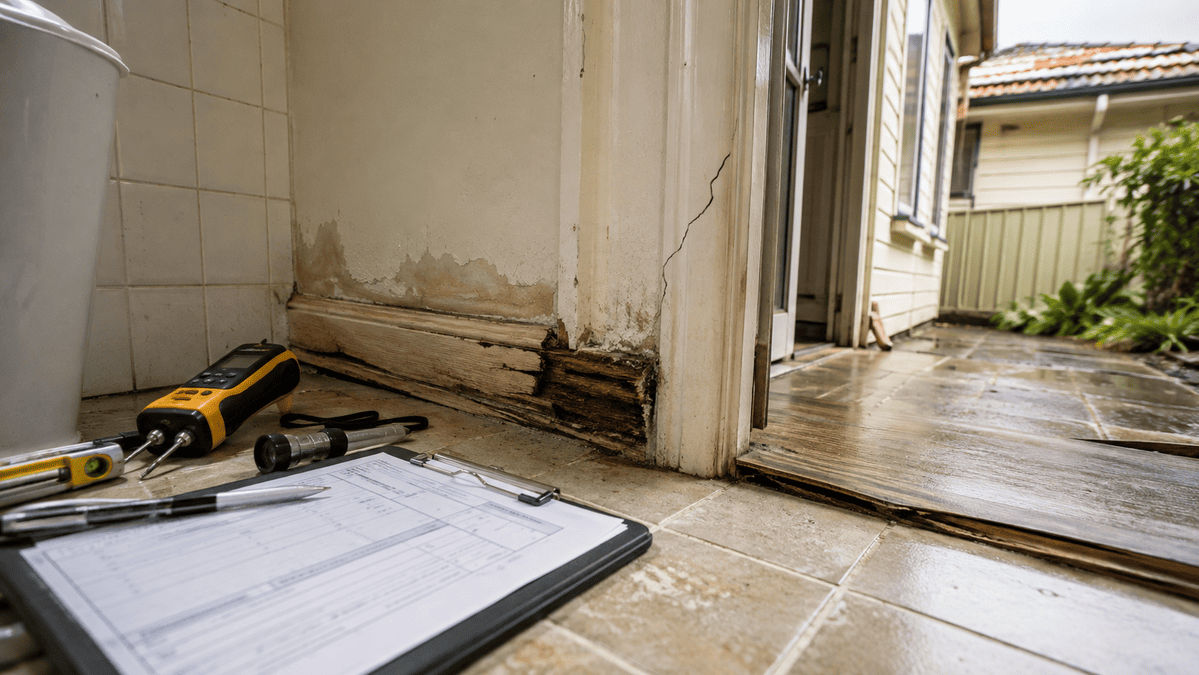
Buying a property can be exciting until your building inspection report lands in your inbox. Suddenly, you’re looking at a list of defects ranging from cracked tiles to moisture issues, wondering whether you’ve found a dream home or an expensive project.
The good news is that not every defect should trigger renegotiation. Almost every property, especially established homes, has some level of wear and maintenance. The challenge is understanding which findings represent normal ownership costs and which could significantly affect the property’s value, safety, or future repair expenses.
This guide explains how residential buyers can assess inspection findings after receiving a report, identify defects worth discussing during negotiations, and know when further professional advice may be appropriate. It focuses on making informed decisions rather than providing legal or conveyancing advice.
At a Glance
If you’re short on time, here are the key takeaways:
- Most properties have defects, but not all justify renegotiation.
- Focus on issues that affect structural integrity, safety, moisture, or significant repair costs.
- Cosmetic problems rarely justify major price adjustments.
- Consider the combined impact of multiple moderate defects, not just individual items.
- Use your inspection report to support informed discussions, not emotional reactions.
- When needed, seek advice from your conveyancer or relevant specialist before making contractual decisions.
Want to know how to separate minor maintenance from genuine negotiation points? Keep reading.
The Short Answer
A defect is generally worth renegotiating when it:
- significantly affects the property’s value
- creates an immediate safety concern
- involves substantial repair costs
- indicates hidden or ongoing problems
- requires specialist investigation before settlement
- changes your understanding of the property’s condition
By contrast, small maintenance items, cosmetic wear, or expected ageing usually form part of normal property ownership rather than negotiation opportunities.
The goal isn’t to create a list of complaints. It’s to understand whether the inspection findings materially change the value or risk of the purchase.
Why Inspection Reports Should Guide Decisions, Not Emotions
Receiving a report with several pages of findings can feel overwhelming. That’s completely normal.
However, building inspectors document visible defects to provide buyers with a clearer picture of the property’s condition. A lengthy report doesn’t necessarily mean the property is a poor purchase.
In fact, according to the Consumer Affairs Victoria guidance on property due diligence, buyers should carefully assess the condition of a property before committing to a purchase and seek appropriate professional advice where required. This helps reduce unexpected costs after settlement.
Instead of counting defects, ask a better question:
Which findings genuinely change the property’s risk or future ownership costs?
That simple shift in thinking often leads to better decisions.
A Practical Framework for Deciding Whether to Renegotiate
Rather than reacting to every issue, assess each finding using four simple questions.
-
Is It Structural?
Structural concerns deserve closer attention because they may involve expensive repairs or further investigation.
Examples include:
- significant foundation movement
- major cracking
- roof framing concerns
- substantial timber deterioration
- movement affecting doors or windows throughout the home
These issues don’t automatically mean you should walk away, but they often justify further discussion.
-
Does It Affect Safety?
Some defects present immediate safety concerns.
Examples include:
- unstable balconies
- damaged stair structures
- unsafe handrails
- exposed electrical hazards noted by appropriate specialists
- deteriorated retaining walls where movement is evident
Safety-related findings often deserve greater attention than cosmetic defects because they may require prompt action after purchase.
-
Could Repairs Be Expensive?
Sometimes a defect appears minor until repair costs are considered.
For example:
| Finding | Possible Negotiation Importance |
| Hairline plaster crack | Usually low |
| Loose roof tile | Often low if isolated |
| Active roof leak | Potentially high |
| Significant subfloor moisture | High because further investigation may be needed |
| Extensive timber decay | Often high depending on severity |
| Waterproofing failure | Potentially significant due to repair complexity |
The report helps identify visible issues, but specialist quotations may still be needed before estimating actual repair costs.
-
Does One Problem Suggest Others?
Some defects rarely exist in isolation.
For example:
- persistent moisture may contribute to mould or timber deterioration
- poor drainage can lead to foundation movement over time
- leaking gutters may contribute to external damage
- termite activity may indicate conditions that require further assessment
These situations don’t automatically increase repair costs, but they often justify additional investigation before making a final purchasing decision.
Cosmetic Defects Usually Aren’t Deal Breakers
Many buyers initially focus on visible imperfections because they’re easy to notice.
Examples include:
- chipped paint
- worn carpets
- faded fencing
- minor plaster imperfections
- ageing fixtures
- small tile chips
These issues may influence your renovation budget, but they’re usually part of purchasing an existing home.
Think of it this way.
A house that’s twenty years old but still has perfect paintwork is almost as suspicious as a restaurant with no customers at lunchtime. Something probably deserves a closer look. Not panic. Just curiosity.
Cosmetic issues generally become negotiation points only when they hide more significant underlying defects.
Looking Beyond Individual Defects
One of the biggest mistakes buyers make is judging each defect in isolation. A property may have no single “major” issue, yet several moderate defects can combine to create significant future costs.
For example, imagine an inspection report identifies:
- Minor roof leaks
- Blocked or poorly graded drainage
- Elevated subfloor moisture
- Early signs of timber decay
None of these findings alone may justify a major price adjustment. Together, however, they suggest a pattern that could require considerable maintenance over time.
Rather than asking, “Is this defect serious?”, ask:
“What does the overall condition of the property tell me?”
A building inspection report is designed to provide context, not just a checklist.
Questions Worth Asking Before Renegotiating
Before approaching the seller or discussing options with your conveyancer, consider these practical questions.
Is the repair likely to be immediate?
Some issues can safely wait for routine maintenance, while others should be addressed as soon as possible after settlement.
Immediate concerns often deserve more attention during negotiations.
Could the defect affect future buyers?
If you eventually decide to sell, would another buyer likely raise the same concern during their inspection?
If the answer is yes, the issue may influence the property’s market value rather than simply your personal preferences.
Is specialist advice recommended?
Inspection reports sometimes recommend further assessment by qualified professionals such as:
- Structural engineers
- Licensed electricians
- Licensed plumbers
- Waterproofing specialists
- Roofing contractors
That recommendation does not necessarily mean a serious problem exists. It usually reflects the limits of a visual inspection and the need for further investigation before drawing conclusions.
Obtaining additional advice can help you make a more informed decision before committing to the purchase.
A Simple Decision Checklist
Use this checklist after receiving your inspection report.
| Question | If Yes |
| Does the defect affect structural integrity? | Consider discussing it during negotiations. |
| Does it present a safety concern? | Seek further advice promptly. |
| Could repairs be expensive? | Obtain repair estimates before deciding. |
| Is further specialist investigation recommended? | Arrange additional inspections where appropriate. |
| Does the issue significantly change the property’s value? | It may justify renegotiation. |
| Is it mainly cosmetic wear? | Usually budget for repairs rather than renegotiate. |
This isn’t a strict formula, but it provides a practical framework for making calm, evidence-based decisions.
Practical Examples
Example 1: Worth Discussing
A buyer receives an inspection report noting:
- Significant moisture beneath the bathroom
- Signs of ongoing water ingress
- Possible waterproofing failure
- Recommendation for specialist assessment
Because the findings may involve substantial repairs and hidden damage, the buyer decides to obtain specialist advice before continuing negotiations.
This is a sensible use of an inspection report.
Example 2: Probably Not Worth Renegotiating
Another report identifies:
- Worn paint
- Loose door handles
- Minor plaster cracking
- Weathered fencing
While these items will require maintenance over time, they are common in established homes and generally don’t justify substantial price negotiations.
Example 3: Several Moderate Issues
A report identifies:
- Ageing roof coverings
- Poor site drainage
- Deteriorating external timber
- Uneven paving
None of the findings alone appears critical, but together they indicate higher-than-expected maintenance costs over the coming years.
Rather than focusing on a single defect, the buyer considers the combined impact before deciding whether to renegotiate.
When Further Advice Makes Sense
An inspection report provides valuable information, but it isn’t intended to replace specialist advice where additional investigation is recommended.
Depending on the findings, buyers may benefit from consulting:
- Their conveyancer regarding contractual matters.
- Qualified tradespeople for repair quotations.
- Engineers where structural concerns are identified.
- Relevant specialists if recommended within the report.
For Victorian buyers, the Consumer Affairs Victoria guidance on buying property explains the importance of carrying out appropriate due diligence before entering into a contract, particularly when significant issues are identified.
Taking a measured approach helps reduce uncertainty without making decisions based purely on emotion.
How a Pre-Purchase Inspection Supports Better Negotiations
The strongest negotiations are based on reliable information rather than assumptions.
A professional Pre-Purchase Building Inspection helps buyers understand a property’s visible condition before committing to the purchase.
Where structural concerns and timber pest risks may both be relevant, a Combined Building and Timber Pest Inspection can provide broader insight into the property’s overall condition.
The goal isn’t to find reasons not to buy.
It’s to understand what you’re buying.
If you’re still comparing properties or planning your next steps, the resources available on the NextGen Inspections homepage can help you better understand the inspection process before making a decision.
Frequently Asked Questions
Should I renegotiate over every defect found in an inspection?
No. Almost every property, particularly established homes, will have some defects. Focus on issues that materially affect safety, structural integrity, future repair costs, or the property’s value rather than routine maintenance or cosmetic wear.
Can I ask for a price reduction after receiving an inspection report?
In some situations, buyers choose to discuss significant inspection findings with the seller. How that process works depends on your contract and circumstances, so it’s sensible to seek advice from your conveyancer before making decisions. This article is intended to help you assess the significance of defects rather than provide legal guidance.
What if the report recommends further investigation?
A recommendation for further investigation doesn’t automatically mean there’s a major problem. It means the inspector has identified something that falls outside the scope of a visual inspection or requires specialist expertise. Arranging additional assessments before proceeding can provide greater confidence.
Are cosmetic issues ever worth negotiating?
Sometimes, but usually only when they indicate a larger underlying issue or when the combined cost of repairs becomes significant. Minor wear and tear is generally considered part of purchasing an existing home.
Can several minor defects become a major concern?
Yes. While each issue may appear manageable on its own, multiple moderate defects can increase maintenance costs, suggest broader property condition concerns, or influence your long-term budget.
Final Thoughts
A building inspection report is more than a list of defects. It’s a decision-making tool that helps you understand the property’s condition before you commit to one of the biggest purchases you’ll ever make.
The most successful buyers don’t negotiate simply because a report contains defects. They negotiate when the findings genuinely change the property’s value, risk, or expected ownership costs. By focusing on the overall picture rather than isolated imperfections, you can make calmer, better-informed decisions and avoid unnecessary surprises after settlement.
Remember that an inspection report should support your due diligence alongside advice from your conveyancer and any relevant specialists where further investigation is recommended. Taking a balanced, evidence-based approach is usually far more effective than reacting to every item on the report.
Make Your Next Decision with Confidence
If you’ve received an inspection report and you’re unsure which findings deserve closer attention, obtaining independent, professional guidance can help you move forward with greater confidence.
Whether you’re purchasing your first home or adding to your property portfolio, NextGen Inspections provides clear, practical reporting to help buyers understand a property’s condition before making important decisions. If you’re ready to reduce uncertainty before committing, you can book an inspection or explore more buyer resources on the NextGen Inspections website.
A clearer understanding today can help prevent expensive surprises tomorrow.