
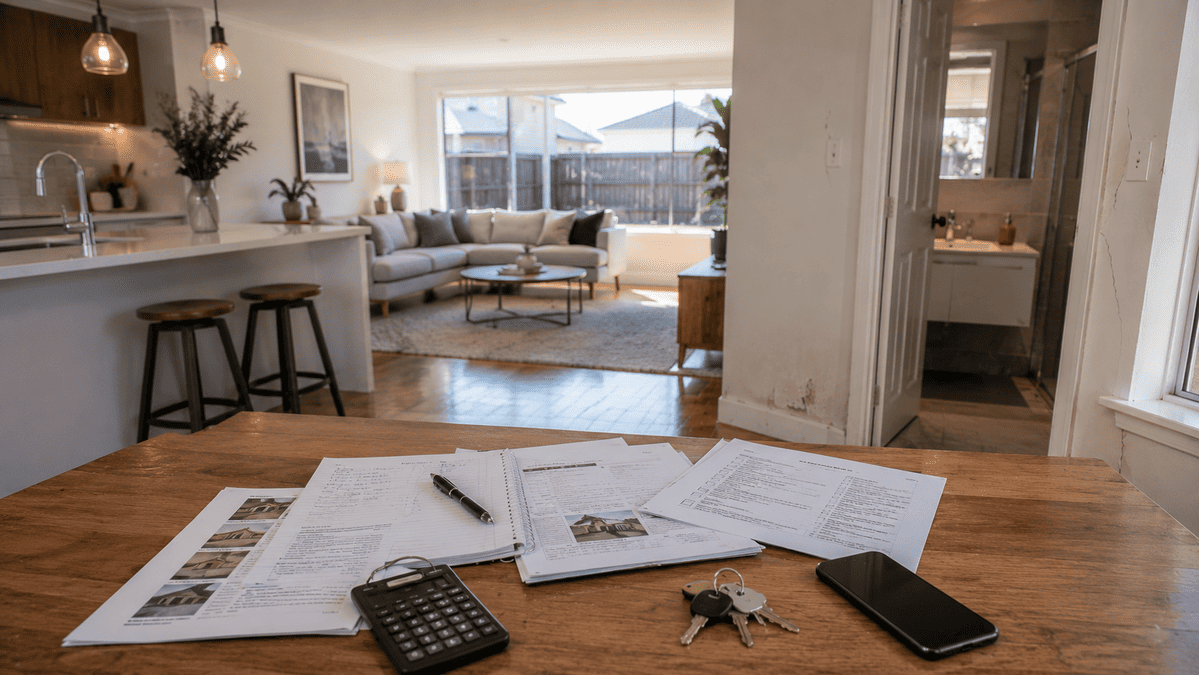
Buying at auction can feel like organised chaos. You inspect the property, read documents at midnight, refresh your bank balance seventeen times, and then stand in a driveway pretending your heart rate is normal while strangers casually bid hundreds of thousands of dollars. Modern civilisation really peaked here.
Still, auctions are common across Victoria, especially in Melbourne’s competitive property market. And unlike private sales, there is usually no cooling-off period once the hammer falls. That means buyers need to do as much due diligence as possible before auction day, not after.
This article focuses on the practical checks buyers should prioritise before bidding. Not broad auction strategy. Not legal bidding tactics. Just the key things that can help you avoid rushing into a property with hidden issues, missing documentation, or expensive surprises.
At a Glance
- Auction buyers should complete as many checks as possible before bidding
- Visible presentation does not always reflect the true condition of a property
- Building defects, moisture issues, poor renovations, and missing approvals can become expensive after settlement
- Older homes and heavily renovated homes often need extra attention
- Time pressure can lead buyers to skip important due diligence steps
- Independent inspections and document reviews can help reduce uncertainty before auction day
- If access or timing is tight, speaking with a professional inspection team early can help avoid last-minute panic
Want the practical version instead of the panic version? Keep reading.
Why Pre-Auction Checks Matter in Victoria
In Victoria, auction purchases are generally unconditional once contracts are signed. According to Consumer Affairs Victoria’s auction guidance, buyers should complete due diligence before bidding because there is usually no cooling-off period after a successful auction purchase.
That does not mean every property is risky. It means buyers need to understand what they are committing to before emotions and competition take over.
A polished kitchen, fresh paint, and strategically placed indoor plants can distract from problems underneath. Cosmetic presentation can hide:
- moisture damage
- structural movement
- poor workmanship
- drainage issues
- termite damage
- rushed renovations
- incomplete repairs
The goal is not to find a “perfect” property. Most homes have some defects. The goal is understanding what you are buying before you become financially attached to it.
The Most Important Things to Check Before You Bid
1. Look Beyond Cosmetic Presentation
Auction properties are often styled to look clean, bright, and move-in ready. Sometimes they genuinely are. Sometimes they are held together by paint and optimism.
Pay attention to signs like:
- fresh paint in isolated patches
- musty smells
- uneven floors
- cracked tiles
- doors that stick
- bubbling paint
- sagging ceilings
- recent silicone work around wet areas
- poor drainage outside
None of these automatically mean disaster. But they can justify closer investigation.
Older Melbourne homes, particularly renovated weatherboard or extended period homes, can sometimes hide older issues beneath modern finishes.
2. Check Renovation and Extension Documentation
Renovated homes can look fantastic during a 15-minute inspection. The problem is that buyers often focus on finishes instead of approvals.
Before auction, it may help to ask whether documentation exists for:
- extensions
- structural alterations
- waterproofing work
- electrical upgrades
- plumbing work
- owner-builder renovations
Missing paperwork does not automatically mean defective work, but it can increase uncertainty and create questions later.
This becomes especially important when the renovation appears recent or unusually extensive.
3. Understand the Property’s Biggest Risk Areas
Different properties come with different common concerns.
Here’s a quick comparison:
| Property Type | Common Risk Areas |
| Older weatherboard home | Subfloor moisture, movement, timber decay |
| Apartment | Waterproofing, balconies, ventilation |
| Recently renovated home | Hidden defects, incomplete documentation |
| New build | Workmanship issues, drainage defects |
| Sloped block property | Drainage and retaining concerns |
| Coastal property | Corrosion and moisture exposure |
This is why generic advice rarely helps. A buyer looking at a 1970s brick veneer home has very different priorities from someone buying a newly completed townhouse.
4. Don’t Ignore Small Signs During Open Inspections
Auction buyers often assume major issues would be obvious.
Unfortunately, many expensive problems begin as “small things” buyers dismiss under pressure.
Examples include:
- a hairline crack that suggests movement
- a bathroom smell that hints at waterproofing failure
- patch repairs that indicate recurring leaks
- damp carpet edges near external walls
- soft timber around windows
- fresh paint around ceiling corners
One isolated issue might be manageable. Multiple small warning signs together can paint a very different picture.
5. Understand What You’re NOT Seeing
Open inspections are short, crowded, and controlled environments.
Buyers usually do not get:
- roof access
- subfloor access
- invasive testing
- unlimited inspection time
- full maintenance history
That means some risks may not become obvious until a more detailed inspection takes place.
This is where many buyers decide to organise independent support through a company like NextGen Inspections before committing.
Not because every property is dangerous. Because uncertainty becomes expensive when you no longer have the option to walk away.
A Practical Pre-Auction Checklist
Before bidding, try to work through the following:
Pre-Auction Due Diligence Checklist
- Review available property documents
- Inspect the property more than once if possible
- Visit at different times of day
- Check for moisture smells or visible dampness
- Look for signs of rushed cosmetic repairs
- Pay attention to drainage and external grading
- Ask questions about renovations or extensions
- Check whether approvals or certificates exist where relevant
- Understand your repair budget buffer
- Organise independent inspection support if concerns exist
- Avoid assuming “new” means defect-free
- Factor in post-settlement maintenance costs
Simple list. Expensive consequences if ignored. Humans do enjoy learning lessons through financial trauma.
What Buyers Often Miss Under Time Pressure
Auction environments create urgency. That urgency can lead buyers to focus only on:
- location
- layout
- emotional appeal
- school zones
- competition from other bidders
Meanwhile, practical risks get pushed aside.
One common example is buyers assuming that a freshly renovated property is automatically lower risk than an older untouched property.
In reality, some rushed renovations can hide defects more effectively than older homes that wear their problems openly.
Another common mistake is underestimating repair costs after settlement. Small issues can become larger projects when moisture, movement, or poor workmanship is involved.
Should You Organise an Inspection Before Auction?
For many buyers, yes, particularly when:
- the property is older
- visible warning signs exist
- renovations appear extensive
- the purchase price stretches the budget
- there is limited repair buffer after settlement
A professional inspection is not about guaranteeing perfection. It is about reducing uncertainty before making a major financial commitment.
If auction timing is tight, buyers sometimes speak with inspection providers early to discuss access, timing windows, or urgency. You can also organise enquiries directly through the NextGen booking page if you need to discuss availability before auction day.
What About Brand-New Homes?
New does not always mean flawless.
Some auction buyers assume recently completed homes are low-risk because they look modern and clean. But newer properties can still have:
- drainage problems
- waterproofing defects
- finish-quality issues
- incomplete work
- cracking
- installation problems
In some cases, buyers later organise support through services like pre-purchase building inspection to identify workmanship concerns before final completion stages.
The important point is this: presentation alone should never replace due diligence.
Simple Example Scenarios
Scenario 1: The Renovated Weatherboard
A buyer falls in love with a beautifully renovated weatherboard home before auction.
During follow-up checks, they notice:
- uneven flooring near the rear extension
- fresh paint around ceiling joins
- limited documentation for renovation work
None of this proves a major issue. But it changes the buyer’s understanding of risk before bidding aggressively.
Scenario 2: The “Perfect” New Townhouse
An investor assumes a recently completed townhouse will require little maintenance.
Later checks identify:
- poor drainage around the slab
- incomplete external sealing
- workmanship defects in wet areas
Again, not necessarily catastrophic. But valuable information before committing financially.
FAQs
Can I organise an inspection before an auction in Victoria?
Yes. Many buyers arrange inspections before auction day to better understand the property condition before bidding.
Is a building inspection always necessary before auction?
Not every property will require the same level of investigation, but many buyers choose independent inspections to reduce uncertainty, especially with older or renovated homes.
What if there isn’t much time before the auction?
Short timelines are common in Victoria. Buyers often contact inspection providers early to discuss timing, property access, and urgency.
Are auction properties more risky than private sales?
Not necessarily. The main difference is often the limited ability to negotiate or withdraw after a successful auction purchase.
Should I worry about small cosmetic defects?
Not always. But multiple small warning signs together can sometimes indicate larger underlying issues worth investigating further.
Final Thoughts
Buying at auction in Victoria often means making decisions under pressure. The challenge is staying practical while everyone around you acts like waving a paddle is a completely normal adult activity.
You do not need to uncover every possible issue before bidding. But you should understand the property well enough to make an informed decision with realistic expectations around risk, repairs, and future costs.
If timing is tight or something about the property feels uncertain, speaking with NextGen Inspections before auction day can help buyers better understand what should be checked before committing.