
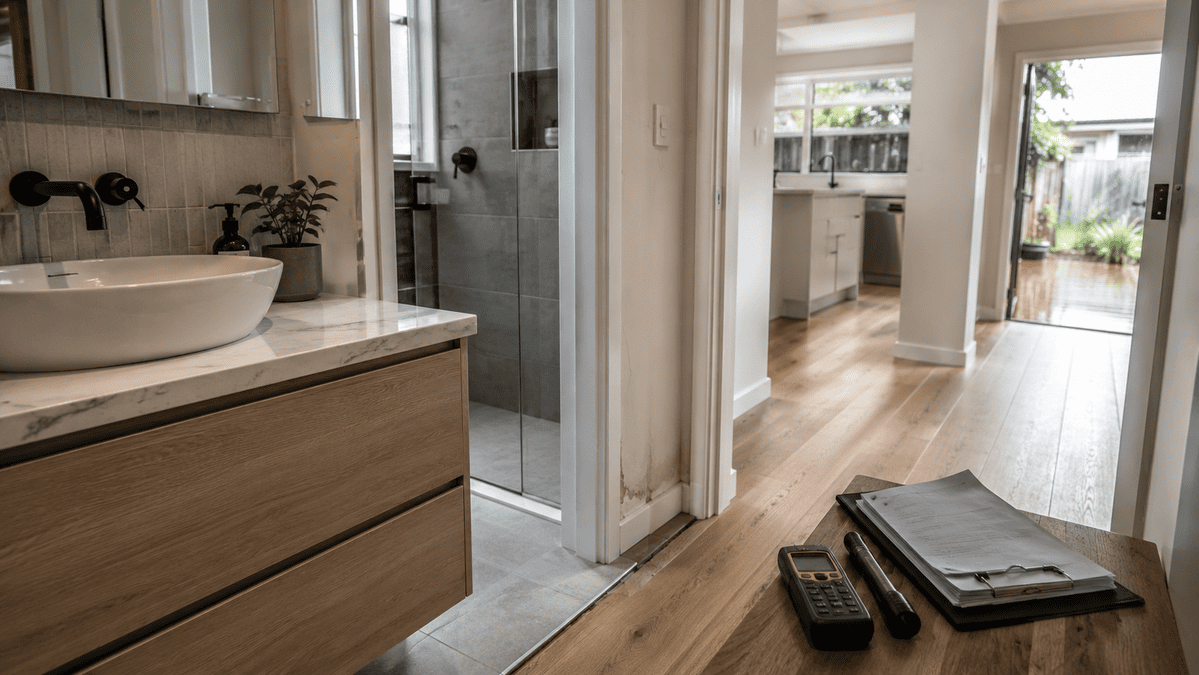
Finding a beautifully renovated home can be exciting. Fresh paint, a modern kitchen, updated bathrooms, and new flooring often make a property feel move-in ready. But if the Section 32 mentions recent building or renovation works, it’s worth slowing down and asking a few practical questions before becoming emotionally attached.
A Section 32 statement provides important information about a property before it is sold in Victoria. While it may mention that renovations or building work have recently taken place, it doesn’t necessarily explain the quality of that work or whether everything has been completed as expected.
For buyers, this creates an important opportunity. Rather than assuming recent renovations are a positive sign, it’s sensible to understand what has changed, what documentation may exist, and whether an independent inspection could help identify any visible concerns.
This guide focuses on the inspection-related questions buyers should ask when recent works appear in a Section 32. It is not legal advice or a complete guide to reviewing the document itself.
At a Glance
Before purchasing a renovated property, remember these key points:
| What to Check | Why It Matters |
| Type of recent works | Cosmetic updates carry different risks from structural renovations. |
| Available documentation | Supporting documents may help explain what work was completed. |
| Visible workmanship | Quality can vary, even when a renovation looks impressive. |
| Moisture and structural concerns | Some issues remain hidden behind finishes. |
| Independent inspection | A professional assessment provides additional confidence before purchase. |
The goal is not to become suspicious of every renovated home. Instead, it’s about making informed decisions based on evidence rather than appearance.
Why Recent Works Deserve Extra Attention
Renovations can significantly improve a property’s comfort and value. Many are completed by experienced tradespeople and result in excellent outcomes.
However, buyers generally have limited knowledge about:
- when the work was completed
- how extensive it was
- whether hidden defects existed beforehand
- whether visible finishes conceal older issues
- whether all areas received the same standard of workmanship
A freshly renovated bathroom may look flawless during an open inspection, but that doesn’t automatically reveal what sits behind the tiles or beneath the flooring.
Similarly, newly painted walls may simply refresh the appearance, or they could make it harder to notice previous cracking or moisture staining.
This is why recent works mentioned in a Section 32 should encourage buyers to ask sensible questions rather than rely solely on presentation.
What Should Buyers Ask First?
Instead of jumping straight into technical details, begin with practical questions that help build a clearer picture of the property’s history.
These might include:
- What areas of the home were renovated?
- Approximately when were the works completed?
- Were the renovations cosmetic or structural?
- Were any extensions or alterations carried out?
- Is there documentation available relating to the works?
These questions help establish the scope of the renovations before looking more closely at the property’s condition.
Cosmetic Updates or Major Building Works?
One of the most useful distinctions is understanding whether the recent works were primarily cosmetic or involved more substantial construction.
Cosmetic improvements often include:
- painting
- replacing flooring
- installing new cabinetry
- updating tapware
- replacing light fittings
Larger projects may include:
- removing internal walls
- extending living areas
- bathroom relocations
- kitchen relocations
- roof alterations
- structural repairs
- additions or decks
Larger projects naturally involve more components that buyers may wish to understand before proceeding.
Don’t Let a Beautiful Finish End the Conversation
Modern styling can make almost any property feel appealing.
New splashbacks, stone benchtops and designer lighting certainly create a great first impression. Human brains are surprisingly willing to forgive almost anything when confronted with matte-black tapware.
The challenge is remembering that attractive finishes don’t always reflect what’s happening beneath them.
For example:
- Fresh paint may conceal previous patch repairs.
- New flooring can hide uneven subfloors.
- Stylish bathrooms still require effective waterproofing.
- Recently installed cabinetry may limit visibility of wall surfaces.
- Landscaping can make drainage issues harder to recognise during inspections.
This doesn’t mean problems exist. It simply means appearance shouldn’t be the only factor guiding a major financial decision.
Practical Examples
Example 1
A buyer notices that the Section 32 refers to recent bathroom renovations completed within the past two years.
Rather than assuming everything is perfect, they ask:
- Was waterproofing carried out?
- Are there any supporting documents available?
- Has the bathroom experienced any leaks since completion?
An independent inspection can then assess visible signs of moisture, movement or workmanship concerns.
Example 2
A home has recently received fresh internal paint before being listed.
During an inspection, the buyer pays particular attention to:
- ceiling lines
- corners around doors
- window frames
- areas beneath windows
- skirting boards
Fresh paint alone isn’t a warning sign, but these locations may reveal movement or moisture that deserves closer attention.
Example 3
A renovated kitchen appears brand new.
The buyer asks whether nearby plumbing has also been upgraded and whether any previous water damage affected surrounding cabinetry or flooring.
These practical questions help build confidence without making assumptions.
A Simple Buyer Checklist
When a Section 32 mentions recent works, consider working through the following checklist.
| Question | Why Ask It? |
| What renovations were completed? | Understand the scope of work. |
| When were they completed? | Helps establish the property’s recent history. |
| Were any structural changes involved? | Larger projects often warrant closer attention. |
| Is supporting documentation available? | May provide useful background information. |
| Are there visible signs of poor workmanship? | Surface quality sometimes indicates broader issues. |
| Could hidden moisture or movement still exist? | Some defects are not immediately obvious. |
| Has the property been independently inspected? | Provides an additional level of confidence before purchase. |
Why Supporting Documentation Matters
If recent works are mentioned in the Section 32, it’s reasonable to ask whether any supporting documentation is available. While your conveyancer or solicitor can advise on the legal significance of these documents, understanding what exists can help you build a clearer picture of the property’s history.
Depending on the type of renovation, documentation may include:
- Building permits where applicable
- Occupancy or final inspection documentation
- Waterproofing information for wet areas
- Electrical or plumbing compliance certificates where relevant
- Product warranties for major installations
- Manuals for new appliances or systems
The presence of documentation does not automatically guarantee workmanship, and missing paperwork does not necessarily mean work was completed incorrectly. Instead, these documents help provide context and may identify areas worth discussing further with the appropriate professionals.
How an Independent Inspection Complements the Section 32
A Section 32 and a building inspection serve different purposes.
The Section 32 provides information about the property’s legal and statutory matters, while an independent inspection focuses on the property’s observable physical condition.
This means an inspector may identify visible issues such as:
- Cracking or movement
- Moisture staining
- Drainage concerns
- Roofing defects
- Poor-quality workmanship
- Ventilation issues
- Timber deterioration
- Maintenance concerns
If you’re purchasing a renovated property, arranging a professional Pre-Purchase Building Inspection can help you better understand the property’s condition before committing to the purchase.
Where timber elements are also a consideration, particularly in older homes, a Combined Building and Timber Pest Inspection may provide a broader picture of visible building defects alongside timber pest risks.
Rather than replacing the information contained within the Section 32, an inspection complements it by assessing what can be observed at the property itself.
Questions Worth Asking During the Inspection Process
If you’ve organised an inspection after reviewing the Section 32, consider asking practical questions such as:
- Do the visible finishes appear consistent with the reported renovation?
- Are there any signs that further investigation may be worthwhile?
- Are there maintenance items that should be budgeted for?
- Does any visible workmanship raise concerns?
- Are there areas that couldn’t be inspected because they were inaccessible or concealed?
These conversations help buyers better understand the report rather than simply receiving a list of observations.
Remember That Renovations Age Differently
A renovation completed six months ago presents different considerations from one completed ten years ago.
For example:
- Sealants naturally deteriorate over time.
- Exterior paint is exposed to weather.
- Decking may require maintenance.
- Silicone around wet areas eventually needs replacement.
- Timber elements remain vulnerable to moisture if not maintained.
Even high-quality renovations require ongoing care. Understanding when work was completed helps buyers plan future maintenance rather than assuming everything will remain problem-free for years.
Victoria-Specific Considerations
In Victoria, the Section 32 forms part of the vendor’s disclosure process. However, buyers should avoid relying solely on the document when assessing the physical condition of a property.
The Consumer Affairs Victoria due diligence guidance encourages buyers to make appropriate enquiries before purchasing property. This may include reviewing relevant documents and obtaining independent professional advice where appropriate. You can find more information in the Consumer Affairs Victoria property buying guidance.
If recent works are mentioned, it is often sensible to understand both:
- the available documentation, and
- the property’s current observable condition.
Together, these provide a more complete picture than either source alone.
When Might Further Advice Be Helpful?
Sometimes an inspection identifies observations that warrant additional investigation.
Depending on the circumstances, buyers may be advised to seek further advice from appropriately qualified professionals, particularly where specialised structural, electrical, plumbing or legal matters arise.
This should not be viewed as a sign that something is necessarily wrong.
Instead, it reflects good due diligence and helps buyers make informed decisions based on the available information.
Before You Commit to the Purchase
If a Section 32 mentions recent works, there’s no need to panic or assume the worst.
Instead:
✓ Understand what work was completed.
✓ Ask sensible questions.
✓ Review any available supporting documentation.
✓ Arrange an independent inspection where appropriate.
✓ Use the information collected to make a confident, informed decision.
Buying a property is one of the largest investments most people will ever make. Spending a little more time understanding recent renovations is often far easier than dealing with unexpected surprises after settlement.
Frequently Asked Questions
Does a Section 32 guarantee renovation quality?
No. A Section 32 provides important property information, but it does not assess the quality of workmanship or identify visible defects.
Should I avoid buying a renovated home?
Not at all. Many renovated homes are completed to an excellent standard. The goal is simply to understand the work that has been carried out and assess the property’s current condition independently.
Is cosmetic renovation less risky than structural renovation?
Cosmetic updates are generally less extensive, but they can still conceal underlying issues. Every property should be assessed on its own merits.
Can a building inspection see behind walls?
No. A standard pre-purchase inspection is primarily a visual assessment of reasonably accessible areas. Inspectors cannot generally see behind walls, beneath fixed flooring or inside concealed building elements.
Who should review the legal aspects of a Section 32?
Questions relating to legal rights, contracts or disclosure obligations should be discussed with your conveyancer or solicitor.
Make Your Decision With Greater Confidence
When recent works appear in a Section 32, treat them as an opportunity to ask informed questions rather than as an immediate warning sign. Combining available documentation with an independent assessment of the property’s visible condition can provide greater clarity before contracts become unconditional.
If you’re preparing to purchase a home in Victoria and want independent insight into its observable condition, the team at NextGen Inspections can help you understand what you’re buying before you commit. If your purchase timeline is already underway, you can also book an inspection at a time that suits your schedule and gain greater confidence before settlement.