
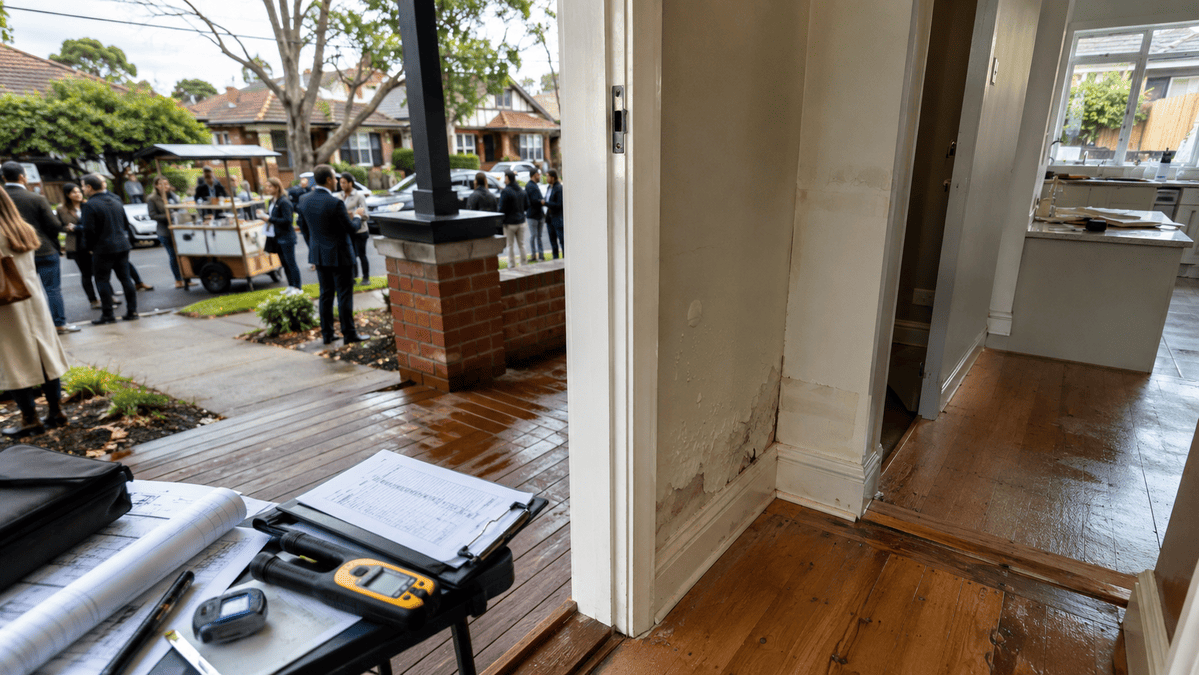
Auction campaigns move fast. Sometimes uncomfortably fast. One open inspection, a packed Saturday crowd, a real estate agent talking like the property market will collapse if you hesitate for four minutes, and suddenly people are making six or seven-figure decisions while standing next to a folding coffee cart.
That pressure changes how buyers assess risk.
A property that might feel manageable during a normal private sale can become far riskier when there is limited time for inspections, document checks, builder conversations, or second thoughts. The issue is not always the defect itself. It is the lack of time and clarity around it.
For auction buyers, understanding which property traits become more dangerous under time pressure can help avoid expensive surprises later.
At a Glance
- Auction pressure often reduces a buyer’s ability to properly investigate risks
- Cosmetic presentation can distract buyers from structural or moisture concerns
- Renovated homes can carry hidden compliance or workmanship risks
- Older homes become riskier when buyers skip deeper due diligence
- Time pressure increases the chance of emotional decision-making
- Limited access before auction can reduce opportunities for specialist advice
- Independent inspections help buyers make calmer, more informed decisions
If you are buying before auction day, the goal is not to eliminate every risk. It is to understand which risks deserve closer attention before you commit.
Why Auction Pressure Changes Risk Tolerance
Under normal purchase conditions, buyers may have cooling-off periods, negotiation time, or opportunities to organise extra inspections after an offer is accepted.
Auctions are different.
In Victoria, auction purchases are generally unconditional once the hammer falls. According to Consumer Affairs Victoria, buyers typically do not receive a cooling-off period after a successful auction purchase.
That reality changes everything.
Buyers under time pressure are more likely to:
- overlook warning signs
- accept uncertainty they would normally investigate
- rely too heavily on presentation
- assume recent renovations equal quality
- skip specialist follow-up advice
- underestimate future repair costs
Some risks become far more serious when there is little time to slow down and assess them properly.
Properties With Fresh Cosmetic Renovations
Fresh paint, modern flooring, new tapware, and styled interiors can make a property feel “safe” emotionally. That does not always mean the underlying condition is low risk.
Under auction pressure, buyers often focus on appearance because appearance is fast to assess. Structural movement, drainage issues, moisture problems, or poor workmanship take more time and expertise to understand.
This becomes especially risky when:
- renovations appear recent
- documentation is incomplete
- workmanship quality looks inconsistent
- multiple surfaces seem freshly covered
- buyers cannot access all areas before auction
A rushed buyer may think:
“It looks new, so the expensive stuff must already be fixed.”
Sometimes that is true. Sometimes it absolutely is not. Humanity continues its proud tradition of confusing expensive pendant lighting with structural integrity.
If a property has been heavily renovated, buyers should still consider independent due diligence before auction day, particularly through a combined building and timber pest inspection where timing allows.
Older Homes With Limited Inspection Access
Older homes are not automatically bad purchases. Many are extremely solid.
The problem is that older homes often require more context and investigation. Auction pressure removes time from that process.
Risk increases when buyers cannot:
- access subfloors properly
- inspect roof cavities
- review renovation history
- clarify past repairs
- organise specialist follow-up advice
This does not mean buyers should panic about every older weatherboard or brick home. It means uncertainty matters more when timelines shrink.
A buyer who has two weeks to investigate an issue may feel comfortable proceeding.
A buyer with 48 hours before auction day may not.
Homes With Signs of Moisture or Drainage Problems
Moisture-related issues are one of the easiest things for stressed buyers to downplay.
Why? Because they are often subtle.
Small stains, musty smells, bubbling paint, swollen skirting boards, or poor outdoor drainage may not feel urgent during a crowded open inspection. But moisture issues can become expensive depending on the cause and extent.
Under auction pressure, buyers may not have enough time to determine whether the issue relates to:
- ventilation
- waterproofing
- plumbing leaks
- rising damp
- drainage
- roof defects
- long-term maintenance neglect
The risk is not simply “there is moisture.”
The risk is buying without enough time to understand what the moisture actually means.
Properties With Incomplete Documentation
Missing or unclear paperwork becomes more dangerous when deadlines are tight.
Buyers under pressure sometimes assume:
- permits probably exist
- extensions were probably approved
- waterproofing was probably compliant
- owner-builder work was probably done correctly
That word “probably” becomes expensive surprisingly often.
Properties with:
- recent extensions
- converted garages
- structural alterations
- deck additions
- major bathroom renovations
- owner-builder modifications
may require extra document review before auction day.
This is particularly important because incomplete documentation can affect future resale, insurance, financing, or repair decisions.
A rushed auction environment is one of the worst places to make assumptions about compliance history.
Properties Where Buyers Feel Emotionally Overcommitted
This one matters more than many buyers realise.
Some properties become riskier simply because buyers emotionally decide too early that they “must” win them.
Once buyers mentally move into the house, objectivity drops fast.
Common warning signs include:
- ignoring concerns because the location feels perfect
- dismissing inspection findings too quickly
- stretching budgets emotionally
- avoiding difficult questions before auction
- treating warning signs as “future me problems”
Auction campaigns are designed to create urgency and competition. That is part of the process.
The challenge for buyers is recognising when excitement starts replacing due diligence.
Quick Comparison Table: Risk Under Normal Sale vs Auction Pressure
| Property Trait | Lower Risk in Standard Sale | Higher Risk Under Auction Pressure |
| Older home with visible wear | More time for follow-up checks | Limited investigation time |
| Fresh renovation | Time to verify documents | Easier to rely on presentation |
| Minor moisture signs | Opportunity for specialist advice | Easy to overlook before auction |
| Limited roof/subfloor access | Can negotiate extra inspections | Less flexibility before bidding |
| Missing paperwork | Time to clarify approvals | Buyers may proceed without answers |
| Emotional attachment | Cooling-off period may help | Unconditional commitment after auction |
What Buyers Should Prioritise Before Auction Day
Not every issue can be solved before an auction.
The goal is prioritisation.
Auction buyers should focus on:
- Identifying major unknowns early
- Clarifying which issues are cosmetic versus potentially structural
- Understanding whether time pressure is hiding important information
- Reviewing available documents carefully
- Organising independent inspection advice where practical
Even a relatively short pre-auction window can still provide useful clarity if buyers focus on the right questions first.
Many buyers begin by reviewing the property with an experienced pre-purchase building inspection professional who can help separate manageable concerns from higher-risk unknowns.
Independent Advice Matters More When Time Is Tight
Auction environments naturally create momentum. Everyone moves quickly. Agents move quickly. Buyers move quickly. Even your family suddenly becomes property economists after watching three episodes of renovation television.
That is exactly why independent advice matters.
An experienced inspection professional may not eliminate every uncertainty, but they can often help buyers:
- identify hidden concerns
- prioritise follow-up questions
- understand practical risk
- make calmer decisions under pressure
Buyers who feel rushed should remember something important:
You are not obligated to match the market’s emotional pace.
Sometimes the smartest decision is slowing the process down enough to think clearly.
If you are preparing for auction and want independent clarity before committing, the team at NextGen Inspections can help buyers understand potential risks before auction day. If timing is tight, you can also organise an inspection booking early so there is more opportunity to assess the property properly before bidding.