
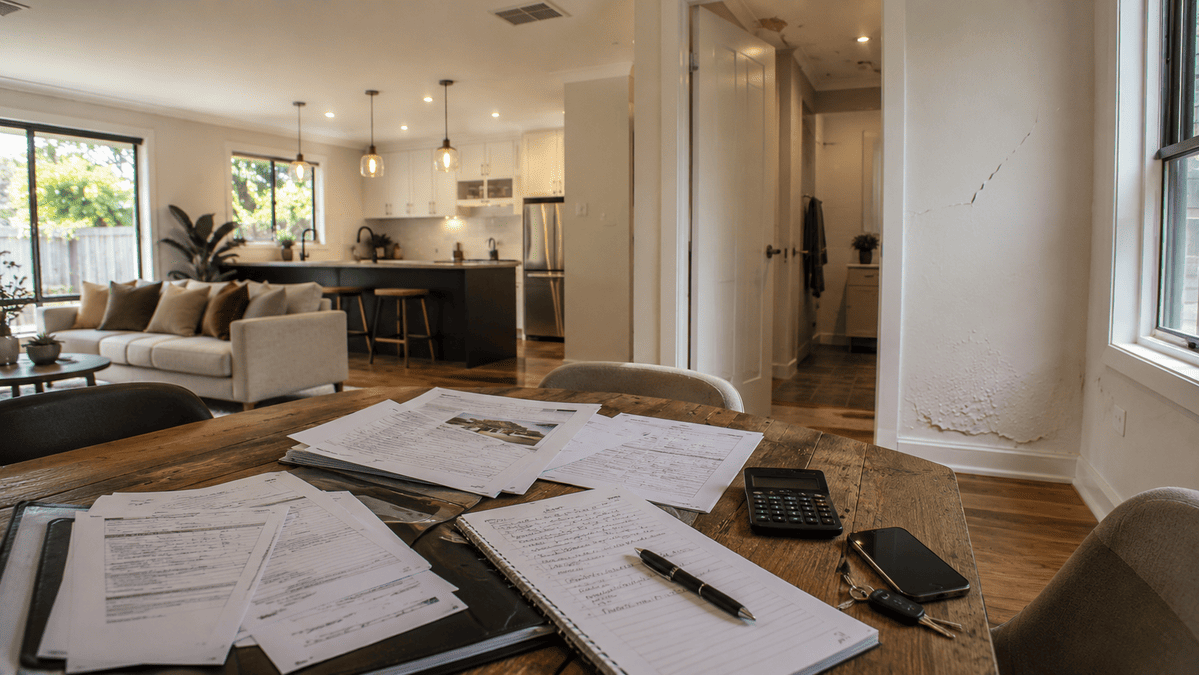
Auction campaigns move fast. Sometimes uncomfortably fast. One open inspection turns into a second inspection, then suddenly the auction is three days away and everyone around you starts speaking in phrases like “you’ll miss out” and “offers are flying”. Human civilisation somehow decided the best time to make a six or seven-figure decision is under pressure with free coffee and artificial urgency. Remarkable species.
The problem is that rushing often leads buyers to skip important due diligence. That can create expensive surprises after settlement, especially if defects, moisture issues, poor renovations, or incomplete work are hiding behind fresh paint and tidy staging.
The good news is that building due diligence does not have to be perfect to be useful. When auction day is close, the goal is to prioritise the right checks quickly and make a more informed decision under real-world time pressure.
At a Glance
- Focus on the highest-risk checks first when time is limited
- Organise inspections early in the auction campaign where possible
- Review available documents before auction day
- Pay attention to visible warning signs during inspections
- Understand what issues may need further specialist advice
- Use professionals to reduce uncertainty before bidding
- Avoid relying purely on presentation or agent reassurance
If auction day is approaching quickly, calm prioritisation usually works better than trying to investigate everything at once.
The Biggest Mistake Buyers Make Before Auctions
One of the most common mistakes auction buyers make is assuming there is still plenty of time.
In Victoria, auctions often move quickly, and once contracts are unconditional, buyers generally have far fewer options if significant issues appear later. According to the Consumer Affairs Victoria due diligence checklist, buyers are encouraged to carry out checks before committing to a purchase.
That does not mean turning into a building expert overnight. It means identifying the most important risks before auction day arrives.
What Due Diligence Actually Means in a Short Auction Timeline
When time is tight, building due diligence is really about reducing uncertainty.
You are not trying to predict every future repair or uncover every hidden issue in a few days. You are trying to answer practical questions like:
- Are there obvious structural or moisture concerns?
- Has renovation work been completed properly?
- Are there signs of movement, leaks, or poor workmanship?
- Is there documentation missing for recent work?
- Could defects create major repair costs shortly after purchase?
This is why many buyers arrange a pre-purchase building inspection before auction day where timing allows.
Start With the Property Documents
Before focusing on cosmetic details, start with the available paperwork.
For auction properties in Victoria, this may include:
- Section 32 documentation
- permits or approvals for renovations
- owner-builder information
- warranty documents
- compliance certificates where relevant
Missing or inconsistent paperwork does not automatically mean something is wrong, but it can signal areas that deserve closer attention.
For example, if a bathroom renovation looks recent but there is little supporting documentation, that may justify asking more questions or seeking additional advice before bidding.
Prioritise Visible Warning Signs
When auction timing is compressed, visible clues matter.
Some common signs buyers should take seriously include:
| Warning Sign | Why It Matters |
| Fresh paint in isolated areas | Could be covering moisture or cracking |
| Doors sticking or misaligning | May indicate movement |
| Strong damp or mould smells | Possible moisture or ventilation problems |
| Uneven flooring | Could point to subfloor or structural concerns |
| Large cracks around openings | May require further assessment |
| Bubbling paint or staining | Possible water ingress |
| Recently patched ceilings | Potential past leaks |
None of these automatically mean disaster. Older homes especially can show normal wear and movement. The key is understanding which issues are cosmetic and which deserve further investigation.
Do Not Confuse Styling With Condition
Auction properties are often presented extremely well.
New lighting, fresh paint, furniture styling, scented candles, and carefully selected music can make almost any home feel impressive for fifteen minutes. Meanwhile the subfloor quietly continues its campaign against your future bank account.
Presentation matters, but it should never replace proper assessment.
A beautifully styled property can still have:
- drainage issues
- poor waterproofing
- termite damage
- incomplete renovations
- roof problems
- ventilation issues
- movement cracks
This is why independent due diligence matters, especially before competitive auctions.
If Time Is Very Tight, Focus on the Highest-Risk Areas First
Sometimes buyers only have a few days before auction day.
In those situations, focus first on issues that could create:
- major repair costs
- safety concerns
- ongoing moisture problems
- structural complications
- significant post-settlement stress
Practical priority areas often include:
- Roof and ceiling condition
- Moisture and drainage signs
- Subfloor or ventilation concerns
- Structural movement indicators
- Renovation quality
- Termite or timber damage indicators
Trying to inspect every tiny cosmetic issue under time pressure is rarely productive.
Understand the Limits of Fast Decisions
A rushed auction timeline can limit how much investigation is realistically possible.
For example:
- specialist engineers may not be available immediately
- inaccessible roof spaces can reduce visibility
- strata information for apartments may take time to review
- some defects only become clearer during heavy rain or seasonal changes
That does not mean buyers should panic or abandon the process automatically. It simply means understanding where uncertainty still exists.
In some cases, buyers decide the remaining uncertainty is manageable. In other cases, they decide the risk level is too high for comfort.
Both outcomes can be reasonable.
Practical Example: Renovated Weatherboard Home Before Auction
Imagine a buyer inspecting a renovated weatherboard home four days before auction.
The home presents beautifully:
- polished timber floors
- modern kitchen
- fresh paint throughout
But several details stand out:
- slight floor slope near the rear extension
- patched ceiling area near bathroom
- limited documentation for recent renovations
- moisture smell near laundry
Under pressure, some buyers ignore these signs because the property “feels fine”.
A calmer approach is to prioritise:
- obtaining professional inspection advice quickly
- reviewing renovation documentation
- understanding what may need further investigation
- estimating possible repair or rectification costs
That does not automatically mean walking away. It means making a more informed decision before bidding emotionally against strangers holding tiny auction paddles like gladiators of suburban finance.
Questions Buyers Should Ask Before Auction Day
When time is limited, focused questions help.
Consider asking:
- When were renovations completed?
- Were permits required?
- Has there been previous water ingress?
- Have any structural repairs been completed?
- Are warranties or certificates available?
- Has the property had past termite treatment?
- Are there known drainage issues?
You may not receive perfect answers to everything, but the responses can help identify where further caution is needed.
Why Early Booking Matters During Auction Campaigns
Auction periods create scheduling pressure for everyone involved.
Inspectors, conveyancers, and related professionals often become busier close to major auction weekends. Waiting until the final day can reduce flexibility for access and reporting timeframes.
If you are seriously considering a property, it can help to organise inspections earlier rather than waiting until the final 48 hours.
Buyers who need quick timing support can contact NextGen Inspections to discuss inspection availability, auction deadlines, and property access requirements before auction day.
When More Specialist Advice May Be Needed
Some findings may justify further specialist assessment before proceeding.
Depending on the situation, buyers may need:
- structural engineering advice
- waterproofing advice
- pest-specific advice
- electrical assessment
- plumbing assessment
- legal or conveyancing guidance about documentation
This is especially relevant when:
- major cracking is visible
- significant renovations lack approvals
- moisture issues appear widespread
- movement concerns seem active
- termite damage appears extensive
The important thing is staying realistic about what can and cannot be confirmed within the available timeframe.
FAQ
Should I skip building due diligence if auction day is very close?
Skipping due diligence entirely increases risk significantly. Even limited checks and professional guidance can help buyers make more informed decisions before auction day.
Can I arrange an inspection a few days before auction?
In many cases, yes, depending on property access and scheduling availability. Earlier organisation generally creates more flexibility.
Does every crack mean structural failure?
No. Many properties, especially older homes, show normal settlement or cosmetic cracking. The key issue is understanding which signs may need further investigation.
Is a beautifully renovated property usually safer to buy?
Not necessarily. Some renovated homes are completed to a very high standard, while others may hide poor workmanship or incomplete work behind cosmetic improvements.
What if I cannot investigate every concern before auction day?
Sometimes buyers must make decisions with partial information. The goal is to reduce uncertainty as much as reasonably possible within the timeframe.
Final Thoughts
Auction timelines can pressure buyers into rushing decisions, but building due diligence does not need to become chaotic.
The smartest approach is usually:
- prioritising the highest-risk checks
- reviewing available documents early
- staying alert to warning signs
- seeking professional guidance where needed
- accepting that not every issue can be investigated perfectly under tight timing
If auction day is approaching and you need practical support around timing, access, or inspection coordination, you can organise a booking through NextGen Inspections before making a final decision. Calm, informed decisions tend to age much better than rushed emotional ones. Unlike auction adrenaline, which disappears approximately fourteen seconds after the hammer falls.