
Buying an older home often comes with a few surprises. Fresh paint, stylish renovations, and well-presented interiors can make a property look immaculate, but small cracks in walls, ceilings, or brickwork can quickly raise questions. Are they simply part of an ageing home, or could they indicate a more significant structural concern?
If you’ve noticed cracking during an inspection, you’re not alone. One of the most common questions buyers ask is whether a crack is merely cosmetic or a warning sign that deserves further investigation. The good news is that not every crack points to serious structural movement. However, understanding the difference can help you make more informed decisions before signing a contract.
This guide explains how buyers can interpret visible cracking, what warning signs to look for, and when it’s worth seeking further professional assessment before purchasing an older property.
At a Glance
If you’re short on time, here’s what you should know:
- Hairline cracks are common in many older homes and are often caused by normal building movement.
- Wider, growing, or uneven cracks may indicate structural movement and deserve further investigation.
- The location, direction, and pattern of a crack are often more important than its size alone.
- Cosmetic repairs can sometimes hide underlying defects, making careful inspection essential.
- A professional inspection helps buyers understand whether visible cracking appears consistent with normal ageing or whether additional specialist advice may be appropriate.
Want to understand what those cracks might really be telling you? Keep reading.
Not Every Crack Means the House Has a Structural Problem
One of the biggest misconceptions among buyers is that every visible crack signals a major structural issue. In reality, buildings naturally move over time.
Older homes in Victoria experience seasonal expansion and contraction as temperatures and moisture levels change. Materials such as plaster, timber, brick, and concrete all respond differently to environmental conditions, which can result in small cosmetic cracks developing over many years.
Many minor cracks are simply signs of an ageing property rather than evidence of serious structural movement.
The challenge is knowing when a crack falls outside what would generally be considered normal.
What Are Hairline Cracks?
Hairline cracks are very narrow surface cracks that usually appear in plaster, paint, or render.
They commonly develop because of:
- Normal settlement over time
- Minor shrinkage of plaster
- Seasonal movement
- Small temperature changes
- Natural ageing of construction materials
These cracks are usually:
- very thin
- relatively straight
- limited in length
- not accompanied by distortion elsewhere
While they may affect appearance, they often do not indicate that the building itself is structurally unsound.
What Is Structural Movement?
Structural movement refers to movement that affects the building’s structural elements rather than just decorative finishes.
Possible contributing factors include:
- foundation movement
- reactive soil conditions
- moisture changes beneath the building
- poor drainage
- tree root activity
- previous structural alterations
- inadequate footings
- long-term ground movement
Structural movement does not automatically mean a home is unsafe, but it may require further assessment depending on its severity and whether movement appears ongoing.
The Location of a Crack Often Matters More Than Its Width
Many buyers immediately focus on how wide a crack appears. However, experienced inspectors also consider where the crack is located.
For example, cracks appearing around:
- doors
- windows
- lintels
- corners
- ceiling junctions
- brickwork
- retaining walls
may provide different clues about how a building has moved over time.
Likewise, a single isolated crack usually tells a different story than multiple cracks appearing throughout several areas of the home.
Looking at the broader pattern helps create a more complete understanding of the property’s condition.
Cosmetic Repairs Can Hide Bigger Problems
A freshly painted room can sometimes give buyers a false sense of confidence.
Cracks may have been patched shortly before the property was listed for sale, making them less obvious during inspections.
While many repairs are simply part of normal maintenance, buyers should remember that paint alone cannot confirm whether movement has stopped.
That’s one reason independent due diligence is valuable before committing to a purchase.
Look for Related Warning Signs
Visible cracking should always be considered alongside other observations throughout the property.
Examples include:
- doors that no longer close properly
- windows sticking
- sloping or uneven floors
- gaps around skirting boards
- ceilings that appear uneven
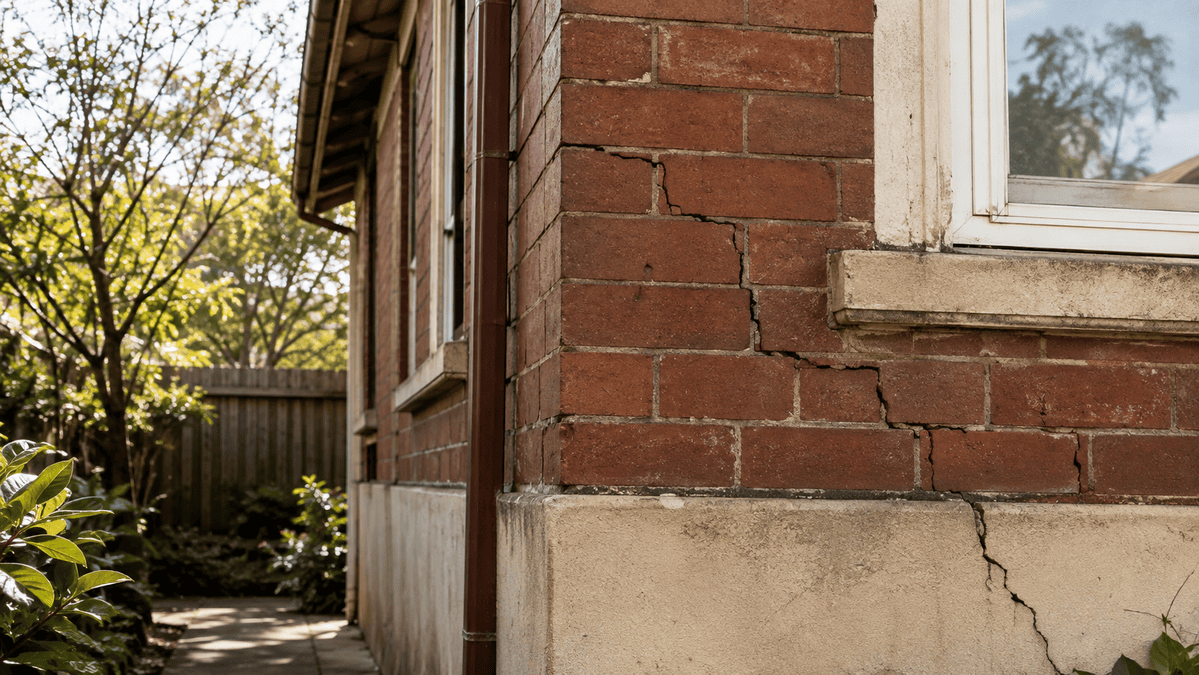
- separated brickwork
- movement around external walls
None of these signs alone prove structural problems, but together they may indicate that further investigation is appropriate.
Moisture Can Influence Structural Movement
Water is often an important part of the story.
Poor drainage, leaking plumbing, overflowing gutters, or changing soil moisture levels can all contribute to movement over time.
The Victorian Building Authority highlights the importance of effective site drainage and moisture management in maintaining building performance and reducing long-term issues.
For this reason, cracks should rarely be viewed in isolation without considering surrounding site conditions.
Older Homes Naturally Have More Character… and More Movement
Many buyers specifically seek older Victorian-era or mid-century homes because of their charm and construction quality.
Older homes often display:
- small settlement cracks
- repaired plaster
- timber movement
- slight floor variation
- previous maintenance work
These characteristics are often part of normal ageing rather than immediate reasons to abandon a purchase.
The goal is not finding a completely perfect home.
Instead, buyers should understand which issues are expected and which deserve closer attention.
When Should Buyers Be More Cautious?
Although many cracks are harmless, certain situations justify additional professional advice.
Greater caution may be appropriate if you notice:
- rapidly widening cracks
- stepped cracking in brickwork
- significant wall separation
- obvious floor movement
- repeated cracking after repairs
- multiple large cracks throughout the property
- evidence that movement appears ongoing
In these situations, your building inspector may recommend further assessment by an appropriately qualified structural engineer where necessary.
This is not because every crack represents a serious defect, but because obtaining the right advice helps buyers make informed decisions.
Why Professional Interpretation Matters
Two homes can display similar-looking cracks while having completely different underlying causes.
That’s why visual observations should always be considered within the context of the entire property.
A professional Pre-Purchase Building Inspection helps buyers understand whether visible cracking appears consistent with normal ageing or whether additional investigation may be worthwhile.
Where moisture or timber concerns are also present, a Combined Building and Timber Pest Inspection may provide a broader understanding of the property’s overall condition.
What Should Buyers Do Before Making an Offer?
If you notice cracking during an inspection or open home:
- Don’t panic simply because cracks are visible.
- Take photographs for later comparison.
- Look for other signs of movement around the property.
- Ask whether previous repairs have been carried out.
- Review any available building documentation.
- Arrange an independent inspection before committing to the purchase.
The Australian Government’s Your Home resource also explains how soil conditions, drainage, and foundations can influence building movement over time, providing useful background information for buyers.
Buying with Confidence Starts with Understanding
Visible cracks can certainly be concerning, but they don’t automatically mean an older home has major structural problems.
Many are simply part of the natural ageing process. Others may deserve closer investigation before contracts become unconditional.
The key is understanding the difference rather than making assumptions based on appearance alone.
By combining careful observation with independent professional advice, buyers can better understand the condition of the property and reduce uncertainty before making one of life’s biggest financial decisions.
If you’re considering purchasing an older home, the team at NextGen Inspections can help you gain an independent understanding of the property’s visible condition before you commit. If your purchase timeline is tight, you can also book an inspection or discuss your situation to help ensure you have the information you need before moving forward.
Frequently Asked Questions
Are hairline cracks normal in older homes?
Yes. Small hairline cracks are common in many older properties due to normal ageing, settlement, and seasonal movement. They do not automatically indicate structural problems.
Can I tell if a crack is structural just by looking at it?
Not always. The size, location, pattern, surrounding symptoms, and overall condition of the property all need to be considered together.
Should I avoid buying a home with cracks?
Not necessarily. Many homes have cosmetic cracking that does not significantly affect their overall condition. The important step is understanding what the cracks may indicate before purchasing.
Do repaired cracks mean the problem has been fixed?
Not always. Cosmetic repairs improve appearance but may not confirm whether movement has stopped. Independent assessment provides greater clarity.
When should a structural engineer become involved?
If visible signs suggest significant or ongoing structural movement, your building inspector may recommend seeking advice from an appropriately qualified structural engineer for further assessment before proceeding with the purchase.
Get Independent Clarity Before You Commit
Buying an older home doesn’t mean avoiding every crack. It means understanding what those cracks may be telling you before making one of your biggest financial decisions.
If you’re unsure whether visible cracking is simply cosmetic or something that deserves closer attention, a professional inspection can provide independent clarity based on the property’s overall condition. At NextGen Inspections, we help buyers make informed decisions with practical, easy-to-understand advice. Whether you’re purchasing your first home or adding to your property portfolio, arranging a Pre-Purchase Building Inspection can help you better understand the property’s condition before you commit.
If you’re ready to move forward or working within a tight purchase timeline, you can book your inspection or contact our team to discuss the most suitable inspection for your situation.