
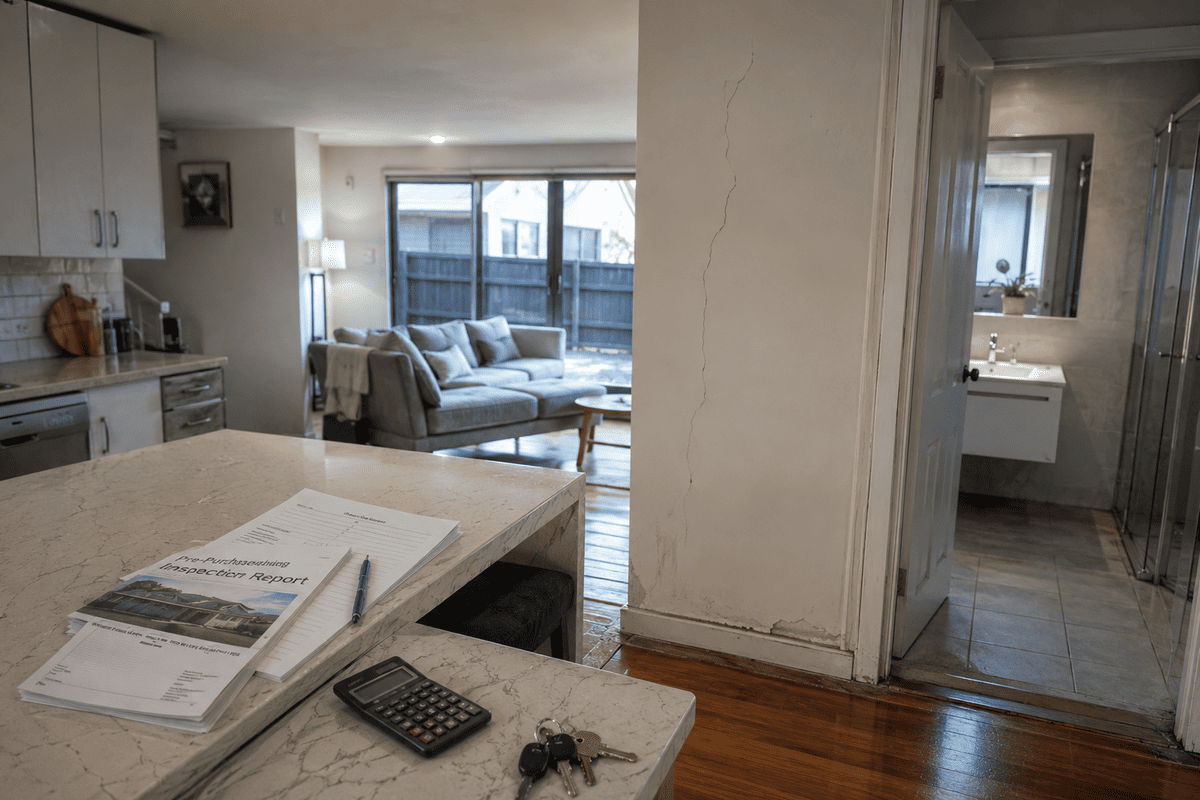
There’s a particular kind of property that makes first-home buyers exhale the second they walk through the door.
Fresh paint. Styled furniture. Clean kitchen. Soft lighting. Maybe even one of those suspiciously perfect bowls of lemons sitting on the bench like the house was prepared by a lifestyle influencer with unresolved control issues.
And to be fair, presentation matters. A well-maintained home can absolutely be a good sign.
But one of the biggest mistakes first-home buyers make is assuming that a property that looks good must also be good.
In reality, presentation can sometimes distract buyers from asking harder questions about condition, workmanship, moisture, movement, maintenance history, or hidden defects. That doesn’t mean every polished home is hiding disaster behind the walls. It simply means appearances should never replace proper due diligence.
At a Glance
- Beautiful presentation does not guarantee good building condition
- Cosmetic updates can sometimes hide older problems
- First-home buyers are more vulnerable to presentation bias under emotional pressure
- Renovated homes deserve careful inspection, especially when upgrades look recent
- Small warning signs are easier to miss when buyers feel emotionally attached
- Independent inspections help separate appearance from actual condition
Want the deeper version? Keep reading before the scented candles convince you to ignore the uneven floorboards.
Why First-Home Buyers Are More Vulnerable to “Presentation Bias”
Experienced buyers tend to walk through homes asking practical questions.
First-home buyers often walk through imagining where the couch will go.
That’s normal. Buying your first home is emotional. It’s exciting, stressful, expensive, and usually happening alongside pressure from agents, auction timelines, loan approvals, family opinions, and your bank account quietly hyperventilating in the background.
Because of that, buyers can unconsciously give too much weight to:
- fresh finishes
- modern styling
- renovated bathrooms
- new flooring
- trendy kitchens
- clean landscaping
- polished staging
Psychologists call this the “halo effect”, where one positive impression influences broader judgement. Even Consumer Affairs Victoria’s property guidance encourages buyers to conduct proper checks before committing to a purchase.
A beautifully presented home may still have:
- drainage issues
- movement or cracking
- poor ventilation
- concealed moisture
- rushed workmanship
- incomplete repairs
- termite history
- ageing structural elements underneath cosmetic upgrades
The goal is not to become paranoid. The goal is to stay balanced.
Renovated Homes Often Need More Careful Thinking, Not Less
This is where many buyers get caught out.
A freshly renovated property can feel “safe” because everything looks new. But newer finishes don’t automatically tell you:
- what was happening before the renovation
- how well the work was done
- whether shortcuts were taken
- what older components remain underneath
For example:
- A bathroom may look modern but still have waterproofing concerns
- Fresh paint can temporarily hide moisture staining
- New flooring can disguise uneven surfaces
- Cosmetic patching can make cracking less obvious during inspections
This doesn’t mean renovated homes are risky by default. Many are done properly.
But first-home buyers should understand that cosmetic presentation and building condition are not the same thing.
That distinction matters.
A Simple Comparison: Presentation vs Property Condition
| What Buyers Notice First | What May Need Closer Attention |
| Fresh paint | Moisture or cracking underneath |
| Modern kitchen | Plumbing quality or ventilation |
| New flooring | Uneven subfloors |
| Styled interiors | Roof or drainage issues |
| Fresh landscaping | Drainage grading around the home |
| New bathroom | Waterproofing workmanship |
| Clean smell | Lack of ventilation masking moisture |
Human brains love shortcuts. Unfortunately, houses also contain roofs, plumbing, drainage systems, and decades of maintenance history that do not care about your emotional attachment to the breakfast bar.
Small Signs Buyers Commonly Miss
When buyers feel emotionally invested, they often stop noticing subtle warning signs.
Some examples include:
- doors that stick slightly
- hairline cracking around windows
- uneven flooring under rugs
- strong air fresheners or recently opened windows
- patched ceilings
- bubbling paint
- poor drainage near external walls
- freshly painted sections that don’t match surrounding finishes
None of these automatically mean major defects exist.
But they are clues worth slowing down for.
This is especially important for first-home buyers who may not yet know what’s normal wear and tear versus what deserves further investigation.
Why Independent Inspections Still Matter on “Good” Homes
One common misconception is:
“If the home looks well cared for, an inspection probably isn’t necessary.”
That mindset can create problems later.
Independent inspections help buyers separate:
- cosmetic presentation
- maintenance quality
- structural concerns
- moisture risks
- workmanship issues
- timber pest concerns
- safety observations
For renovated or recently completed homes, buyers may also consider whether a specialist assessment is appropriate depending on the situation. In some cases, a pre-purchase building inspection may help identify workmanship or finishing concerns before settlement stages are finalised.
Where broader risk assessment is needed, especially in homes with timber elements or concealed areas, a combined building and timber pest inspection can help buyers understand the bigger picture before committing.
The key point is simple:
An inspection is not about expecting disaster. It’s about reducing uncertainty.
Practical Example: When Presentation Distracts Buyers
Imagine two properties.
Property A
- older presentation
- dated kitchen
- visible wear and tear
- no styling
Property B
- freshly renovated
- beautifully staged
- polished finishes
- modern lighting
Many first-home buyers instinctively feel safer with Property B.
But in practice:
- Property A may simply need cosmetic updating
- Property B may have rushed renovation work covering older problems
Without proper assessment, buyers are mostly reacting emotionally rather than objectively.
And that’s understandable. Humans evolved to survive predators, not interpret waterproofing quality in renovated Melbourne bathrooms. Evolution left a few gaps in the system.
What First-Home Buyers Should Actually Focus On
Instead of asking:
“Does this home feel impressive?”
Try asking:
- Does the condition match the presentation?
- Is the workmanship consistent?
- Are there signs of rushed cosmetic fixes?
- What maintenance might be coming soon?
- Are there hidden costs after settlement?
- Have independent checks been done?
That mindset shift alone can help buyers make calmer decisions.
A Smarter Approach During Inspections
When attending open homes or inspections:
- slow down
- look past furniture and styling
- revisit rooms twice
- check natural light and ventilation
- inspect ceilings, skirting, corners, and external drainage areas
- take photos for later review
- avoid making emotional decisions on the spot
If you’re uncertain, it’s often better to gather more information rather than rush because another buyer seems interested.
Pressure is common in property markets. Regret is also common. One of those costs significantly more.
Final Thoughts
A beautifully presented home can absolutely be a great purchase.
But first-home buyers should remember that styling, renovations, and presentation are only part of the picture. The real goal is understanding the property beyond the surface level.
Careful due diligence, practical thinking, and independent inspections help buyers make more confident decisions without relying purely on emotion or appearance.
If you’re preparing to buy and want independent clarity before committing, the team at NextGen Inspections can help you better understand potential risks before settlement. If timing is tight or you’re ready to move forward, you can also book an inspection to support a more informed purchase decision.