
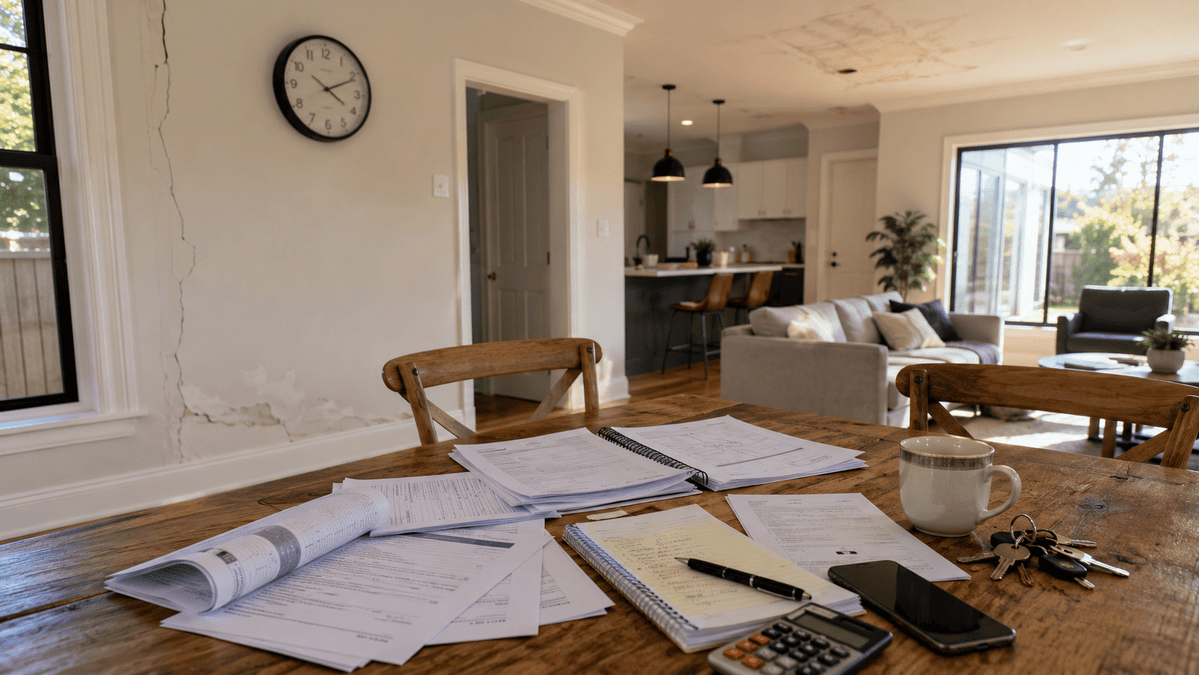
Auction week has a way of turning otherwise sensible people into sleep-deprived detectives carrying a tape measure and pretending they understand drainage. Human civilisation peaked somewhere before “quickly inspecting subfloors between work meetings.”
If you’re buying at auction in Victoria, time pressure is real. There’s usually no cooling-off period after the hammer falls, which means many buyers are forced to make decisions fast. That doesn’t mean you need to investigate every possible issue in the property. It does mean you need to focus on the checks most likely to protect you from nasty surprises later.
This article focuses specifically on practical auction-week property checks, not the entire due diligence process from start to finish.
At a Glance
- Auction buyers often have limited time to investigate a property properly
- Visible cosmetic upgrades can sometimes hide larger maintenance issues
- Key areas to assess include moisture, movement, roofing, drainage, ventilation, and renovation quality
- Missing permits or incomplete paperwork can become expensive later
- Short-notice inspections can still provide valuable clarity before auction day
- Buyers should prioritise the checks most likely to affect safety, repair costs, or future negotiation power
Want the practical version without the fluff? Keep reading.
What Matters Most During Auction Week?
During auction week, buyers usually don’t have the luxury of “perfect” due diligence.
Instead, the goal is to identify major risks early enough to make a smarter decision before bidding.
The most important checks are usually the ones that can:
- lead to expensive repairs
- affect structural integrity
- point to hidden moisture problems
- reveal poor renovation work
- create insurance or compliance headaches later
That does not mean every crack is catastrophic or every older home is a disaster waiting to happen. It means knowing which signs deserve closer attention before emotions and auction adrenaline take over.
Start With the Areas Buyers Often Ignore
Many buyers spend inspection time admiring kitchens and natural light while completely missing the things that actually cost money.
A property can look beautifully presented while still having:
- drainage problems
- subfloor moisture
- roof leaks
- poor ventilation
- incomplete renovation work
- termite activity
- movement-related cracking
According to Consumer Affairs Victoria, buyers should organise appropriate checks before auction because contracts become unconditional once the property is sold.
That timing pressure is exactly why prioritisation matters.
The Highest-Priority Checks During Auction Week
1. Moisture and Water Damage
Moisture-related issues are one of the biggest things buyers underestimate.
Signs worth paying attention to include:
- bubbling paint
- swollen skirting boards
- mould smells
- staining near ceilings
- damp garage walls
- warped flooring
- poor bathroom ventilation
A freshly painted wall can sometimes hide previous water damage. Not always. But enough times that experienced buyers stop trusting “freshly renovated” at face value.
2. Cracks and Movement
Not every crack means structural failure.
Hairline plaster cracks are common in many homes, especially older properties. But wider cracks, diagonal movement, sticking doors, sloping floors, or uneven frames can suggest movement that deserves closer assessment.
Auction buyers often panic when they see any crack at all. Others ignore serious signs completely because the staging furniture looked expensive.
Both approaches are flawed. Impressive work, humanity.
3. Roofing and Drainage
Roofing issues are difficult and expensive to fix after settlement.
During auction week, buyers should look for:
- sagging gutters
- rusted flashing
- signs of overflow
- patched ceiling areas
- poor stormwater flow
- pooling water around the property
Even a quick external assessment can sometimes reveal maintenance patterns that suggest broader neglect.
A Simple Auction Week Priority Table
| Check Area | Why It Matters | Common Warning Signs |
| Moisture | Hidden damage and mould risk | Damp smells, stains, bubbling paint |
| Structural movement | Potential repair costs | Large cracks, sticking doors |
| Roof and drainage | Expensive future repairs | Overflow marks, rust, pooling water |
| Renovation quality | Compliance and workmanship concerns | Uneven finishes, rushed cosmetic fixes |
| Timber pest risk | Damage hidden from view | Soft timber, moisture, hollow sounds |
| Ventilation | Long-term moisture build-up | Condensation, mould, stale smells |
Don’t Ignore Renovation Shortcuts
Auction campaigns love the phrase “beautifully renovated.”
Sometimes that’s true.
Sometimes it means someone installed matte-black tapware and hoped nobody looked underneath the bathroom vanity.
If the property has recent renovations, buyers should pay closer attention to:
- uneven tiling
- poor silicone work
- gaps around fittings
- signs of rushed painting
- mismatched flooring transitions
- poor drainage in wet areas
Where relevant, it may also help to ask about permits or compliance documentation for larger renovation works.
This does not mean assuming the work is defective. It means understanding that cosmetic presentation and workmanship quality are not always the same thing.
Short Timelines Still Allow Useful Checks
One of the biggest mistakes auction buyers make is assuming there’s “no point” organising professional help because time is tight.
In reality, even a short-notice assessment can help identify major concerns before auction day.
A professional pre-purchase building inspection can help buyers understand:
- whether visible defects appear isolated or more widespread
- which issues are urgent
- where further specialist advice may be worth seeking
- whether maintenance concerns look manageable or potentially costly
That clarity matters when buyers are trying to decide how confident they feel bidding.
Documents Matter Too
This article is not about broad legal due diligence, but auction buyers should still pay attention to missing or unclear documentation connected to renovations or additions.
Examples may include:
- owner-builder works
- extensions
- waterproofing documentation
- plumbing or electrical certificates
- permits for structural changes
If something feels unclear, buyers should speak with their conveyancer or appropriate professional before auction day.
The key point is simple: auction week is not the ideal time for assumptions.
A Practical Example
Imagine two buyers inspecting the same renovated weatherboard home.
Buyer A focuses mainly on styling, room size, and staging.
Buyer B notices:
- a musty smell near the rear wall
- new paint patches near the ceiling
- poor drainage near the subfloor vents
- uneven movement around an extension doorway
Even if the property still suits Buyer B, they now have a clearer understanding of possible maintenance or investigation needs before bidding.
That’s the difference practical checks can make.
What Buyers Should Prioritise If Time Is Running Out
If auction week is already underway and time is limited, focus on:
- moisture and drainage concerns
- movement or cracking patterns
- roofing and external maintenance
- renovation quality
- pest-risk indicators
- missing or unclear documentation
You do not need to become a building expert overnight.
You do need enough clarity to avoid blindly committing to a property that could create serious stress or repair costs later.
The Goal Isn’t Perfection
No property is perfect.
Even newer homes can have defects, maintenance needs, or workmanship concerns. The goal during auction week is not to eliminate every risk. It’s to reduce uncertainty enough to make a better-informed decision.
For buyers under time pressure, practical checks and independent advice can make a significant difference before auction day arrives.
If you’re preparing to bid and want clearer insight into a property’s condition, the team at NextGen Inspections can help you organise the right inspection for your situation. If timing is tight, you can also book an inspection early to avoid last-minute scrambling the night before auction day. Because nothing improves decision-making quite like not panic-Googling “major structural crack?” at 1:14am.