
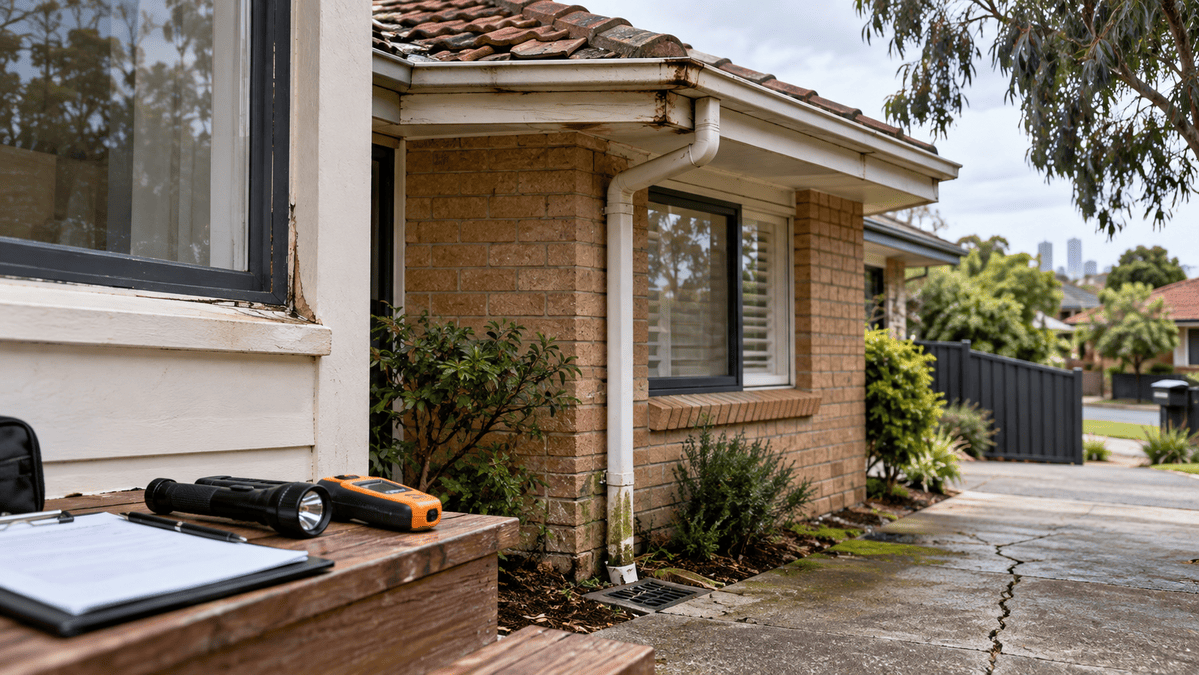
Buying your first home is exciting, but it can also stretch your finances to their limit. Many first-home buyers focus heavily on saving for the deposit, securing finance, and covering settlement costs. Once the purchase is complete, there may be very little left for unexpected repairs.
If you’re buying at the top of your budget, repair risk deserves just as much attention as the purchase price itself. A property that appears to fit your budget today may become far more expensive if significant defects are discovered after settlement.
The good news is that understanding repair risk before you commit can help you make a more informed decision without turning the buying process into a guessing game.
At a Glance
- Buying at your financial limit leaves less room for unexpected repairs.
- Even well-presented homes can have hidden maintenance issues.
- A professional inspection helps identify visible defects before purchase.
- Repair risk is about protecting your future budget, not finding a “perfect” home.
- Understanding likely maintenance needs can help you buy with greater confidence.
If your budget has very little flexibility, knowing a property’s condition becomes even more valuable.
Why Repair Risk Becomes More Important When Money Is Tight
Every property will need maintenance eventually. The question is not whether repairs will happen, but when and how significant they may be.
For buyers with comfortable financial reserves, unexpected maintenance can often be managed without major disruption. However, buyers who have committed most of their available funds to the purchase may have fewer options if problems appear soon after moving in.
That is why repair risk becomes increasingly important as your financial margin becomes smaller.
This article is not about mortgage advice or borrowing capacity. Instead, it focuses on understanding how a property’s condition may affect your budget after settlement.
Looking Beyond the Purchase Price
Two homes may have identical sale prices, but they may present very different ownership costs.
For example:
| Property | Initial Purchase Price | Potential Immediate Repairs |
| Home A | Within budget | Minor cosmetic maintenance only |
| Home B | Same purchase price | Roof repairs, drainage concerns and deteriorating timber requiring attention |
Although both homes cost the same to purchase, one may require considerably more spending during the first year of ownership.
This is why many buyers choose to organise a professional pre-purchase building inspection before making their final decision.
Small Defects Can Add Up
Not every defect is a major structural issue.
Often, buyers encounter multiple smaller maintenance items such as:
- Leaking taps
- Damaged gutters
- Cracked roof tiles
- Poor drainage
- Worn sealants
- Minor timber deterioration
- Moisture around wet areas
Individually these may not seem significant, but together they can place unexpected pressure on a tight household budget.
Understanding these issues beforehand allows buyers to prepare rather than being surprised after settlement.
Presentation Doesn’t Always Reflect Condition
Fresh paint, modern flooring and stylish kitchens often create an excellent first impression.
However, cosmetic improvements do not necessarily indicate the underlying condition of the property.
A beautifully renovated home may still have:
- ageing roofing
- poor subfloor ventilation
- moisture issues
- inadequate drainage
- previous repairs that require further investigation
According to the Consumer Affairs Victoria guide for home buyers, carrying out appropriate due diligence before purchasing helps buyers better understand the condition of a property and make informed decisions.
Why a Repair Buffer Matters
A repair buffer simply means allowing some financial breathing room after purchasing a property.
It is not about expecting disaster.
Instead, it recognises that:
- homes naturally age
- maintenance is inevitable
- some issues only become apparent over time
If every available dollar goes into the purchase itself, even relatively modest repairs may become stressful.
Planning for maintenance is simply part of responsible home ownership.
Practical Example
Imagine two first-home buyers purchasing similar homes.
Buyer One
- Keeps some savings available after settlement.
- Receives an inspection report identifying several maintenance items.
- Plans repairs over the next 12 months.
The repairs are inconvenient but manageable.
Buyer Two
- Uses every available dollar to complete the purchase.
- Declines an inspection to reduce upfront costs.
- Discovers water ingress several weeks after moving in.
The repair itself may not have been avoidable, but knowing about the issue earlier may have influenced the buying decision or prompted further investigation.
Questions Worth Asking Yourself
Before committing to a property, consider:
- If an unexpected repair appeared next month, could I comfortably manage it?
- Am I relying solely on the property’s appearance?
- Have I properly understood the visible condition of the home?
- Have I considered future maintenance alongside today’s purchase price?
- Would more information help me feel confident about my decision?
These questions encourage practical thinking rather than unnecessary worry.
A Professional Inspection Supports Better Decisions
A building inspection cannot predict every future issue, nor does it guarantee a maintenance-free property.
However, it can identify many visible defects and maintenance concerns that buyers may otherwise overlook.
This information allows buyers to:
- better understand the property’s condition
- prioritise future maintenance
- seek further specialist advice where appropriate
- make purchasing decisions with greater confidence
If you’re unsure which inspection best suits your situation, the information on the NextGen Inspections homepage provides an overview of available services without replacing personalised advice.
Repair Risk Is About Confidence, Not Fear
It’s easy to assume every defect is a reason to walk away.
In reality, many homes have maintenance items that are entirely manageable.
The goal is not to find a perfect property.
The goal is to understand what you’re buying.
Knowing about potential issues before committing allows buyers to make balanced decisions based on facts rather than assumptions.
For first-home buyers already stretching their budget, that knowledge can be particularly valuable.
A Simple Buyer Checklist
Before purchasing at the top of your budget, consider whether you have:
✔ Allowed some financial room for future maintenance
✔ Looked beyond cosmetic presentation
✔ Understood any visible defects
✔ Considered whether further specialist advice may be appropriate
✔ Reviewed the property’s condition before making a final commitment
Even a short checklist like this can help reduce uncertainty during an already stressful buying process.
Make Your Decision With Greater Confidence
Buying your first home is a significant milestone, and careful preparation can make the experience much less stressful.
If you’re purchasing close to your financial limit, understanding the property’s condition before settlement may be just as important as negotiating the purchase price itself.
A professional inspection report provides valuable information that helps you make clearer, more informed decisions based on the property’s visible condition. If you’re ready to move forward, you can book an inspection or contact the team at NextGen Inspections to discuss your purchase timeline and determine the most suitable inspection for your situation.