
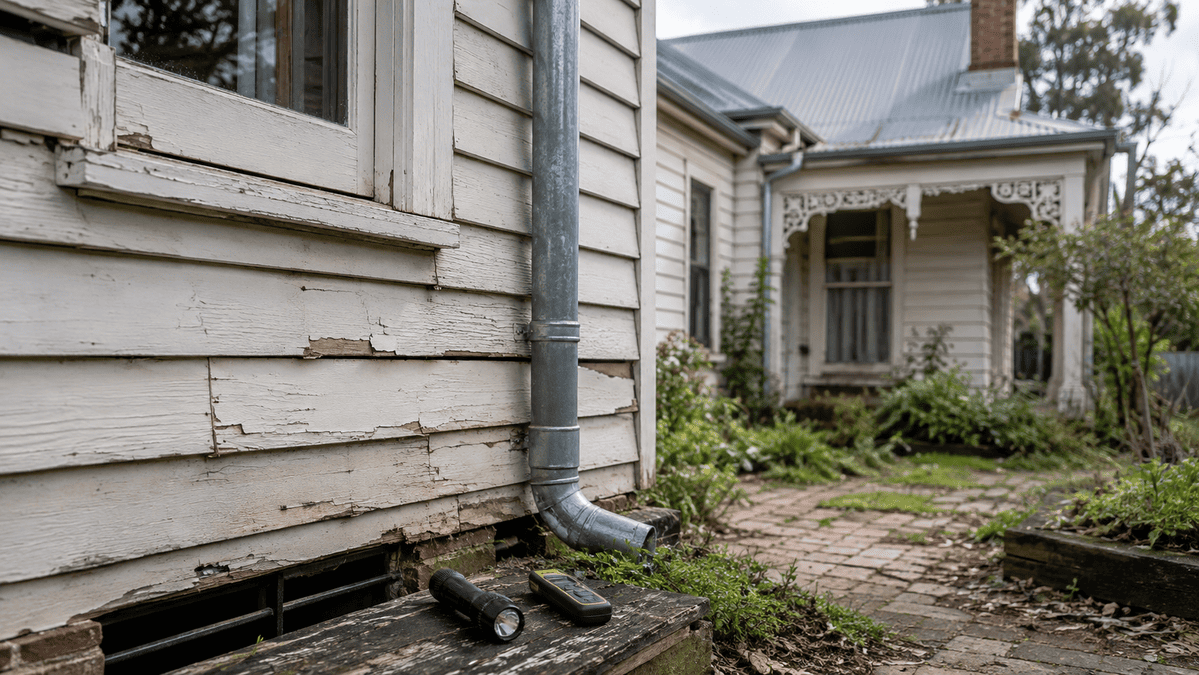
Weatherboard homes have long been part of Australia’s architectural character. From charming period cottages to renovated family homes, they offer warmth, character, and street appeal that many buyers love. However, behind a freshly painted exterior, there can sometimes be maintenance issues or hidden defects that aren’t immediately obvious during an open inspection.
If you’re considering purchasing a weatherboard home, it’s worth understanding the types of risks that are more common with this style of construction. That doesn’t mean every weatherboard property is problematic. Many have been exceptionally well maintained for decades. The key is knowing what deserves a closer look before you commit.
This guide focuses specifically on weatherboard-related risks, helping buyers understand what to watch for without replacing the detailed assessment provided by a professional inspection.
At a Glance
- Weatherboard homes can perform exceptionally well when properly maintained.
- Moisture is one of the biggest long-term risks for timber cladding.
- Paint condition often tells an important maintenance story.
- Ventilation problems can contribute to timber decay.
- Older weatherboard homes may have experienced multiple renovations over time.
- Professional building and timber pest inspections can help identify issues that aren’t obvious during inspections.
Short answer: Weatherboard homes are not inherently risky, but they do require careful attention to moisture management, timber condition, maintenance history, and potential pest activity.
Why Weatherboard Homes Need a Different Mindset
Unlike brick veneer construction, weatherboard homes rely on timber cladding to protect the building from Australia’s changing weather conditions.
Timber naturally expands and contracts with seasonal temperature and moisture changes. When maintained correctly, this flexibility is actually one of its strengths. However, deferred maintenance can allow small issues to gradually become larger ones.
For buyers, this means looking beyond cosmetic presentation and considering how well the property has been cared for over time.
Moisture Is Often the Biggest Long-Term Enemy
Water is one of the most common contributors to problems in weatherboard homes.
Moisture doesn’t always enter through dramatic roof leaks. It can develop gradually through:
- ageing paint
- failed sealants
- damaged flashings
- overflowing gutters
- poor drainage
- inadequate ventilation
Over time, excessive moisture can contribute to timber deterioration, mould growth, and structural concerns if left untreated.
According to the Victorian Building Authority, regular maintenance of external building elements plays an important role in protecting homes from moisture-related deterioration. Their homeowner guidance encourages routine inspection and timely repairs to reduce long-term damage.
For buyers, signs of moisture deserve investigation rather than assumptions.
Paint Does More Than Improve Appearance
Fresh paint certainly improves street appeal, but on weatherboard homes it also provides an important protective barrier.
Peeling, blistering or cracked paint may indicate:
- prolonged weather exposure
- trapped moisture
- overdue maintenance
- previous repairs
Conversely, freshly painted weatherboards aren’t automatically a sign that everything is perfect.
Sometimes new paint simply reflects good maintenance.
Other times it can temporarily hide underlying problems.
This is why buyers should avoid making conclusions based solely on appearance.
Timber Movement Isn’t Always a Serious Problem
Timber naturally moves.
Small seasonal movement is completely normal and doesn’t necessarily indicate structural failure.
You may notice:
- minor gaps between boards
- slight movement around windows
- small changes as temperatures fluctuate
However, significant movement, distortion or uneven settlement deserves further investigation because the underlying cause can vary considerably.
Understanding whether movement is cosmetic or more significant requires experience and inspection rather than guesswork.
Weatherboard Homes Often Have a Long Renovation History
Many Victorian weatherboard homes have been renovated multiple times over several decades.
This can be both a benefit and a challenge.
Renovations may have included:
- extensions
- updated kitchens
- bathroom upgrades
- replacement windows
- new roofing
- verandah alterations
Each renovation may have been completed under different building standards and by different contractors.
Rather than assuming every upgrade has been completed consistently, buyers should consider whether documentation and workmanship appear appropriate for the property’s history.
Ventilation Matters More Than Many Buyers Realise
Good airflow helps timber remain dry.
Poor ventilation can contribute to elevated moisture levels beneath floors or within roof spaces.
Areas that deserve attention include:
| Area | Why It Matters |
| Subfloor | Excess moisture may contribute to timber deterioration |
| Roof cavity | Poor ventilation may trap heat and moisture |
| Bathrooms | Steam requires adequate extraction |
| Laundry | High humidity can affect surrounding timber |
Ventilation problems often develop gradually rather than suddenly.
Because of this, they can easily go unnoticed during casual property inspections.
Timber Pests Are Worth Considering
One of the reasons weatherboard homes receive additional attention is their greater reliance on timber components.
This doesn’t mean every weatherboard property has termites or timber pests.
It simply means buyers should remain aware of potential risks.
Visible warning signs can sometimes include:
- damaged timber
- hollow sounding wood
- mud shelter tubes
- excessive moisture around timber elements
However, many forms of pest activity are not visible during a standard property viewing.
Where appropriate, arranging a professional Combined Building & Pest Inspection or a dedicated Timber Pest Inspection can provide greater confidence before contracts become unconditional.
Simple Practical Example
Imagine two weatherboard homes built in the same year.
Property A has:
- well-maintained paint
- clean gutters
- good drainage
- documented renovations
- consistent maintenance
Property B has:
- cracked paint
- poor site drainage
- signs of prolonged moisture
- little maintenance history
Although both homes appear similar online, their long-term maintenance requirements could be very different.
This illustrates why buyers benefit from assessing the property’s condition rather than relying on age alone.
A Quick Buyer Checklist
Before purchasing a weatherboard home, consider asking yourself:
✔ Does the exterior appear well maintained?
✔ Are there obvious signs of moisture damage?
✔ Have gutters and downpipes been maintained?
✔ Is drainage directing water away from the home?
✔ Do renovations appear professionally completed?
✔ Is there evidence of adequate ventilation?
✔ Has the property been professionally inspected before purchase?
You don’t need every answer during the first inspection, but these questions can help guide your due diligence.
When Professional Advice May Be Helpful
Every property is different.
Some weatherboard homes have stood in excellent condition for over a century through regular maintenance and thoughtful upgrades.
Others may require further investigation before a buyer feels comfortable proceeding.
If there are visible concerns about moisture, timber condition, structural movement or previous alterations, obtaining independent professional advice can help clarify the property’s condition before making a significant financial commitment.
You can also find practical guidance on home buying and due diligence through the Consumer Affairs Victoria property buying information, which outlines important steps buyers should consider during the purchasing process.
Frequently Asked Questions
Are weatherboard homes more expensive to maintain?
Not necessarily. Regular maintenance is important, but many owners find that routine painting and timely repairs help prevent larger expenses later.
Should I avoid buying an older weatherboard home?
Age alone shouldn’t determine your decision. Many older weatherboard homes have been exceptionally well maintained and remain excellent family homes.
Are timber pests guaranteed in weatherboard homes?
No. Weatherboard construction does not automatically mean pest activity is present. However, timber components make appropriate inspections an important part of due diligence.
Is fresh paint always a good sign?
Fresh paint may indicate good maintenance, but it can also make it harder to assess the condition of underlying timber. It’s best considered alongside the overall condition of the property.
Final Thoughts
Weatherboard homes remain one of Australia’s most loved housing styles for good reason. They offer character, flexibility and timeless appeal.
Understanding their unique maintenance needs simply helps buyers make more informed decisions.
If you’re considering purchasing a weatherboard property in Victoria and would like greater confidence before committing, the team at NextGen Inspections can provide independent advice through professional inspections tailored to your situation. If you’re working within contract deadlines, you can also book an inspection early to help reduce uncertainty before moving forward with your purchase.