
Walking into an open home should help you imagine living there, not leave you wondering where that musty smell is coming from. While a damp odour doesn’t automatically mean a property has major problems, it is one of those warning signs that deserves closer attention before you commit to a purchase.
If you’ve noticed a damp smell during an inspection, you’re probably asking: What could it mean, and should I be concerned? In many cases, the smell may point to excess moisture somewhere in the property, but the underlying cause can vary significantly. Understanding the possibilities helps you make informed decisions without jumping to conclusions.
This article focuses specifically on damp smells as one warning sign, rather than explaining every type of moisture issue or the full inspection process.
At a Glance
- A damp smell often indicates excess moisture somewhere in the property.
- The source may be minor, or it could point to hidden building defects.
- Older homes can be more susceptible due to ageing materials or previous water intrusion.
- Never rely solely on appearance or fresh paint to judge a property’s condition.
- A professional inspection can help identify visible signs that deserve further investigation before purchase.
Keep reading to understand what that musty smell might be telling you.
Why Does a House Develop a Damp Smell?
A damp smell usually develops when moisture remains trapped for an extended period. Materials such as timber, plasterboard, carpets and insulation can absorb moisture, creating conditions where odours develop.
Importantly, the smell itself is not the defect. Instead, it is often a symptom that something else may be happening within the building.
Potential causes include:
- Previous roof leaks
- Plumbing leaks
- Poor ventilation
- Water entering through external walls
- Subfloor moisture
- Condensation in enclosed areas
- Past flooding or storm damage
- Long-term humidity issues
The exact cause cannot be determined simply by noticing an odour during an open inspection.
What Buyers Should Look For
A damp smell becomes more significant if it’s accompanied by other visible warning signs.
While walking through the property, keep an eye out for:
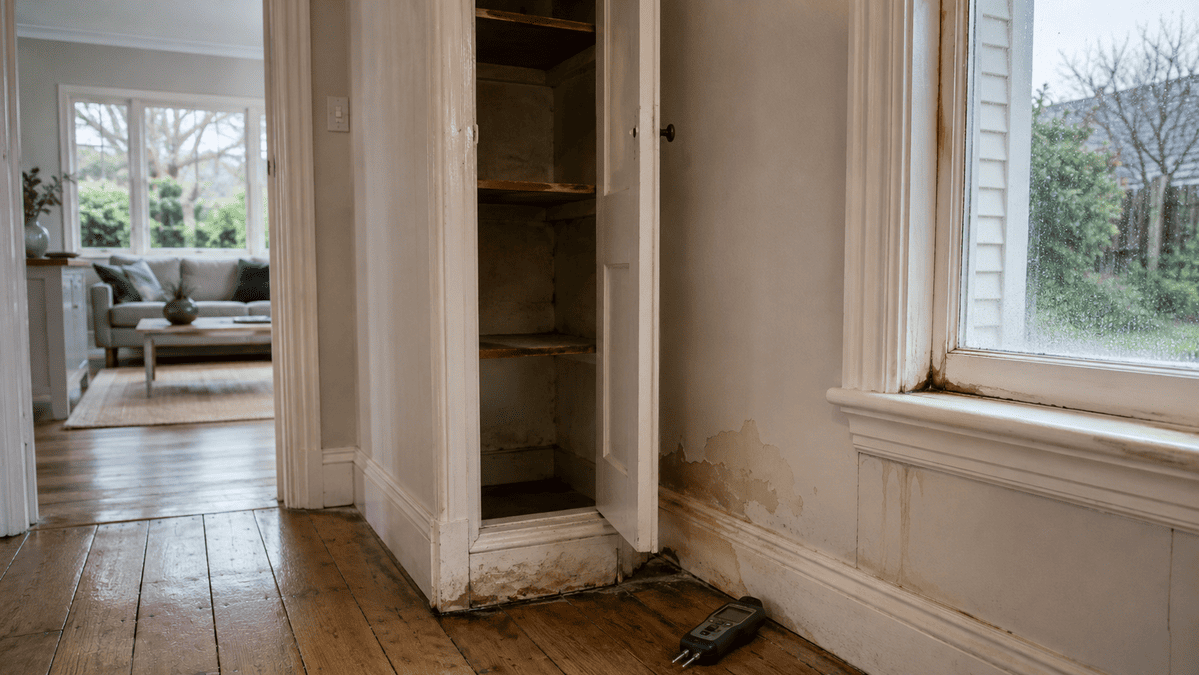
- Water stains on ceilings or walls
- Bubbling or peeling paint
- Swollen skirting boards
- Warped timber flooring
- Soft areas underfoot
- Discoloured plaster
- Condensation on windows
- Musty cupboards or wardrobes
One isolated sign may not indicate a serious issue. However, several signs appearing together deserve closer attention.
Why Older Homes Can Be More Vulnerable
Older properties often have character that buyers love, but age also increases the likelihood of maintenance issues.
Over decades, homes experience:
- Multiple renovations
- Ageing plumbing
- Roof wear
- Settling foundations
- Changes to drainage
- Older waterproofing systems
A damp smell doesn’t necessarily mean an older home should be avoided. Many older houses remain excellent purchases after appropriate maintenance. The key is understanding the property’s condition before making a commitment.
Don’t Be Fooled by Fresh Presentation
Presentation can sometimes hide clues.
Fresh paint, new flooring and scented candles may improve first impressions, but they don’t necessarily reveal what’s happening behind walls or beneath flooring.
Likewise, a pleasant-looking bathroom doesn’t automatically mean waterproofing has performed well over many years.
This isn’t a reason to become suspicious of every renovated home. It’s simply a reminder that visual presentation and building condition are not always the same thing.
What Should Buyers Do Next?
If you notice a damp smell, avoid making assumptions.
Instead:
- Mention the smell to the selling agent.
- Ask whether there has been any previous water damage or repairs.
- Review available documentation if relevant.
- Consider arranging an independent pre-purchase building inspection before signing contracts.
Professional inspectors assess visible building conditions and identify observations that may require further investigation where appropriate.
Could It Also Be Related to Timber Pests?
Moisture and timber pests are different issues, but they can sometimes be connected.
Persistent moisture may create conditions that are more attractive to termites or contribute to timber decay over time.
That doesn’t mean every damp-smelling home has termite activity.
However, depending on the property’s age, location and overall condition, buyers may choose to arrange a combined building and timber pest inspection for broader peace of mind.
A Practical Example
Imagine you’re inspecting a 1960s weatherboard home.
The living room appears freshly painted and well presented. Everything seems fine until you open a hallway cupboard and notice a persistent musty smell.
Later, you also spot slight staining near a window frame.
Neither observation proves a major defect exists. Together, however, they suggest the property deserves closer examination before proceeding with the purchase.
Taking time to investigate now could provide valuable information before settlement.
Why Independent Due Diligence Matters
Buying property often involves significant financial decisions, so it’s worth gathering as much reliable information as possible.
The Victorian Government encourages buyers to complete appropriate due diligence before purchasing residential property. Resources such as the Consumer Affairs Victoria property buying guide outline the importance of researching a property’s condition and understanding your responsibilities as a buyer.
Independent inspections form one part of that broader due diligence process.
When Further Advice May Be Needed
Sometimes an inspection identifies visible conditions that warrant further investigation by an appropriate specialist.
Examples might include:
- Suspected plumbing leaks
- Structural movement
- Waterproofing concerns
- Drainage issues
Where necessary, buyers should obtain advice from suitably qualified professionals before making major decisions.
Frequently Asked Questions
Is a damp smell always a serious problem?
No. A damp smell can result from relatively minor causes, but it can also indicate more significant moisture-related issues. It should always be investigated rather than ignored.
Can I identify the source myself?
You may notice visible clues, but the exact cause isn’t always obvious during an open inspection.
Should I avoid buying a house with a damp smell?
Not necessarily. Many properties with previous moisture issues can still represent good purchases, provided buyers understand the property’s condition and any potential repair requirements.
Does fresh paint mean the issue has been fixed?
Fresh paint alone doesn’t confirm whether any underlying moisture issue has been resolved. It’s simply one piece of the overall picture.
Final Thoughts
A damp smell at an open home doesn’t automatically mean you should walk away, but it shouldn’t be dismissed either.
Treat it as one useful clue rather than a final diagnosis. Asking questions, reviewing available information and arranging appropriate inspections can help you make a more confident purchasing decision.
If you’re buying property in Victoria and want greater confidence before committing, the team at NextGen Inspections can help you understand a property’s visible condition. If you’re ready to organise an inspection, you can conveniently book online or discuss your situation with the team before moving forward.