
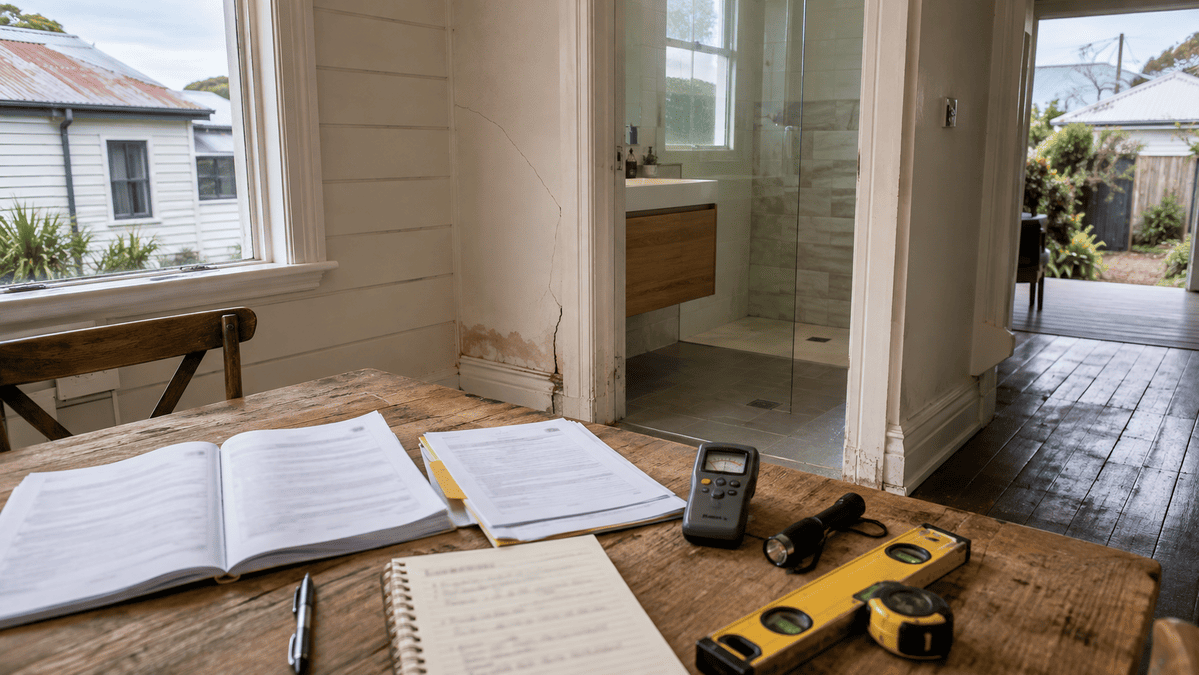
Buying a property involves more than reviewing a contract and organising finance. While conveyancers play an essential role in helping buyers understand legal documents and the settlement process, they may also encourage buyers to clarify practical questions about the property’s physical condition before making a final commitment.
A legal review and a property inspection often complement each other. One focuses on documents and contractual matters, while the other helps identify visible building defects and maintenance concerns. Together, they provide a more complete picture of the property and can help buyers make informed decisions without unnecessary surprises.
This article explains how conveyancing and property inspection due diligence can work together, particularly for buyers purchasing property in Victoria. It is intended as general information only and should not be considered legal advice.
At a Glance
- Conveyancers review legal documents, but they generally do not assess the physical condition of a property.
- Buyers may need to clarify both documentation and visible property issues before proceeding.
- Building inspections can complement the conveyancing process by identifying defects that contracts may not reveal.
- Missing approvals, renovation records, or warranties can raise additional questions worth investigating.
- Coordinating both legal and property due diligence early can help reduce uncertainty before settlement.
Different Professionals Answer Different Questions
Purchasing property often involves several professionals, each with a specific role.
A conveyancer typically assists with matters such as reviewing contracts, explaining legal obligations, checking title information, and helping manage settlement. A building inspector, on the other hand, assesses the property’s visible condition and identifies defects that may require attention.
Neither role replaces the other.
For many buyers, understanding both the legal documentation and the property’s condition creates a stronger foundation for making an informed decision.
Questions About the Property’s Condition
During the purchase process, buyers sometimes discover that a property looks well presented but still has unanswered questions.
These may include:
- Are visible cracks cosmetic or signs of movement?
- Has water damage been repaired properly?
- Do uneven floors indicate a larger structural issue?
- Is the roof showing signs of ageing?
- Have renovations been completed to a reasonable standard?
These questions generally fall outside a conveyancer’s role, but they are often important for buyers to clarify before committing.
A professional pre-purchase building inspection can help provide independent information about many visible building issues before contracts become unconditional.
Documents That May Need Further Clarification
Property documents tell an important story, but they do not always answer every practical question.
Depending on the property, buyers may wish to clarify documentation relating to:
- Building permits
- Renovation approvals
- Waterproofing certificates
- Electrical or plumbing compliance certificates
- Owner-builder warranties where applicable
- Recent extensions or structural alterations
For Victorian buyers, the information available within a Section 32 Vendor Statement forms part of the due diligence process. The Victorian Government and Consumer Affairs Victoria provide guidance on what buyers should review before purchasing residential property through their Buying Property guidance. However, these documents do not replace an assessment of the property’s physical condition.
Practical Example
Imagine a buyer finds a beautifully renovated weatherboard home.
The conveyancer notices documentation relating to a recent extension and advises the buyer to ensure all relevant approvals are available.
Meanwhile, the building inspector identifies minor moisture staining around a bathroom and recommends further investigation if required.
Neither issue necessarily means the purchase should stop. Instead, together they provide valuable information that helps the buyer ask better questions before proceeding.
This coordinated approach often leads to greater confidence during the purchasing process.
Clarifying Renovations
Renovated homes often attract strong buyer interest, but renovations naturally raise additional questions.
Buyers may wish to understand:
- When was the work completed?
- Were appropriate permits required?
- Is supporting documentation available?
- Are warranties still applicable?
- Do visible finishes appear consistent with the age of the renovation?
While documentation helps explain what was approved, a property inspection may help identify whether any visible workmanship concerns deserve further attention.
Timing Matters
Many buyers leave inspections until the last possible moment.
Unfortunately, this can reduce the time available to review findings, discuss documents, or obtain further specialist advice if necessary.
Where practical, organising inspections early within the purchase timeline provides greater flexibility if additional clarification is needed.
This is particularly valuable during busy property markets where decision timeframes can become compressed.
Understanding the Limits of Documentation
A common misconception is that complete paperwork automatically means the property has no defects.
In reality, documents and physical inspections answer different questions.
For example:
- A permit confirms approval for certain work.
- An inspection considers the property’s visible condition at the time of inspection.
Both pieces of information contribute to a better-informed purchasing decision.
Working Together Creates Better Due Diligence
Rather than viewing conveyancing and building inspections as separate tasks, buyers often benefit from treating them as complementary parts of one due diligence process.
The conveyancer may help identify documentation that requires clarification.
The building inspector may identify visible defects or maintenance concerns.
Together, this information helps buyers better understand both the paperwork and the property itself before making a significant financial commitment.
Knowing When Further Advice May Be Appropriate
Sometimes additional specialist advice may be appropriate.
For example:
- Structural engineers for complex structural concerns.
- Licensed plumbers for plumbing defects.
- Electricians for electrical safety issues.
- Legal professionals for contract interpretation.
- Pest specialists where evidence of timber pest activity is identified.
Seeking the right advice at the right time helps buyers avoid making assumptions based on incomplete information.
Building Confidence Before You Commit
Buying property is one of life’s largest financial decisions. While no process can eliminate every risk, asking the right questions before signing contracts can significantly improve confidence.
Understanding the legal documentation and the property’s physical condition are both valuable parts of responsible due diligence.
If you’re buying a property in Victoria and want an independent assessment of its visible condition, the team at NextGen Inspections can help you understand what you’re purchasing before you commit. If your purchase timeline is already underway, you can also book an inspection or discuss your situation to determine the most appropriate next step.