
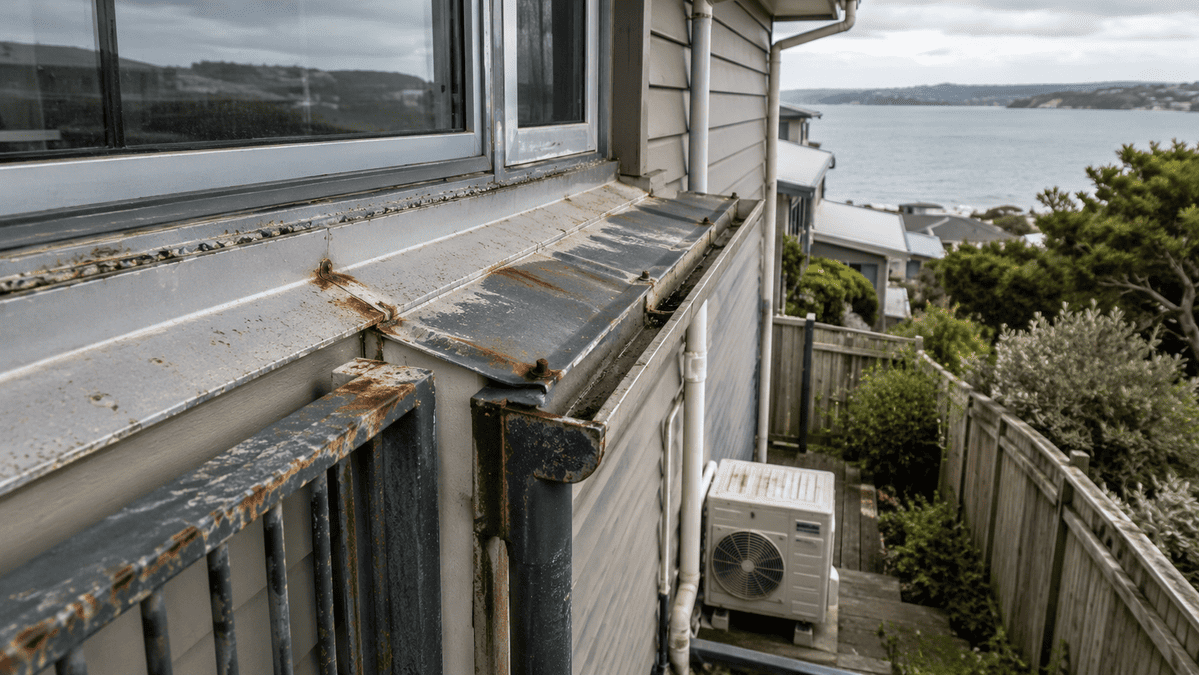
Buying a home near the coast has obvious appeal. Fresh sea air, beautiful views, and an enviable lifestyle make bayside properties highly desirable across Victoria. However, living close to the ocean also means homes are exposed to environmental conditions that inland properties may never experience.
If you’re considering purchasing a coastal property, understanding how salt exposure can affect a home’s condition is an important part of making an informed decision. Salt carried by sea breezes can gradually contribute to corrosion, deterioration of certain materials, and increased maintenance requirements. While this doesn’t mean bayside homes should be avoided, it does mean buyers should know what to look for before committing.
This article focuses on general housing patterns found in bayside environments, rather than any specific suburb, helping buyers better understand the unique considerations that often come with coastal living.
At a Glance
- Salt-laden air can accelerate corrosion of some building materials.
- Coastal homes often require more frequent maintenance than inland properties.
- Metal fixtures, roofing, fasteners, and external fittings deserve closer attention.
- Regular maintenance often prevents minor issues from becoming expensive repairs.
- A professional inspection can help identify visible signs of salt-related deterioration before purchase.
If you’re buying a bayside property, understanding these common patterns can help you make a more confident decision.
Why Salt Exposure Matters
Salt doesn’t usually cause immediate damage. Instead, it works gradually over many years.
Tiny salt particles carried by coastal winds settle on buildings every day. Combined with moisture, these deposits can increase the rate of corrosion on exposed metal components and place additional stress on certain building materials.
According to the Australian Government’s Your Home guidance on designing for coastal environments, buildings located close to the coastline require careful material selection and ongoing maintenance because marine environments are significantly more corrosive than inland locations.
For buyers, this simply means a beautiful coastal property may have different maintenance needs than an equivalent home located further inland.
Parts of a Home Commonly Affected
While every property is different, inspectors often pay closer attention to several external components in coastal environments.
Roofing Components
Metal roofing, flashings, gutters, and downpipes can experience accelerated corrosion when regularly exposed to salt-laden air, particularly if protective coatings have deteriorated over time.
Surface rust doesn’t always indicate a major issue, but widespread corrosion may require further assessment.
External Metal Fixtures
Items such as:
- handrails
- fences
- gates
- outdoor staircases
- pergola fixings
- balustrades
can all show signs of corrosion earlier than similar fixtures inland.
Visible rust isn’t always structural, but it can indicate that ongoing maintenance has been neglected.
Windows and Doors
Salt exposure may contribute to:
- corrosion around aluminium frames
- deterioration of hardware
- stiff locks
- sticking hinges
- worn weather seals
These issues are often maintenance related but are still worth noting during the buying process.
Outdoor Equipment
Air conditioning units, hot water systems, external electrical fittings, and pool equipment can all have shorter service lives in marine environments if not appropriately protected or maintained.
Coastal Homes Can Age Differently
Not every bayside property experiences the same level of exposure.
Factors that influence salt exposure include:
| Factor | Possible Effect |
| Distance from the coastline | Properties closer to the ocean generally receive more salt spray. |
| Prevailing wind direction | Some homes experience more frequent salt-laden winds. |
| Natural vegetation | Trees and landscaping can provide partial protection. |
| Building materials | Some materials perform better in marine environments than others. |
| Maintenance history | Well-maintained homes often age far better despite coastal conditions. |
Two homes only a few streets apart may display noticeably different levels of weathering depending on these factors.
Cosmetic Issues Versus Genuine Concerns
One common mistake buyers make is assuming every sign of rust indicates a major structural problem.
In reality, that’s not always the case.
Minor corrosion on external fixtures may simply reflect normal ageing and coastal exposure. On the other hand, corrosion affecting structural connections, roofing components, or important waterproofing elements deserves closer investigation.
The key is understanding the difference rather than making assumptions based solely on appearance.
Practical Example
Imagine two similar homes overlooking the bay.
Home A has been regularly maintained. Gutters are clean, metal fixtures have protective coatings, and external fittings have been replaced when needed.
Home B has received very little maintenance over the years. Rust is visible on balustrades, roof flashings show deterioration, and external fixtures have begun to corrode.
Although both homes enjoy the same location, their long-term maintenance costs could differ significantly.
A professional inspection helps buyers understand which issues are simply cosmetic and which may require further attention before settlement.
What Buyers Should Look For During an Inspection
While every property is unique, buyers should pay particular attention to areas that are regularly exposed to sea air.
A professional inspection may identify visible signs such as:
- Corrosion on roofing materials or flashings
- Rust on external fixings and brackets
- Deterioration of metal fences or balustrades
- Weathered sealants around windows and doors
- Damage to external paint or protective coatings
- Signs that moisture has accelerated material wear
It’s important to remember that an inspection focuses on the property’s observable condition at the time of inspection. Where necessary, inspectors may recommend further assessment by an appropriate specialist if significant corrosion or deterioration is identified.
If you’re purchasing a coastal property in Victoria, arranging a professional pre-purchase building inspection can provide valuable independent information before contracts become unconditional.
Simple Checklist for Buyers
Before purchasing a bayside home, consider the following:
| Check | Why It Matters |
| Inspect visible metal components | Corrosion often appears first on exposed fittings. |
| Ask about previous maintenance | Regular upkeep helps extend the life of coastal homes. |
| Look for recently repaired areas | Fresh paint may simply be maintenance, but understanding why work was completed is helpful. |
| Review the roof from ground level | Obvious corrosion or deterioration may warrant closer inspection. |
| Check windows and doors | Hardware should operate smoothly without excessive corrosion. |
| Arrange an independent inspection | An objective assessment helps reduce uncertainty before purchase. |
Maintaining a Bayside Home
Owning a coastal property doesn’t automatically mean expensive repairs.
Many homeowners enjoy decades of reliable performance simply by following good maintenance practices.
These often include:
- Washing external surfaces periodically to remove salt deposits.
- Repainting exposed timber and metal when protective coatings begin to wear.
- Cleaning gutters and drainage systems regularly.
- Inspecting roofing and external fixtures after severe coastal weather.
- Replacing worn sealants before moisture enters vulnerable areas.
Preventative maintenance is generally far more affordable than allowing minor issues to develop into larger repairs.
Victoria-Specific Considerations
Victoria’s coastline includes a wide variety of housing styles, construction ages, and environmental conditions. Salt exposure varies depending on factors such as proximity to the shoreline, local topography, vegetation, and prevailing winds.
For general guidance on buying residential property in Victoria, the Consumer Affairs Victoria due diligence information provides a useful overview of the checks buyers should undertake before purchasing a property.
While these resources help buyers understand the purchasing process, they do not replace an independent assessment of the property’s physical condition.
Frequently Asked Questions
Does every bayside home suffer from salt damage?
No. Many coastal homes remain in excellent condition for decades. Construction quality, building materials, exposure to prevailing winds, and ongoing maintenance all influence how a property performs over time.
Should salt exposure stop me buying a coastal property?
Not necessarily. Bayside homes remain highly sought after across Victoria. The key is understanding the property’s condition and expected maintenance requirements before purchasing.
Are newer homes protected from salt exposure?
Newer homes often use materials designed for improved durability, but they are still exposed to the same coastal environment. Regular maintenance remains important regardless of the property’s age.
Can a building inspection identify salt-related issues?
A professional inspection can identify many visible signs of corrosion and deterioration present at the time of inspection. Where significant concerns are identified, further specialist assessment may be recommended.
Final Thoughts
Buying a bayside home offers an attractive lifestyle, but coastal living comes with its own maintenance considerations. Understanding how salt exposure can affect different building materials helps buyers make better-informed decisions without becoming unnecessarily concerned.
Rather than assuming every coastal property has serious issues, focus on the overall condition, maintenance history, and any visible signs of deterioration. An independent assessment provides valuable context and can help distinguish routine maintenance from issues that deserve closer investigation.
If you’re considering purchasing a coastal property in Victoria, the team at NextGen Inspections can provide an independent assessment to help you better understand the property’s visible condition before you commit. If you’re working within a purchase deadline, you can also book an inspection to obtain greater clarity before moving forward with confidence.