
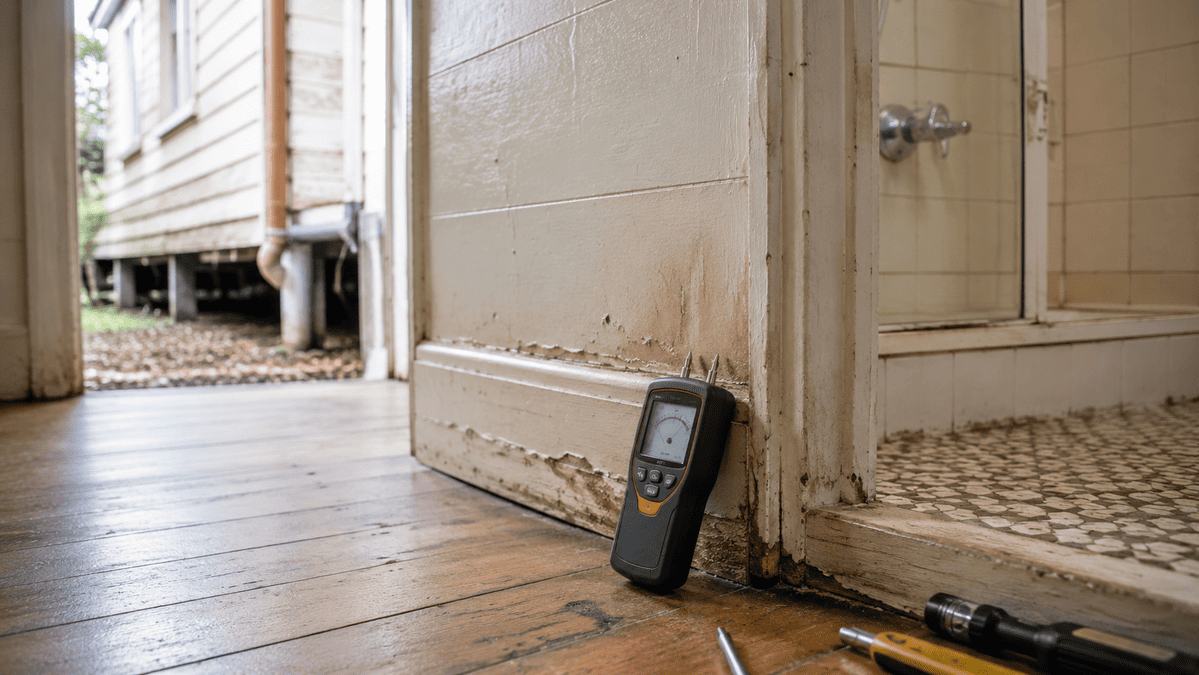
Buying an older home often comes with a mix of excitement and uncertainty. Fresh paint, polished timber floors, and a tidy garden can create a great first impression, but they don’t always reveal what’s happening beneath the surface. One issue that often attracts attention during a timber pest inspection is elevated moisture readings.
If you’ve ever wondered why inspectors pay close attention to moisture levels, the answer is simple. Moisture creates conditions that can encourage timber deterioration and increase the likelihood of termite activity. While a high moisture reading does not automatically mean termites are present, it is an important clue that deserves further assessment.
This article explains what moisture readings can indicate, why they matter during a timber pest inspection, and what home buyers should understand before making a purchasing decision.
At a Glance
- Moisture readings help identify areas that may require closer inspection.
- Elevated moisture does not confirm termite activity.
- Damp conditions can contribute to timber decay and increase pest risk.
- Older homes often have more potential sources of hidden moisture.
- Moisture findings should be considered alongside other inspection observations.
- Additional specialist advice may sometimes be appropriate before proceeding with a purchase.
Why Moisture Matters
Timber performs best when it remains reasonably dry. When moisture levels remain elevated over extended periods, timber can become more vulnerable to decay and create favourable conditions for certain timber pests.
Inspectors use moisture readings as one part of a broader assessment rather than treating them as a diagnosis on their own.
High moisture may indicate issues such as:
- A plumbing leak
- Roof leaks
- Poor drainage
- Inadequate ventilation
- Rising damp
- Water entering through damaged building materials
- Condensation in enclosed spaces
Each of these situations deserves attention because they may affect both the condition of the property and future maintenance costs.
Moisture Does Not Automatically Mean Termites
One of the biggest misconceptions among buyers is assuming that elevated moisture confirms termite activity.
In reality, moisture is a risk indicator, not proof of infestation.
For example:
- A leaking bathroom may produce high moisture readings without any termite activity.
- A recent plumbing repair may leave building materials temporarily damp.
- Heavy rainfall before an inspection can influence moisture levels in some external areas.
Likewise, termites can occasionally be present in locations where moisture readings are not unusually high.
Professional inspectors therefore combine moisture readings with visual observations and other evidence rather than relying on one measurement alone.
Why Older Homes Deserve Extra Attention
Older homes often contain building features that increase the likelihood of hidden moisture.
These may include:
- Ageing plumbing systems
- Older roofing materials
- Timber subfloors
- Less effective waterproofing
- Previous renovations with unknown workmanship quality
- Natural settling over time
None of these automatically indicate major defects, but they do increase the importance of careful inspection before purchase.
For buyers considering an older property, arranging an independent Timber Pest Inspection can provide valuable context about conditions that may not be visible during an open inspection.
Common Areas Where Elevated Moisture May Be Found
Certain parts of a property are naturally more prone to moisture.
These include:
Bathrooms
Failed waterproofing, leaking shower bases, or deteriorated grout may allow moisture to penetrate surrounding materials.
Kitchens
Hidden plumbing beneath sinks or appliances can create persistent dampness if leaks develop.
Laundry Areas
Water supply connections and drainage systems are common sources of moisture.
Roof Spaces
Roof leaks may allow water to enter insulation, ceiling timbers, or wall cavities.
Subfloors
Poor ventilation, drainage issues, or rising damp can increase moisture beneath older homes.
External Walls
Blocked gutters, damaged downpipes, or poor site drainage may contribute to damp conditions around the building.
A Simple Example
Imagine you’re purchasing a weatherboard home built in the 1970s.
During the inspection, elevated moisture is detected around the rear bathroom wall.
This finding does not immediately mean termites are present.
Instead, it tells the inspector that the area deserves closer attention. Further observations may identify a leaking shower, damaged waterproofing, or another moisture source. Depending on the circumstances, additional specialist investigation may also be recommended before contracts become unconditional.
This approach helps buyers make informed decisions rather than relying on assumptions.
Moisture Readings Are Just One Piece of the Puzzle
Professional timber pest inspections consider many factors together.
These may include:
- Visible timber damage
- Evidence of previous pest activity
- Building construction
- Ventilation
- Drainage
- Landscaping around the property
- Moisture readings
- Accessibility of inspection areas
Looking at the complete picture provides a far more reliable understanding than focusing on a single measurement.
If buyers also want information about the property’s overall structural condition, a Combined Building and Timber Pest Inspection may be appropriate.
What Should Buyers Do If Elevated Moisture Is Found?
Finding elevated moisture is not necessarily a reason to walk away from a property.
Instead, buyers should consider:
- Understanding the likely source of the moisture.
- Reviewing the inspection findings carefully.
- Asking whether additional investigation is recommended.
- Considering possible repair or maintenance costs.
- Discussing significant findings with relevant professionals where appropriate.
A calm, evidence-based approach usually leads to better purchasing decisions than reacting to one isolated finding.
Why Moisture Can Affect Future Costs
Even when termites are not present, ongoing moisture problems can contribute to:
- Timber deterioration
- Mould growth
- Internal finishes becoming damaged
- Reduced durability of building materials
- Higher maintenance expenses after settlement
Addressing moisture early is generally easier than allowing problems to continue unnoticed.
According to the CSIRO’s guidance on termites and moisture, excessive moisture around buildings can increase the attractiveness of conditions for subterranean termites, making moisture management an important part of reducing long-term risk.
Victoria-Specific Considerations
Property purchases in Victoria involve various due diligence responsibilities before settlement.
An inspection can identify visible conditions at the time of assessment, but it cannot guarantee future performance or reveal concealed issues that are inaccessible during the inspection.
For guidance on buying property in Victoria, buyers can also review the Consumer Affairs Victoria information for home buyers, which outlines important due diligence considerations before purchasing.
Frequently Asked Questions
Can moisture readings confirm termite activity?
No. Moisture readings indicate conditions that may warrant closer investigation but do not confirm termites.
Should high moisture stop me buying a property?
Not necessarily. The significance depends on the cause, location, severity, and any associated findings identified during the inspection.
Can recent rain affect moisture readings?
Yes. Weather conditions can sometimes influence moisture levels, particularly in external building elements. Inspectors interpret readings within the broader inspection context.
Why are moisture readings important in older homes?
Older homes may have ageing plumbing, roofing, or waterproofing systems that make hidden moisture more likely. Identifying these issues early can help buyers understand potential maintenance requirements.
Final Thoughts
Moisture readings are valuable because they help identify areas that may require closer attention, not because they provide automatic answers.
For buyers of older homes, understanding what these readings may indicate can reduce uncertainty and support more informed decisions during the purchasing process.
If you’re preparing to buy a property in Victoria, the team at NextGen Inspections can provide independent information to help you better understand visible property conditions. If you’re working within a contract deadline or need guidance on the right inspection, you can also book an inspection or discuss your situation before committing to your purchase.