
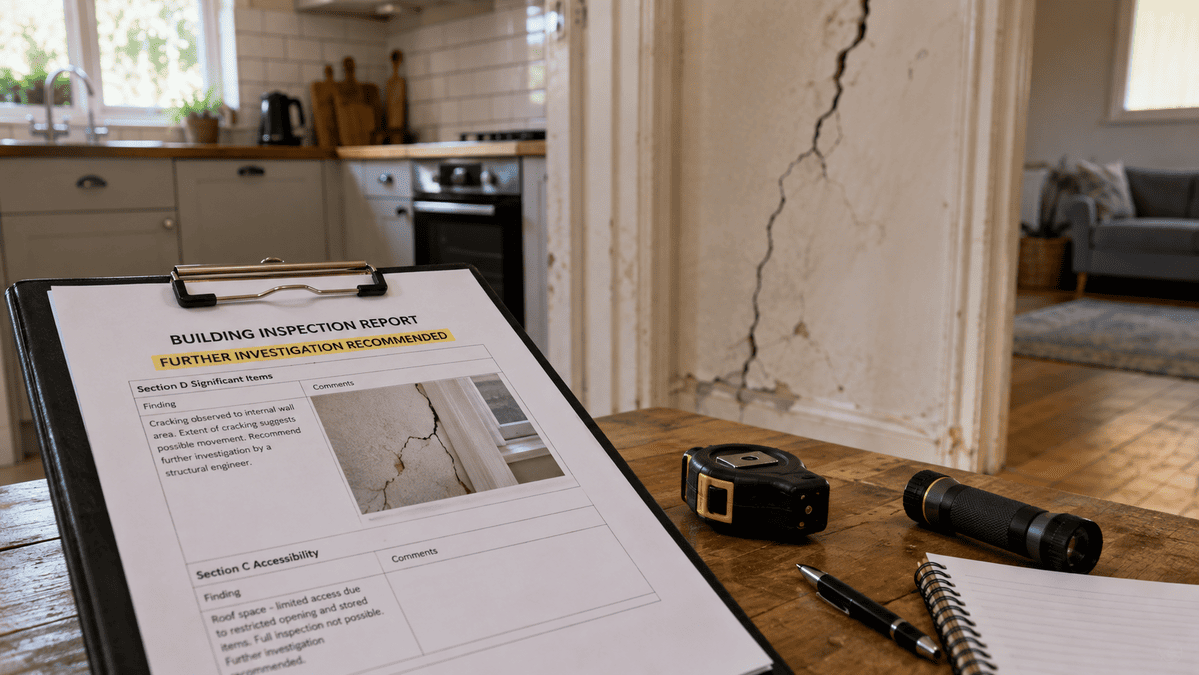
Receiving a building inspection report is an important step in the property buying process. While many findings are straightforward, one phrase often leaves buyers uncertain: “Further Investigation Recommended.”
If you’ve seen this recommendation in your inspection report, it doesn’t automatically mean the property has a major defect or that you should walk away. Instead, it usually means the inspector has identified something that requires a closer look by an appropriately qualified specialist before you make an informed decision.
Understanding what this recommendation actually means can help you avoid unnecessary worry while ensuring you don’t overlook an issue that deserves attention.
At a Glance
- “Further Investigation Recommended” is not a diagnosis.
- It means additional assessment may be needed before the property’s condition can be fully understood.
- The recommendation often relates to areas that cannot be safely inspected or require specialist expertise.
- Following up promptly can help buyers make more confident decisions before settlement.
- In Victoria, it’s sensible to complete any additional investigations before contractual deadlines wherever possible.
What Does “Further Investigation Recommended” Actually Mean?
In simple terms, the inspector has identified an issue, observation, or limitation that cannot be fully assessed during a standard visual inspection.
Rather than guessing or making assumptions, professional inspectors recommend further investigation when additional expertise, specialised equipment, or access is required.
This approach reflects good professional practice because inspection reports should remain factual and avoid making conclusions that cannot be supported by the available evidence.
If you’ve arranged a pre-purchase building inspection, the report is designed to identify visible conditions and highlight situations where further assessment may reduce uncertainty before you proceed with the purchase.
Why Would an Inspector Recommend Further Investigation?
There are several reasons this recommendation may appear in a report.
Limited Access
Some parts of a property simply cannot be inspected safely or without causing damage.
Examples include:
- Roof spaces with restricted access
- Areas behind wall linings
- Concealed plumbing
- Subfloors blocked by stored belongings
- Sections hidden by heavy furniture
Rather than speculate, the inspector records the limitation and may recommend further investigation if those concealed areas could affect the property’s condition.
Specialist Assessment Is Required
Certain observations fall outside the scope of a standard building inspection.
For example, an inspector may notice:
- Possible structural movement
- Electrical concerns
- Plumbing issues
- Signs of waterproofing failure
- Possible asbestos-containing materials
Each of these may require assessment by the relevant qualified professional before conclusions can be reached.
More Information Is Needed
Sometimes visible evidence suggests there may be a larger underlying issue.
For example, a small ceiling stain could simply result from an old repaired leak, or it could indicate an active roof problem. Without opening building elements or conducting specialised testing, it may not be possible to determine the cause during a visual inspection.
Does It Mean There’s a Serious Problem?
Not necessarily.
This is probably the biggest misconception buyers have.
A recommendation for further investigation is not a statement that major defects definitely exist. Instead, it means there is not enough information to confidently rule out a more significant issue.
In many cases, additional assessment confirms the concern is relatively minor. In others, it identifies repairs that buyers may wish to consider before proceeding.
The recommendation is there to reduce uncertainty, not create unnecessary alarm.
A Practical Example
Imagine an inspector notices cracking around a doorway.
The cracks may simply reflect normal movement that occurs as homes settle over time.
However, if the cracking pattern appears unusual or is accompanied by uneven flooring, the inspector may recommend that a structural engineer assess the area further.
The building inspector is not diagnosing structural failure. Instead, they are recognising where specialist expertise is appropriate.
This careful approach helps buyers make informed decisions based on the best available information rather than assumptions.
What Should Buyers Do Next?
Seeing “Further Investigation Recommended” in your report doesn’t mean you need to panic. It does mean you should pause before making any major decisions until you understand what additional information is needed.
A practical approach is to work through these steps.
-
Read the Recommendation Carefully
Not every recommendation has the same level of urgency.
Some relate to routine maintenance or limited access, while others may involve structural concerns, moisture issues, or safety matters. Read the wording carefully to understand exactly what the inspector observed and why further investigation has been suggested.
Avoid assuming the worst based on the heading alone.
-
Discuss the Report with Your Inspector
If anything is unclear, contact your inspector before arranging specialist assessments.
Often, they can explain:
- what they observed
- why further investigation was recommended
- whether the issue appears urgent
- which type of specialist may be appropriate
A short conversation can often provide valuable context that isn’t fully captured in the written report.
-
Arrange Specialist Advice Where Appropriate
Depending on the finding, you may be advised to seek further assessment from professionals such as:
- a structural engineer
- a licensed electrician
- a qualified plumber
- a roofing specialist
- a waterproofing specialist
- a pest management professional
The recommendation should be viewed as an opportunity to gather better information rather than an indication that expensive repairs are inevitable.
-
Consider Your Contract Timeframes
If you’re purchasing property in Victoria, timing can be just as important as the findings themselves.
Some purchase decisions are subject to cooling-off periods, finance approval, or other contractual deadlines. Where possible, arrange any recommended investigations early so you have the information you need before those timeframes expire.
For guidance on buying property in Victoria, the Consumer Affairs Victoria guide for home buyers provides helpful information about the buying process and due diligence.
Remember that building inspectors do not provide legal advice. If the inspection findings may affect your contractual obligations, it’s sensible to discuss them with your conveyancer or solicitor.
Why Inspectors Avoid Making Definitive Diagnoses
Some buyers wonder why inspectors don’t simply state exactly what’s wrong.
The answer is straightforward.
Most pre-purchase building inspections are visual inspections. Inspectors are not expected to dismantle building components, remove finishes, or carry out destructive testing. They also work within recognised inspection standards that define the scope of the inspection.
Making conclusions beyond what can reasonably be observed would not be responsible.
A recommendation for further investigation demonstrates that the inspector is staying within those professional limits while helping you identify areas that deserve closer attention.
Can You Still Buy the Property?
Absolutely.
Many buyers successfully purchase properties after arranging additional investigations.
The important question isn’t whether the report contains the phrase “Further Investigation Recommended.” Instead, ask yourself:
- Has the issue now been properly investigated?
- Do I understand the potential repair costs?
- Am I comfortable with the level of risk?
- Have I received any specialist advice I need before proceeding?
Once those questions are answered, you’ll be in a much stronger position to make an informed decision.
Common Misunderstandings
“It means the house has major structural problems.”
Not necessarily.
Many recommendations relate to relatively minor observations or areas that simply couldn’t be inspected fully.
“The inspector missed something.”
Quite the opposite.
Highlighting uncertainty is part of a thorough inspection. It shows the inspector is identifying situations where additional expertise may be appropriate instead of making unsupported assumptions.
“I should ignore it because nothing has been confirmed.”
Ignoring the recommendation defeats its purpose.
Even if the issue ultimately proves minor, following up gives you greater confidence before committing to one of the biggest financial decisions you’ll make.
Frequently Asked Questions
Is “Further Investigation Recommended” a defect?
No. It is a recommendation for additional assessment, not a confirmed defect.
Does every recommendation require expensive specialist reports?
No. Some recommendations are precautionary and may be resolved with relatively straightforward inspections or advice.
Should I renegotiate immediately?
Not usually. It’s generally better to understand the nature of the issue first before making decisions about negotiations or contract changes.
Can I ask my building inspector for more information?
Yes. Your inspector can usually explain why the recommendation was made and what type of specialist, if any, may be appropriate.
Make Decisions With Confidence, Not Assumptions
Finding “Further Investigation Recommended” in an inspection report can feel unsettling at first, but it’s often a sign that the inspection has been carried out responsibly. Rather than guessing about conditions that cannot be confirmed, the report identifies where additional information could help you make a more informed decision.
If you’ve received an inspection report and would like greater clarity before committing to a purchase, the team at NextGen Inspections can help you understand the findings and discuss the most appropriate next steps. If you’re still arranging your inspection or working within a tight timeframe, you can also book an inspection to gain independent insight before moving forward with confidence.