
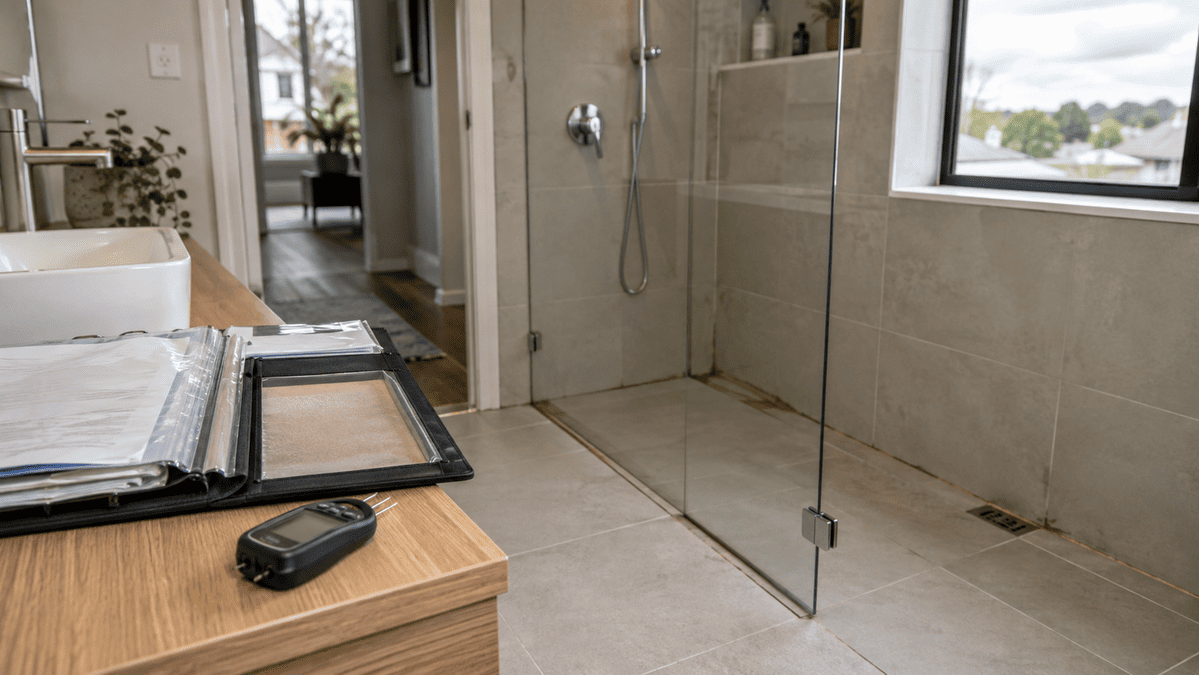
Buying a renovated home can feel like the best of both worlds. You get modern finishes, updated bathrooms, stylish kitchens, and fewer immediate maintenance concerns. But while fresh tiles and new fixtures may look impressive, not every renovation tells the full story.
If you’re buying a home in Victoria, one document that deserves your attention is the waterproofing certificate for renovated wet areas such as bathrooms, laundries, balconies, and certain shower areas. Its absence does not automatically mean there’s a problem, but it should encourage buyers to ask more questions before proceeding.
This article focuses specifically on waterproofing documentation as part of renovation due diligence. It is not a guide to every renovation document or a legal explanation of property contracts. Instead, it explains why waterproofing certificates matter, what buyers should ask, and how they fit into making a more informed purchasing decision.
At a Glance
- Waterproofing protects buildings from moisture damage in wet areas.
- Renovated bathrooms, laundries and balconies may require compliant waterproofing work.
- Missing waterproofing certificates are not proof of defective work, but they justify further investigation.
- Water damage often develops gradually and may not be visible during an open inspection.
- A professional pre-purchase building inspection can help identify visible signs of moisture-related issues, although concealed defects cannot always be confirmed without invasive investigation.
- Asking questions before signing a contract is usually easier than dealing with unexpected repairs after settlement.
Why Waterproofing Matters More Than Many Buyers Realise
Waterproofing is designed to prevent water from penetrating building materials in areas regularly exposed to moisture. When it performs properly, it helps protect surrounding walls, floors, framing, and neighbouring rooms from gradual deterioration.
If waterproofing fails, moisture may slowly enter areas that remain hidden for months or even years. By the time visible damage appears, repairs can become considerably more expensive than addressing the original issue.
According to the National Construction Code (NCC), waterproofing forms an important part of the construction requirements for many wet areas in residential buildings. Similarly, Standards Australia AS 3740 provides guidance on waterproofing domestic wet areas used throughout the building industry.
For buyers, this means the quality of waterproofing is just as important as the appearance of new tiles or fittings.
Why Missing Waterproofing Certificates Raise Questions
A missing certificate should never be treated as automatic evidence of defective workmanship.
Instead, think of it as a prompt to understand the renovation more thoroughly.
Questions worth asking include:
- When was the renovation completed?
- Who carried out the work?
- Was the work professionally managed?
- Are there invoices or records available?
- Were any relevant approvals or compliance documents issued?
- Has the property experienced leaks since the renovation?
Many legitimate renovations have good documentation. Others may have incomplete records simply because paperwork has been misplaced over time.
The goal isn’t to assume the worst.
The goal is to reduce uncertainty before making one of the largest financial decisions you’ll ever make.
Which Areas Usually Require Waterproofing?
Waterproofing is commonly associated with bathrooms, but several other areas may also require appropriate waterproofing depending on their design and construction.
Examples include:
| Area | Why Waterproofing Is Important |
| Bathrooms | Frequent water exposure around showers and floors |
| Laundries | Washing machines, sinks and regular moisture |
| Balconies | Rainwater protection and drainage |
| Powder rooms with showers | Moisture protection around wet areas |
| Certain ensuites | Preventing leaks into adjoining rooms |
Each property is different, and building requirements may vary depending on when the work was completed.
Fresh Renovations Can Hide Older Problems
A beautifully renovated bathroom naturally attracts buyers.
New tiles.
Modern tapware.
Frameless shower screens.
Fresh silicone.
Everything looks clean and contemporary.
Unfortunately, cosmetic improvements cannot confirm what sits beneath the surface.
For example:
- New tiles may cover previous water damage.
- Silicone can temporarily conceal small gaps.
- Fresh paint may hide earlier staining.
- Replacement cabinetry can obscure previous moisture issues.
This doesn’t mean sellers are deliberately hiding defects. Many renovations are completed to a high standard.
It simply means appearance alone isn’t enough to judge workmanship.
Practical Example
Imagine two similar homes.
Property A includes renovation invoices, waterproofing documentation, and details of the contractor who completed the work.
Property B has an equally attractive bathroom but no supporting documents, and nobody is certain when the renovation occurred.
Both homes may ultimately prove to be perfectly sound.
However, Property B naturally presents more uncertainty.
For many buyers, reducing uncertainty is one of the main reasons for arranging an independent inspection before committing to the purchase.
What Can a Building Inspection Help Identify?
An experienced inspector cannot see through tiles or walls.
However, during a professional inspection they may identify visible indicators that deserve further attention, including:
- moisture staining
- deteriorated sealants
- damaged grout
- uneven flooring
- signs of previous water entry
- swollen skirting boards
- movement around wet areas
- ventilation concerns
If visible concerns are identified, the report may recommend obtaining further specialist advice before proceeding.
This careful approach helps buyers make informed decisions without jumping to conclusions.
As explained in the Consumer Affairs Victoria guide for buying property, carrying out appropriate due diligence before purchasing is an important part of protecting yourself when buying a home.
Questions Buyers Should Ask Before Proceeding
If you’re interested in a renovated property, asking a few practical questions early can save time and help clarify any uncertainties.
Consider asking:
- When was the bathroom or wet area renovated?
- Who completed the work?
- Are there invoices or receipts available?
- Is there any waterproofing documentation or compliance paperwork?
- Have there been any previous leaks or repairs?
- Has any maintenance been carried out since the renovation?
These questions are not about challenging the seller. They’re about understanding the property’s history so you can make a more informed decision.
Simple Buyer Checklist
Use this checklist when inspecting a renovated home.
| Check | Why It Matters |
| Ask when the renovation was completed | Helps establish the age of the work |
| Request available renovation documents | Provides confidence in the work completed |
| Look for visible signs of moisture | Early indicators may warrant further investigation |
| Check balconies and wet areas carefully | These areas experience frequent water exposure |
| Review the inspection report thoroughly | Understand both significant and maintenance items |
| Discuss any concerns with relevant professionals | Obtain advice before committing if needed |
Even if every box cannot be ticked, completing this checklist gives buyers a more complete picture before moving forward.
What If No Certificate Is Available?
There are many reasons why documentation may no longer be available.
Older renovations may have incomplete records.
Owners may have misplaced paperwork over time.
The work may have been completed before the current owner purchased the property.
Rather than assuming the renovation is defective, consider the missing documentation as one piece of the overall due diligence process.
If the renovation appears well finished, documentation is unavailable, and an inspection identifies no visible concerns, you may simply decide that the remaining level of uncertainty is acceptable.
On the other hand, if missing paperwork is accompanied by moisture staining, movement, poor workmanship, or other visible warning signs, further investigation may be worthwhile before contracts become unconditional.
Understanding the Limits of Documentation
A waterproofing certificate is valuable, but it is not a guarantee that every aspect of a renovation is perfect.
Likewise, the absence of a certificate does not automatically mean the waterproofing has failed.
Good buying decisions are usually based on several pieces of information working together, including:
- Available renovation records
- The property’s overall condition
- Visible inspection findings
- Professional advice where appropriate
- Your own level of risk tolerance
Looking at the bigger picture often leads to better decisions than relying on a single document alone.
Why Independent Inspections Still Matter
Documentation tells part of the story.
The condition of the property tells another.
An independent inspection helps buyers assess the property’s visible condition without relying solely on what can be seen during an open home.
For renovated properties, this can provide valuable peace of mind before contracts are finalised.
If you’re buying a renovated home in Victoria and want an independent assessment, NextGen Inspections can help you understand the property’s visible condition before you commit. Depending on the property, a Combined Building and Timber Pest Inspection may also provide a broader assessment of structural and timber pest risks in a single inspection.
If your purchase timeline is tight, you can also book an inspection early to help ensure you have the information you need before key contract deadlines.
Frequently Asked Questions
Is a waterproofing certificate legally required for every bathroom renovation?
Requirements can vary depending on when the work was completed, the type of renovation, and the applicable building requirements at the time. If you’re unsure, seek advice from the appropriate building or legal professional for your specific situation.
Can a building inspection confirm waterproofing behind tiles?
No. A standard pre-purchase building inspection is generally non-invasive. Inspectors assess visible and reasonably accessible areas and may identify signs that warrant further investigation, but they cannot confirm the condition of concealed waterproofing membranes without destructive testing.
Should I avoid buying a home if waterproofing certificates are missing?
Not necessarily. Missing documentation should encourage further questions rather than immediate assumptions. Consider the property’s overall condition, available records, inspection findings, and any professional advice before making your decision.
What are common signs of possible moisture problems?
Visible staining, mould, deteriorating grout, swollen skirting boards, peeling paint, musty odours, and damaged sealants can all indicate that further investigation may be worthwhile. These signs do not always confirm waterproofing failure but should not be ignored.
Should I arrange an inspection even if the renovation looks new?
Yes. A recently renovated property can still benefit from an independent inspection. Attractive finishes don’t always reveal what lies beneath the surface, and an inspection may identify visible issues that deserve closer attention before settlement.
Make an Informed Decision Before You Commit
A beautifully renovated bathroom can certainly add value and appeal, but attractive finishes should be only one part of your decision-making process.
When waterproofing documentation is unavailable, asking a few additional questions, reviewing available records, and arranging an independent inspection can help reduce uncertainty before you purchase.
If you’re buying a renovated home in Victoria and want greater confidence in your decision, NextGen Inspections can provide an independent assessment of the property’s visible condition, helping you move forward with clearer information and greater peace of mind.