
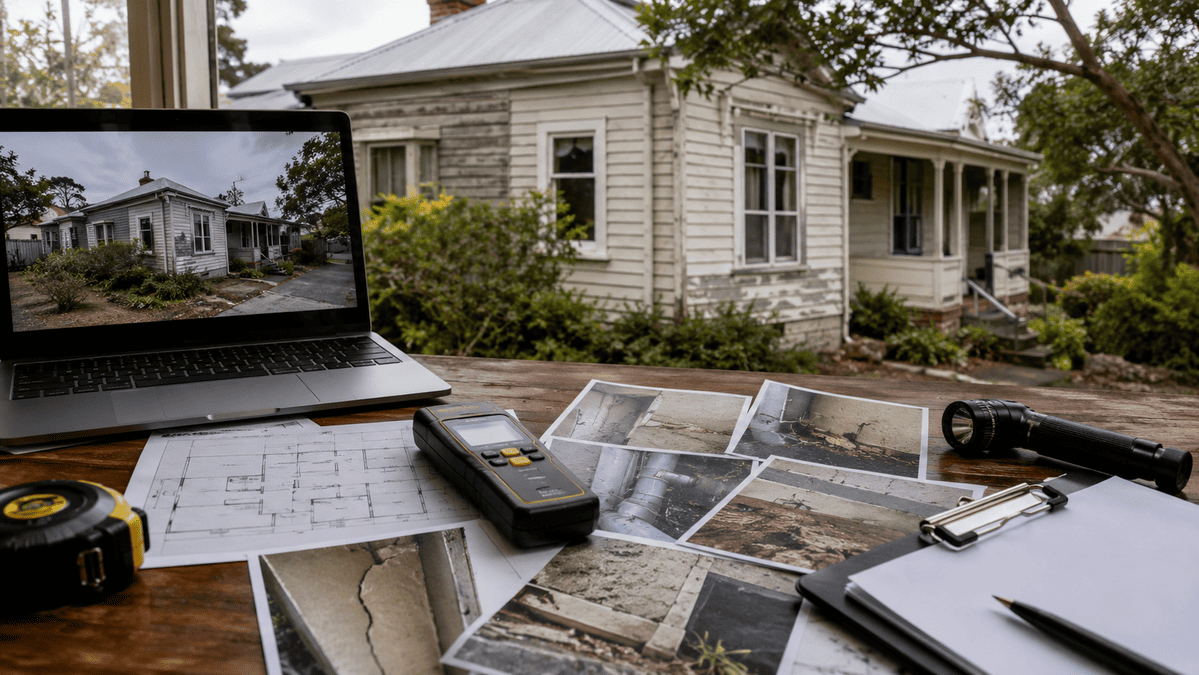
Buying property interstate can feel a bit like online dating for buildings. The photos look great, the agent says it has “character”, and suddenly you are trying to decide whether that charming Victorian terrace is actually charming or just quietly collapsing behind fresh paint.
For interstate buyers, inspection reports often become one of the most important decision-making tools in the entire purchase process. When you cannot easily walk through the property yourself, the findings inside the report help fill the gap between marketing and reality.
This article focuses on how interstate buyers can use inspection findings after the report arrives, so they can make calmer, clearer decisions without needing to jump on a plane every second weekend. Humanity really did invent a stressful way to buy houses.
At a Glance
- Inspection reports help interstate buyers reduce uncertainty before committing
- Not every defect is a deal-breaker
- Focus on severity, timing, safety, and future costs
- Photos and wording matter more when you cannot inspect in person
- Some findings may require follow-up from specialists
- A practical interpretation approach usually works better than panic
- Independent inspections can help interstate buyers make decisions with more confidence
Why Inspection Reports Matter Even More for Interstate Buyers
Local buyers can often revisit a property, check suspicious areas again, or compare homes in person before making a final decision.
Interstate buyers usually do not have that luxury.
That means the inspection report often becomes:
- your second set of eyes
- your reality check
- your risk filter
- your budgeting tool
A quality pre-purchase building inspection can help identify issues that are difficult to spot through listing photos or quick walkthrough videos alone.
This becomes especially important in Victoria, where older homes, renovations, extensions, and varying construction styles can create hidden maintenance or compliance concerns. The Consumer Affairs Victoria due diligence checklist also recommends buyers carry out independent checks before purchasing property.
Start With the Big Picture, Not the Worst Photo
One common mistake interstate buyers make is zooming straight into the scariest image in the report and mentally demolishing the house within five minutes.
A cracked tile does not automatically mean structural failure. A moisture reading does not automatically mean the property is uninhabitable. A sticking door does not mean the entire building is sinking into the earth like an exhausted biscuit in tea.
Instead, step back and assess the report in layers.
Ask These Questions First
- Are the issues mostly maintenance-related or structural?
- Are the defects common for the property age and type?
- Are any findings urgent from a safety perspective?
- Could repairs realistically fit within your budget?
- Did the inspector recommend further investigation?
- Are the issues isolated or repeated throughout the property?
This approach usually creates a calmer and more accurate understanding of the property overall.
Learn the Difference Between “Manageable” and “Expensive”
Inspection findings become more useful when buyers separate normal property wear from potentially expensive risk.
Often More Manageable Issues
These may still require money or maintenance, but they are relatively common:
- minor cracking
- worn sealants
- ageing paint
- loose fittings
- small drainage issues
- isolated timber wear
- minor movement typical for older homes
Findings That Usually Deserve Closer Attention
These can carry larger cost or risk implications:
- widespread moisture intrusion
- active termite activity
- major movement patterns
- roofing failures
- unsafe balconies or retaining walls
- poor waterproofing in wet areas
- significant subfloor moisture
- repeated structural concerns
Interstate buyers do not necessarily need to reject every property with defects. Almost every property has some issues. The key is understanding which issues are normal ownership realities and which ones may significantly affect future costs or livability.
Use the Photos Properly
Inspection photos are particularly valuable when you cannot physically revisit the property.
Do not just skim them.
Study:
- location of defects
- scale of visible damage
- repeated patterns
- signs of recent cosmetic cover-ups
- moisture staining
- ventilation conditions
- external drainage areas
- roofline condition where visible
Good inspection images often tell a more practical story than sales photography ever will. Estate agent photography exists in a strange parallel universe where every room apparently receives golden cinematic sunlight and no house has a power point. Remarkable species of marketing.
Pay Attention to “Further Investigation Recommended”
This wording matters.
It does not automatically mean the property is disastrous. It usually means the inspector has identified something that cannot be fully assessed during a standard visual inspection.
Examples may include:
- suspected concealed moisture
- inaccessible roof cavities
- structural movement requiring engineering review
- electrical concerns requiring electrician assessment
- plumbing concerns needing specialist inspection
For interstate buyers, these recommendations help prioritise what needs more clarity before proceeding.
Sometimes the next step is arranging a specialist opinion. Other times, it simply helps buyers prepare for future maintenance planning.
Think About Distance and Future Practicality
Inspection findings should also be viewed through the lens of interstate ownership.
A defect that feels manageable for a local owner-builder may feel very different if you live hundreds of kilometres away.
For example:
- ongoing drainage problems may require repeated trades
- maintenance-heavy older homes may need frequent attention
- unresolved moisture issues can worsen if left unattended
- complex renovations may create ongoing compliance uncertainty
Interstate buyers often benefit from asking:
“Can I realistically manage this property remotely if issues continue?”
That question alone can clarify a surprising amount.
Understand the Property Type Context
Not all properties carry the same risk profile.
An older weatherboard home in Melbourne will naturally present different maintenance patterns compared to a newer townhouse or apartment.
Likewise:
- renovated homes may carry workmanship concerns
- apartments may involve waterproofing or balcony considerations
- extensions may raise documentation questions
- older homes often show movement or ageing materials
The goal is not to find a “perfect” property. The goal is to understand whether the condition aligns with your expectations, risk tolerance, and budget.
You can explore more buyer-focused guidance and property risk information through the NextGen Inspections homepage, especially if you are comparing multiple properties remotely.
Use the Report to Prioritise Decisions
Interstate buyers often feel pressure to solve every issue immediately.
That is rarely realistic.
A better approach is to separate findings into categories:
Immediate Concerns
These may affect safety, habitability, or urgent costs.
Short-Term Repairs
Important but manageable within the first 6 to 12 months.
Long-Term Maintenance
Items that can be monitored or planned gradually over time.
This framework makes reports feel less overwhelming and more actionable.
A Practical Example
Imagine you receive an inspection report for a renovated Melbourne weatherboard home while living in Brisbane.
The report identifies:
- minor subfloor moisture
- ageing stormwater drainage
- some uneven flooring
- recently patched wall cracks
- no evidence of active termites
At first glance, that might sound alarming.
But once interpreted properly:
- uneven floors may be typical for the age
- patched cracking may simply require monitoring
- drainage improvements may be budgetable
- no active termite findings reduces one major concern
The report helps transform vague anxiety into specific, manageable information.
That is the real value.
When It Makes Sense to Slow Down
Some findings do justify caution.
Interstate buyers may want more clarity if reports show:
- major structural movement
- extensive moisture damage
- significant hidden access limitations
- repeated signs of poor renovations
- active pest issues
- widespread waterproofing failures
In those situations, additional specialist advice may help buyers avoid expensive surprises later.
Calm caution is useful. Panic-buying or panic-walking-away usually is not.
FAQs
Should interstate buyers rely heavily on the inspection report?
Yes, especially when physical access is limited. The report helps provide independent information about the property’s condition before purchase.
Does every defect mean I should avoid the property?
No. Many inspection findings are normal maintenance-related issues. The key is understanding severity, cost, and practicality.
What if the report recommends further investigation?
That usually means additional specialist review may help clarify a specific issue. It does not automatically mean the property is unsafe or unsuitable.
Are older homes in Victoria always risky?
Not necessarily. Older homes often have maintenance considerations, but many remain structurally sound when properly maintained.
Should interstate buyers organise inspections early?
In many cases, yes. Particularly during short decision windows or competitive market conditions. Buyers can also book an inspection early to help reduce time pressure later in the process.
Final Thoughts
For interstate buyers, inspection findings are not just technical notes buried inside a PDF. They are decision tools.
The goal is not to eliminate every possible risk. Property ownership does not work that way unless you plan to live inside a newly manufactured concrete cube maintained by robots.
Instead, the goal is to understand:
- what matters
- what can wait
- what needs follow-up
- what fits your budget and comfort level
A clear, independent inspection can help interstate buyers move from uncertainty to informed decision-making with far more confidence.