
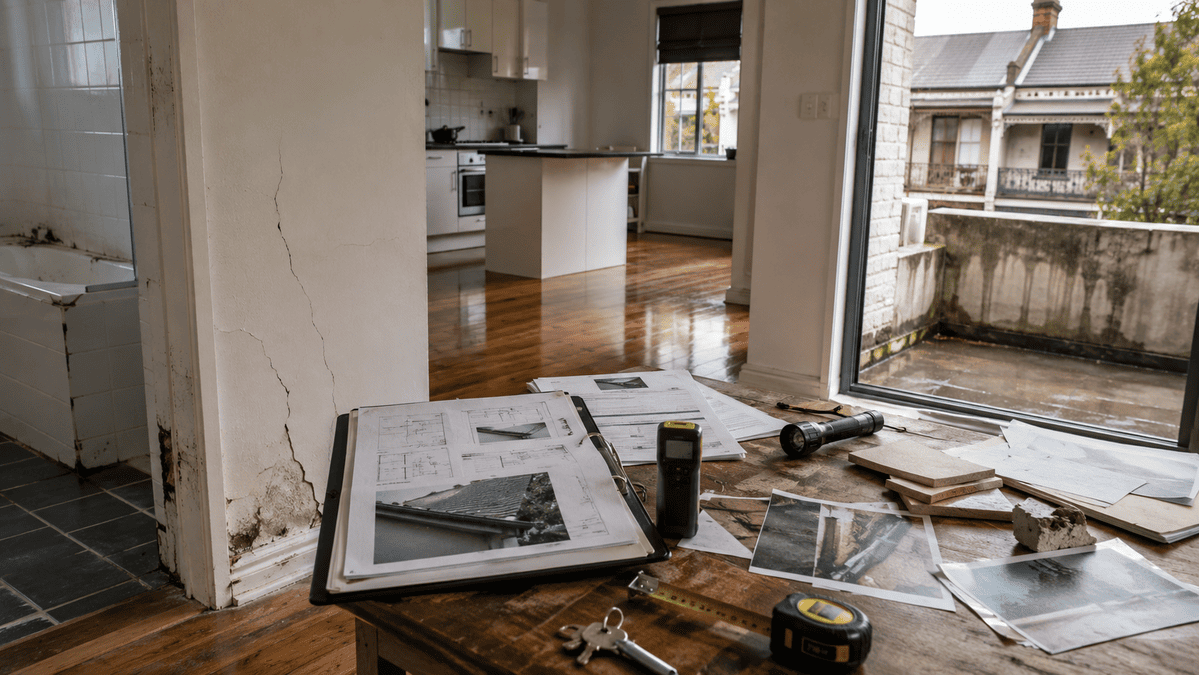
Buying a property in Melbourne while living interstate can feel a bit like online dating for houses. The photos look polished, the description sounds charming, and everyone claims it has “great bones”. Then reality arrives carrying a leaking balcony and a mystery crack hidden behind a bookshelf.
The challenge for interstate buyers is not just distance. It is uncertainty. You are often making major decisions without physically walking through the property, speaking to local trades directly, or understanding how certain Melbourne housing styles behave over time.
That does not mean interstate buying is a bad idea. It simply means your due diligence needs to be sharper, more structured, and less reliant on real estate photography. Humanity somehow invented drone footage before solving mould behind plasterboard. Remarkable priorities.
At a Glance
- Interstate buyers should verify both visible issues and hidden risks before committing
- Building inspections are especially important when you cannot inspect the property yourself
- Renovation documents, permits, and compliance paperwork matter just as much as cosmetic presentation
- Melbourne properties can have different risks depending on age, construction style, and renovation history
- Time pressure should not push buyers into skipping independent checks
- A clear inspection process can reduce uncertainty and help buyers make calmer decisions
Want the fuller picture? Keep reading.
Why Interstate Buyers Need a Different Approach
Local buyers can usually revisit a property multiple times, inspect details in person, and compare nearby homes more easily.
Interstate buyers often cannot.
That creates a few common problems:
- Relying heavily on listing photos
- Missing subtle signs of moisture or movement
- Feeling rushed during negotiations
- Trusting seller-provided information too quickly
- Struggling to coordinate inspections remotely
- Underestimating repair or maintenance costs
According to the Consumer Affairs Victoria property buying guidance, buyers should carefully investigate property condition and documentation before signing contracts or committing financially. That becomes even more important when distance limits your ability to inspect the property personally.
Start With the Property’s History, Not the Styling
A freshly renovated kitchen can distract buyers from much bigger concerns underneath.
For interstate buyers, it helps to mentally separate:
- presentation
- structure
- compliance
- maintenance history
They are not the same thing.
For example:
- Fresh paint may hide cracking
- New flooring may conceal uneven subfloors
- Recently tiled bathrooms may still have waterproofing problems
- Extensions may not always have clear approval documentation
This does not mean renovated homes are automatically risky. It means buyers should verify what was done, when it was done, and whether the supporting paperwork exists.
Key Things Interstate Buyers Should Check Before Committing
1. Arrange an Independent Building Inspection Early
One of the smartest things interstate buyers can do is organise an independent pre-purchase building inspection before becoming emotionally committed to the property.
An inspection can help identify:
- structural movement
- moisture issues
- roofing concerns
- poor workmanship
- drainage problems
- ventilation concerns
- timber deterioration
- signs of pest activity
Importantly, the goal is not to find a “perfect” property. Most homes have some level of maintenance or age-related wear.
The real question is:
What are you actually taking on?
For interstate buyers, this clarity matters because you cannot easily “pop back later” to double-check concerns yourself.
2. Ask for Renovation and Compliance Documents
If the property has been renovated, extended, or updated, request supporting documents early in the process.
Depending on the situation, that could include:
- building permits
- occupancy permits
- waterproofing certificates
- electrical certificates
- plumbing compliance certificates
- owner-builder documentation
In Victoria, owner-builder work can involve additional considerations for buyers, particularly if major domestic building work was completed within recent years.
If documents are missing or unclear, it does not automatically mean the property is unsafe. But it may justify asking more questions before moving forward.
A Simple Interstate Buyer Checklist
| Check Item | Why It Matters |
| Independent building inspection | Identifies hidden defects and maintenance risks |
| Renovation paperwork | Confirms work was properly documented |
| Moisture and drainage concerns | Common issues can become expensive later |
| Roof and gutter condition | Repairs can affect insurance and future costs |
| Pest risk indicators | Important in older or timber-heavy properties |
| Recent cosmetic upgrades | May hide older issues underneath |
| Access limitations | Important if tenants occupy the property |
| Repair budget buffer | Helps avoid financial surprises after settlement |
Simple? Yes. Unnecessary? Not unless your retirement plan involves emergency waterproofing invoices.
Be Careful With “Recently Renovated” Listings
Interstate buyers are often drawn toward turnkey homes because they feel lower risk.
Sometimes they are.
Sometimes they are simply better photographed.
A recently renovated property deserves careful scrutiny because cosmetic improvements can occasionally cover unfinished or poorly executed work.
Pay attention to:
- uneven finishes
- rushed silicone work
- new paint around cracks
- poor drainage around extensions
- ventilation in bathrooms and laundries
- balcony waterproofing
- mismatched flooring levels
If something feels inconsistent during the sales process, it is worth slowing down rather than assuming everything will “probably be fine”. Real estate optimism has powered many regrettable human decisions.
Understand Melbourne Housing Differences
Melbourne has a wide mix of housing styles, and risks can vary significantly depending on the property type.
For example:
- Older weatherboard homes may require closer moisture and subfloor attention
- Renovated terraces can have hidden extension or waterproofing concerns
- Apartments may involve balcony or common-area maintenance questions
- Newer homes can still have workmanship defects or drainage issues
Interstate buyers are not expected to become construction experts overnight. The goal is simply to understand that different property styles carry different inspection priorities.
That is why independent assessment matters more than relying purely on the sales campaign.
Do Not Ignore Timing Pressure
Many interstate buyers purchase under tight timelines because of:
- relocation deadlines
- work commitments
- school moves
- auction schedules
- travel limitations
That pressure can lead buyers to skip steps they would normally take.
Common examples include:
- signing before reviewing documents properly
- relying only on virtual walkthroughs
- delaying inspections until after emotional commitment
- assuming “someone else would have noticed”
Unfortunately, markets do not reward optimism for its own sake.
Even when timelines are tight, a structured inspection process can still help reduce uncertainty before committing financially.
If access, timing, or coordination is difficult, speaking with a local inspection provider early can help clarify what is realistically achievable within the purchase window.
Practical Example: Interstate Buyer Purchasing a Renovated Home
Imagine a Brisbane buyer purchasing a renovated Melbourne townhouse remotely.
The online listing looks excellent:
- modern kitchen
- polished timber floors
- fresh bathrooms
- newly painted interior
But the inspection identifies:
- moisture around a shower base
- poor drainage near the rear extension
- signs of minor movement previously patched cosmetically
- missing documentation for part of the renovation work
None of these findings automatically kills the deal.
However, they may:
- affect negotiation decisions
- influence budgeting
- trigger further specialist advice
- change the buyer’s comfort level
That is the value of independent clarity. Not panic. Not drama. Just better information before making a major financial commitment.
Questions Interstate Buyers Should Ask Before Signing
Before committing to a Melbourne property remotely, it helps to ask:
- Has the property been renovated recently?
- Are permits or compliance documents available?
- Has independent building advice been obtained?
- Are there any known moisture, drainage, or movement issues?
- Is there enough budget flexibility for unexpected repairs?
- Has the buyer personally reviewed the contract and supporting documents with appropriate professionals?
Simple questions often uncover the most useful answers.
FAQ
Is a building inspection really necessary if the property looks well maintained?
Yes, particularly for interstate buyers who cannot inspect the property thoroughly themselves. Presentation alone does not confirm structural condition, waterproofing quality, or maintenance history.
Can newer homes still have defects?
Yes. Newer homes can still experience workmanship issues, drainage concerns, incomplete finishes, or compliance-related problems.
What if the seller already has a report?
Buyers sometimes review seller-provided reports, but many still prefer independent inspections arranged on their own behalf for additional confidence and clarity.
Should interstate buyers avoid auctions?
Not necessarily. But auction timelines can reduce flexibility, so organising inspections and document reviews early is especially important.
What if documents are missing?
Missing documents do not always mean there is a major problem, but buyers may want additional clarification or professional advice before proceeding.
Final Thoughts
Buying a Melbourne property from interstate is absolutely possible, but distance increases the importance of careful checks, independent advice, and realistic expectations.
The goal is not to eliminate every possible risk. Property ownership does not work like that. Even brand-new homes can surprise people in deeply creative ways.
The goal is to reduce uncertainty before committing to a major purchase.
By organising independent inspections, reviewing documents carefully, and slowing down where necessary, interstate buyers can make more informed decisions with greater confidence.
If you are unsure about a property’s condition or want independent clarity before committing, the team at NextGen Inspections can help you understand the risks, timing considerations, and practical next steps. If you already have a property in mind, you can also book an inspection to help reduce uncertainty before moving forward.