
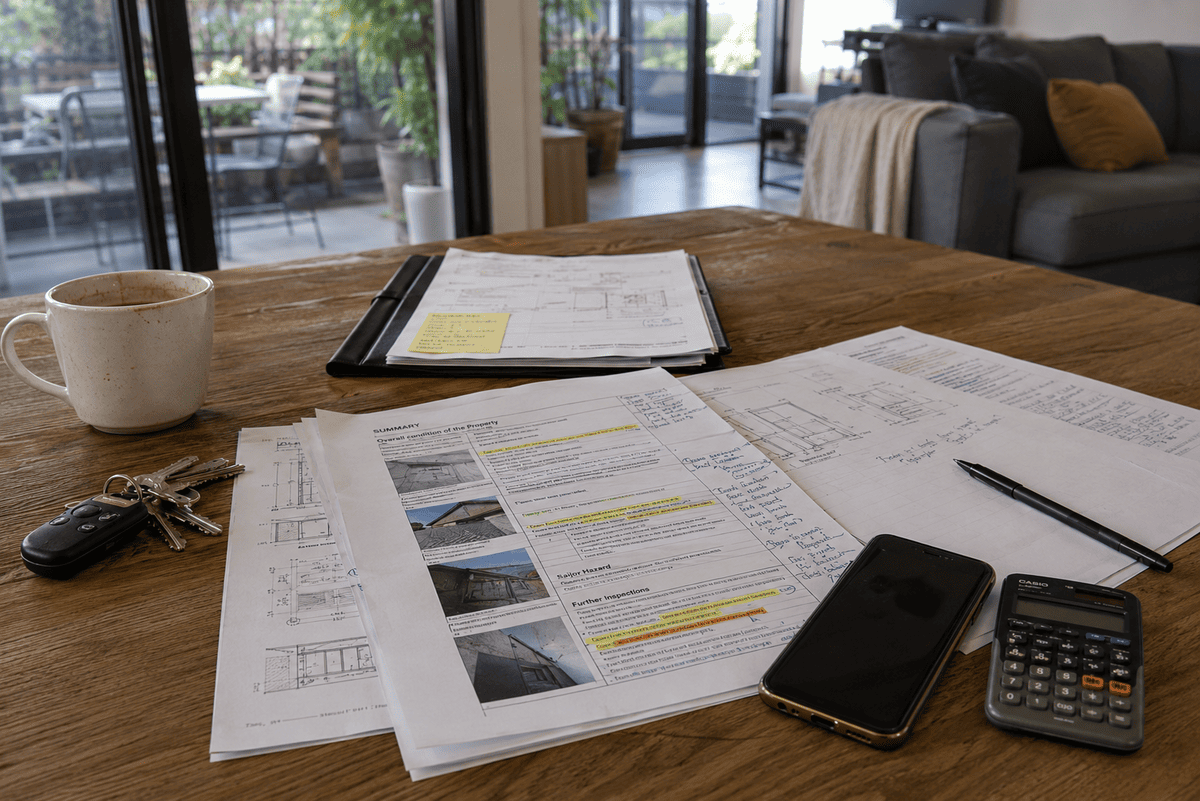
Buying your first home can feel like a strange combination of excitement, panic, spreadsheets, and pretending you understand what “minor moisture ingress” means. Then the inspection report arrives and suddenly every crack in a wall feels like the beginning of financial collapse.
The truth is, most inspection reports are not designed to scare buyers. They are designed to help you make a more informed decision.
For first-home buyers especially, the challenge is usually not getting the report. It is knowing how to use it properly without either:
- overreacting to manageable issues, or
- ignoring problems that could become expensive later.
A good inspection report gives context, priorities, and clarity. The smart move is learning how to separate normal property imperfections from genuine warning signs. Humanity continues its proud tradition of turning PDFs into emotional rollercoasters.
At a Glance
- Most homes have defects, even well-presented ones
- An inspection report helps you understand risk, not chase perfection
- Focus on major issues, safety concerns, and hidden costs first
- Cosmetic problems are usually less important than structural or moisture-related concerns
- Ask questions if findings are unclear instead of guessing
- Use the report to make a calmer, more informed decision
- If timing is tight, professional guidance can help prioritise what matters most
Want the fuller picture? Keep reading.
What an Inspection Report Is Actually Meant to Do
One of the biggest misunderstandings among first-home buyers is assuming the report gives a simple “good house” or “bad house” verdict.
It does not.
An inspection report is really a risk-assessment tool. It helps identify:
- visible defects
- maintenance concerns
- signs of potential future costs
- workmanship issues
- areas that may need further investigation
That means the report is there to support your decision-making process, not replace it.
Even newer homes can have issues. According to the Consumer Affairs Victoria property due diligence checklist, buyers should carefully review a property’s condition and supporting documentation before committing to a purchase.
That matters because first-home buyers often focus heavily on presentation. Fresh paint, styled furniture, and polished floors can distract from bigger concerns sitting quietly behind the walls, roofline, or subfloor.
Don’t Panic Over Every Defect
This is probably the most important mindset shift.
Almost every property inspection report contains defects.
Older homes especially may include:
- minor cracking
- ageing materials
- uneven surfaces
- worn sealants
- drainage concerns
- maintenance recommendations
That does not automatically mean the property is a disaster.
A smarter approach is asking:
- Is this issue common for the property type and age?
- Is it manageable?
- Is it likely to become expensive soon?
- Does it affect safety or structural integrity?
- Am I financially prepared for the repair or maintenance?
For example, peeling paint on an older weatherboard home is very different from evidence of ongoing moisture intrusion around structural timber.
One is usually maintenance.
The other may require deeper investigation.
Focus on the Bigger Risks First
First-home buyers can easily become overwhelmed because reports often contain dozens of observations.
The smarter move is prioritisation.
Pay closer attention to:
- structural movement concerns
- significant moisture issues
- termite activity or timber decay
- drainage problems
- roofing defects causing water entry
- unsafe electrical observations
- major waterproofing concerns
- poor renovation workmanship
- signs of ongoing movement or instability
Lower-priority items may include:
- cosmetic wear
- minor plaster cracking
- ageing fittings
- normal maintenance items
- surface-level deterioration
This does not mean you ignore smaller issues entirely. Small problems can still cost money over time. But not every issue deserves the same emotional response.
A house can still be a good purchase even if the report is not perfectly clean.
Think About Repair Costs Realistically
One useful way to use an inspection report is to estimate future ownership costs more realistically.
Many first-home buyers budget heavily for:
- deposit
- stamp duty
- moving costs
- furniture
Then completely forget the property itself may need work within the first 12 months.
The report can help you prepare for:
- immediate repairs
- medium-term maintenance
- future upgrades
- specialist inspections if needed
For example:
- replacing damaged gutters is different from replacing an entire roof
- fixing isolated damp issues is different from widespread drainage failure
- patching cracked tiles is different from redoing failed waterproofing
You do not need to become a builder overnight. Frankly, Australia already has enough people watching three renovation shows and suddenly believing they are structural consultants.
You just need enough understanding to make a sensible financial decision.
Use the Report Alongside Other Information
An inspection report should not exist in isolation.
Smart buyers also consider:
- Section 32 documentation
- renovation approvals
- property age
- maintenance history
- location factors
- future repair budgets
- advice from conveyancers or specialists where needed
For example, if the report raises concerns about unapproved renovation work, you may need further clarification before proceeding.
Similarly, if the report mentions specialist review recommendations, it is usually wise to understand why.
The goal is not to create panic. It is to reduce uncertainty before you commit financially.
Ask Questions Instead of Guessing
A surprising number of buyers receive a report, skim the headings, panic briefly, then try interpreting technical comments through internet forums populated by strangers named “BrickWarrior87”.
A much better approach is simply asking questions.
If something in the report is unclear:
- ask what the issue means in practical terms
- ask whether it is urgent
- ask whether monitoring may be reasonable
- ask whether specialist advice is recommended
- ask what level of repair may realistically be involved
Clarity matters far more than pretending to understand technical terminology.
At NextGen Inspections, many buyers are simply trying to understand whether findings are manageable or genuinely concerning. That distinction can dramatically change how confident someone feels moving forward.
Don’t Ignore Timing Pressure
First-home buyers often purchase under emotional or timing pressure.
That pressure can come from:
- auction timelines
- cooling-off periods
- fear of missing out
- lender deadlines
- competitive markets
Unfortunately, rushed decisions sometimes lead buyers to either:
- skip important review steps, or
- emotionally dismiss report findings because they already feel attached to the property.
This is where stepping back briefly can help.
Instead of asking:
“Is this house perfect?”
A better question is:
“Do I clearly understand the risks, costs, and condition well enough to move forward confidently?”
That is a far more practical standard.
A Simple Example of Smart Report Use
Imagine a first-home buyer receives a report showing:
- minor cracking
- ageing gutters
- poor bathroom ventilation
- evidence of past moisture staining
- no major structural movement
A panicked interpretation might be:
“This house is falling apart.”
A smarter interpretation could be:
“This property has maintenance needs typical of its age, but no immediate evidence of severe structural failure.”
That second interpretation creates space for:
- budgeting properly
- asking follow-up questions
- understanding priorities
- making a calmer decision
Inspection reports work best when they reduce emotional guessing.
What Buyers Should Do After Receiving the Report
Once you receive the report:
- Read the summary carefully
- Highlight major concerns
- Separate cosmetic issues from structural or moisture-related risks
- Ask questions about unclear findings
- Consider future repair budgets realistically
- Seek specialist advice if recommended
- Decide whether the overall risk level still suits your situation
Sometimes the report confirms confidence.
Sometimes it changes the decision entirely.
Both outcomes are useful.
When Additional Advice May Be Needed
Some findings may require more specialised guidance depending on the issue.
That could include:
- structural engineering advice
- electrical review
- plumbing investigation
- waterproofing assessment
- pest specialist input
- legal or conveyancing clarification regarding documentation
A building inspection report is part of the decision-making process, not the final word on every technical issue.
For buyers navigating tight timelines or uncertainty, organising professional guidance early can make the process far less stressful. If you are preparing for settlement or construction completion, a pre-purchase building inspection may also help identify issues before final sign-off.
FAQs
Should first-home buyers worry if a report has lots of defects?
Not necessarily. Most reports contain multiple findings, especially for older properties. The key is understanding which issues are routine maintenance and which may involve higher risk or cost.
Can a house still be worth buying with defects?
Yes. Many properties have manageable issues. The important question is whether you understand the condition and are financially prepared for likely repairs or maintenance.
What findings are usually more serious?
Structural movement, major moisture problems, termite activity, unsafe electrical concerns, significant drainage issues, and poor waterproofing are often worth closer attention.
Should I get specialist advice after an inspection?
If the report recommends further investigation, it is usually sensible to understand why. Additional specialist advice can provide clearer information before you commit.
What if I feel overwhelmed by the report?
That is very common for first-home buyers. Focus on priorities first, ask questions where needed, and avoid assuming every defect is catastrophic.
Final Thoughts
A good inspection report should help first-home buyers make calmer, smarter decisions, not trigger unnecessary panic.
No property is perfect. Even brand-new homes can have defects, incomplete work, or hidden issues. What matters is understanding:
- what the findings mean
- what risks are manageable
- what future costs may exist
- whether the property still fits your goals and budget
The smartest buyers are usually not the ones who find flawless houses. They are the ones who make informed decisions with realistic expectations.
If you need independent clarity before moving forward, or want help navigating inspection timing and next steps, you can book an inspection with NextGen Inspections and make your decision with greater confidence.