
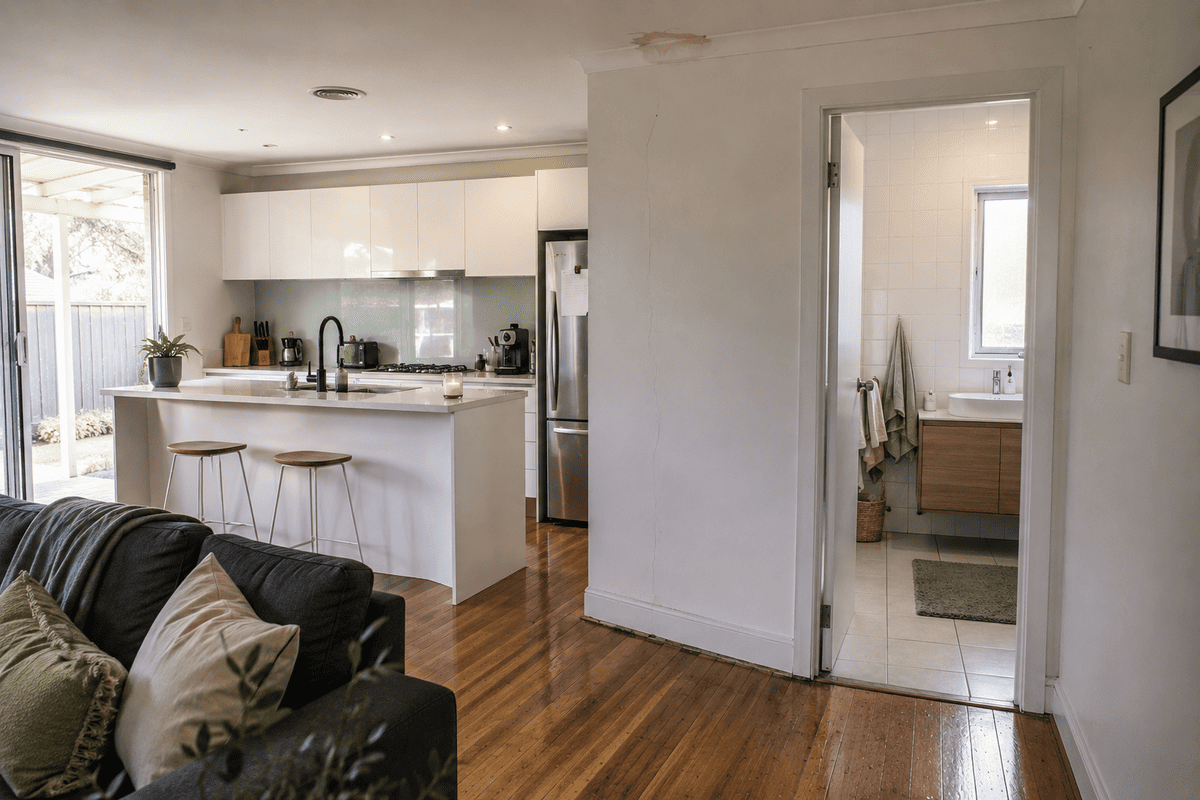
Recently renovated homes can look incredibly appealing to first-home buyers. Fresh paint, new kitchens, modern bathrooms, polished floors, and stylish lighting can make a property feel “move-in ready” from the second you walk through the door.
But renovations can also hide rushed workmanship, incomplete repairs, or shortcuts that are difficult to spot during a quick inspection. Humanity’s favourite hobby remains covering expensive problems with white paint and warm lighting.
That does not mean renovated homes are bad purchases. Many are excellent. The key is knowing what to ask before you make an offer.
At a Glance
- Cosmetic upgrades do not always mean the important parts of the home were fixed
- Ask when the renovations were completed and who carried them out
- Check whether permits, warranties, or certificates may apply
- Pay attention to signs of rushed workmanship
- Be cautious if everything looks brand new but parts of the home feel inconsistent
- A renovated property can still benefit from an independent pre-purchase building inspection
- If termite-prone areas or moisture risks are involved, a combined building and timber pest inspection may provide extra clarity
Keep reading if you want to avoid confusing “looks modern” with “has been properly done.”
Why Renovated Homes Can Be Tricky for First-Home Buyers
First-home buyers are often balancing emotion, budget pressure, and competition. Renovated homes naturally stand out because they reduce the mental load of future upgrades.
The problem is that renovations mainly improve presentation. They do not automatically confirm the condition of the structure, drainage, waterproofing, roofing, plumbing, ventilation, or subfloor areas.
A beautifully renovated bathroom can still have waterproofing issues behind the tiles. A freshly painted ceiling can still hide past leak damage. A polished timber floor can still sit above moisture problems underneath.
According to Consumer Affairs Victoria’s property due diligence guidance, buyers should take reasonable steps to investigate a property before committing to purchase.
That investigation starts with asking better questions.
Questions First-Home Buyers Should Ask Before Making an Offer
1. When Were the Renovations Done?
This is one of the simplest and most useful questions.
A renovation completed:
- 10 years ago tells you something different from one completed last month
- shortly before sale may deserve extra scrutiny
- over multiple stages may explain inconsistencies in finish quality
If the renovation is extremely recent, it can sometimes be harder to see how materials or workmanship will perform over time.
For example:
- fresh paint may temporarily conceal moisture staining
- new flooring may hide uneven surfaces
- recently sealed areas may not yet show movement or cracking
That does not automatically mean something is wrong. It just means buyers should slow down and assess carefully instead of assuming “new = problem solved.”
2. Were the Renovations Cosmetic or Structural?
Some renovations are mainly aesthetic:
- repainting
- replacing cabinetry
- changing fixtures
- updating flooring
Others involve larger work:
- removing walls
- extensions
- bathroom relocation
- structural changes
- drainage updates
This distinction matters because larger renovations can involve more complexity and more risk if workmanship was poor or incomplete.
You do not need to interrogate the selling agent like you’re solving a crime documentary. You simply want a clearer understanding of what actually changed.
A Quick Comparison Table
| Cosmetic Updates | Larger Renovation Work |
| Painting | Structural wall changes |
| New tapware | Extensions |
| Cabinet replacement | Bathroom relocation |
| Flooring updates | Roof modifications |
| Light fittings | Drainage alterations |
Larger renovation work may justify additional due diligence before making an offer.
3. Is the Finish Quality Consistent Throughout the Home?
One practical thing buyers often miss is consistency.
If the kitchen looks high-end but:
- doors stick
- skirting boards are uneven
- tiles are poorly aligned
- paint edges are messy
- windows do not close properly
…it can suggest parts of the renovation were rushed.
Small workmanship issues do not always mean major defects exist, but they can indicate the overall quality standard of the project.
A home can photograph beautifully online while still having visible practical issues in person. Real estate photography has evolved into its own branch of science fiction at this point.
4. Are There Signs of Moisture or Ventilation Problems?
Renovated bathrooms and laundries deserve extra attention because moisture-related issues can be expensive later.
Ask yourself:
- Is there a strong damp smell?
- Are windows heavily fogged?
- Is there mould around silicone edges?
- Do exhaust fans appear functional?
- Are there bubbling paint areas nearby?
These signs do not automatically mean the property is a disaster. They simply suggest more investigation may be worthwhile.
This is especially important in older renovated homes where modern finishes were added over ageing structures.
5. Has Anything Been Covered Up Too Neatly?
Some renovated homes genuinely improve old problems properly. Others mainly improve presentation.
Buyers should be cautious if:
- one room looks dramatically newer than surrounding areas
- patch repairs appear hidden under fresh paint
- flooring transitions feel uneven
- access areas are difficult to inspect
- there are signs of recent patching near cracks or leaks
Again, this is not about assuming dishonesty. It is about staying practical.
A renovated property should still make sense beneath the styling choices.
6. What Should You Pay Attention to Outside?
First-home buyers often focus heavily on kitchens and bathrooms while forgetting external areas.
Pay attention to:
- drainage around the property
- retaining walls
- balconies
- roof condition
- external cracking
- signs of moisture near foundations
- timber areas near soil or gardens
Sometimes the expensive problems are outside while the inside gets all the attention.
7. Should You Still Get an Inspection If the Home Looks Perfect?
In many cases, yes.
A renovated home can still benefit from an independent inspection because:
- some issues are not visible during open inspections
- renovations may not address older underlying conditions
- buyers may need help prioritising risks
- defects can be difficult for inexperienced buyers to interpret
This is especially relevant for first-home buyers who may not have experience spotting workmanship concerns or maintenance risks.
You can learn more about how the process works through the NextGen Inspections before deciding what level of support suits your situation.
Practical Example
Imagine a first-home buyer inspecting a renovated 1970s brick veneer home.
The kitchen is brand new. The bathroom looks recently upgraded. Floors are polished and staging furniture makes everything feel spotless.
But during a closer look:
- a window sticks badly
- there are hairline cracks near a doorway
- moisture staining appears near an external wall
- ventilation in the bathroom seems poor
None of these automatically kill the deal.
But they are exactly the kinds of things buyers should understand before making an offer, rather than after settlement when reality introduces itself aggressively.
Questions Worth Writing Down Before the Inspection
Here’s a simple checklist first-home buyers can bring with them:
Renovated Home Buyer Checklist
- When were the renovations completed?
- What areas of the home were updated?
- Were bathrooms or kitchens relocated?
- Are there signs of moisture or poor ventilation?
- Do doors and windows operate normally?
- Are finishes consistent throughout the property?
- Are external areas in good condition?
- Does anything feel rushed or incomplete?
- Would independent inspection advice help reduce uncertainty?
Simple questions often uncover more than highly technical ones.
FAQ
Should first-home buyers avoid renovated homes?
Not at all. Many renovated homes are excellent purchases. The goal is simply to understand what was improved, what may still need attention, and whether the presentation matches the underlying condition.
Can a newly renovated home still have defects?
Yes. Renovations improve appearance, but they do not always address every structural, moisture, drainage, or maintenance issue.
Are older renovated homes riskier?
Not necessarily. Older homes can be very solid. But renovations on older properties sometimes involve layers of old and new construction working together, which may deserve closer assessment.
Is a building and pest inspection still useful for renovated homes?
Often yes, particularly where moisture risks, timber issues, or concealed defects may be harder to identify during a standard walkthrough.
Should buyers ask for professional advice before offering?
If something feels unclear, rushed, or inconsistent, getting independent advice before committing can help buyers make more confident decisions.
Final Thoughts
Recently renovated homes can absolutely be worth buying. But first-home buyers should avoid assuming that modern finishes automatically mean the property is low-risk.
The best approach is usually calm, practical, and informed:
- ask good questions
- look beyond presentation
- understand what was actually changed
- investigate concerns before committing
If you want independent clarity before making a decision, NextGen Inspections can help you better understand the condition of a property before you move forward. If timing is tight, you can also organise a booking online and discuss the property situation before committing to an offer.