
Buying your first home can feel exciting, overwhelming, and slightly surreal. One minute you are admiring a renovated kitchen, the next you are mentally calculating whether two-minute noodles count as a long-term financial plan.
The problem is that many first-home buyers walk through open homes focused on styling, layout, or emotional first impressions while missing practical warning signs that could affect the property later.
This article looks at the common things buyers overlook during inspections and walkthroughs, not what a professional inspection includes. The goal is to help you slow down, notice more, and make smarter decisions before committing to a property.
At a Glance
- Cosmetic presentation can hide underlying issues
- Damp smells and cracks are often dismissed too quickly
- Poor ventilation and drainage are easy to overlook
- Renovated homes may still have unresolved defects
- Open homes are designed to feel appealing, not investigative
- Taking notes and photos helps avoid emotional decisions
- Independent inspections can help clarify risks before purchase
If you have ever walked into an open home thinking, “This place feels perfect,” you are not alone. Humans are surprisingly easy to distract with fresh paint and strategically placed indoor plants. Real estate styling exists because it works.
Most First-Home Buyers Focus on the Wrong Things
Many buyers naturally focus on:
- furniture layout
- natural light
- kitchen finishes
- backyard size
- street appeal
- how quickly they can picture themselves living there
Those things matter, but they should not be the only things guiding the decision.
According to the Consumer Affairs Victoria property checklist, buyers should also pay attention to signs of structural movement, dampness, ventilation, and maintenance issues during inspections.
The challenge is that open homes move quickly. There may be other buyers around, agents talking, and time pressure building. First-home buyers often feel awkward opening cupboards, checking walls closely, or asking detailed questions.
That hesitation can lead to missed warning signs.
Cosmetic Fixes Can Distract You
Fresh paint is not automatically suspicious. Sometimes a seller simply repainted the house. Humans do occasionally improve things without ulterior motives. Rare, but possible.
Still, buyers should pay attention when:
- one wall looks noticeably newer than others
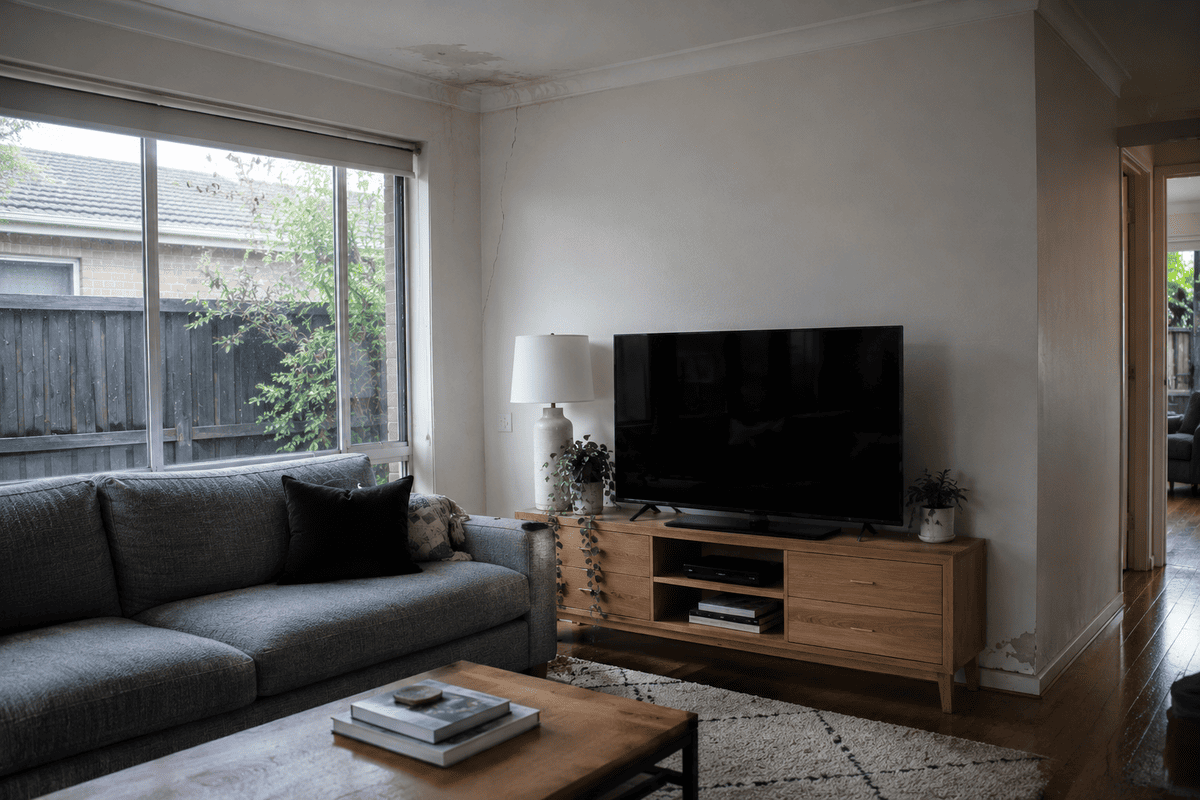
- paint appears patchy around cracks
- strong air fresheners are present
- rugs cover unusual floor areas
- furniture placement hides sections of walls or flooring
These do not automatically mean major defects exist, but they can justify looking more carefully or organising further investigation.
A beautifully styled property can still have:
- moisture problems
- poor drainage
- movement cracks
- termite damage
- ventilation issues
- unfinished renovation work
Presentation and condition are not the same thing.
Buyers Often Ignore Small Signs of Moisture
Damp-related problems are one of the most commonly overlooked issues during open homes.
People often dismiss:
- musty smells
- condensation on windows
- bubbling paint
- swollen skirting boards
- minor mould spots
- damp garage corners
The issue is not that every moisture sign equals disaster. The issue is that moisture problems can become expensive if ignored.
Bathrooms, laundries, kitchens, and subfloors deserve extra attention. Even newer homes can develop waterproofing or drainage problems if workmanship was poor.
This is one reason many buyers organise an independent pre-purchase building inspection before committing to a property.
Open Homes Rarely Show the Property Under Pressure
An open home usually happens:
- during daylight
- in good weather
- after cleaning
- with windows open
- with the property carefully prepared
You are not seeing:
- heavy rain performance
- overnight moisture build-up
- noisy neighbours at midnight
- drainage overflow during storms
- how the house feels during winter
This matters because some issues only appear under certain conditions.
For example:
| Issue | Easy to Miss During Open Homes |
| Poor drainage | Dry weather inspection |
| Condensation | Windows opened before inspection |
| Roof leaks | No recent rain |
| Ventilation issues | Property aired out beforehand |
| Neighbour noise | Quiet inspection time |
First-home buyers often assume the open-home version of the property reflects daily reality. Sometimes it does. Sometimes it absolutely does not.
Renovated Homes Can Create False Confidence
A renovated property often feels safer because it looks modern and clean.
But renovations can sometimes hide:
- rushed workmanship
- incomplete repairs
- non-compliant alterations
- poor waterproofing
- concealed damage
This does not mean renovated homes are bad purchases. Many are excellent. The key is not assuming that “new-looking” automatically means “problem-free.”
If major renovations were completed, buyers may want to ask about:
- permits
- approvals
- warranties
- compliance certificates
The Victorian Building Authority also recommends checking whether renovation work required permits or registered practitioners.
First-Home Buyers Often Forget to Look Up and Down
People usually inspect properties at eye level because that is how humans move through life. Convenient for social interaction. Less useful for spotting ceiling movement.
Commonly missed areas include:
- ceilings
- cornices
- roof lines
- gutters
- under sinks
- flooring transitions
- subfloor ventilation
- retaining walls
- garage corners
Even simple signs like uneven flooring or sticking doors may suggest movement or moisture changes worth investigating further.
You do not need to become a building expert during an open home. You just want to notice enough to ask better questions later.
Emotional Pressure Leads to Fast Decisions
First-home buyers often feel pressure because:
- properties sell quickly
- auctions create urgency
- competition feels intense
- agents mention strong interest
- buyers fear missing out
That emotional pressure can reduce critical thinking.
Some buyers stop noticing warning signs because they become emotionally attached to the property. Others convince themselves that visible issues are “probably normal.”
Sometimes they are. Sometimes they are not.
Taking photos, writing notes, and comparing multiple properties calmly can help reduce emotional decision-making.
A Simple Open Home Checklist Helps More Than You Think
You do not need a 14-page spreadsheet to inspect a property. You just need a system simple enough to actually use.
Quick Open Home Checklist
Before leaving an inspection, ask yourself:
- Did I notice any unusual smells?
- Are there visible cracks or patch repairs?
- Do windows and doors open properly?
- Is there evidence of moisture or mould?
- Does drainage around the property look adequate?
- Are renovations consistent and well-finished?
- Did I look at ceilings, flooring, and external areas?
- Am I excited because the property suits me, or because I feel rushed?
That final question matters more than people realise.
Professional Advice Still Matters
Open homes are useful for first impressions, but they are not designed to replace proper due diligence.
A buyer may still need:
- building inspections
- timber pest inspections
- legal advice
- specialist assessments
- document reviews
The goal is not to become paranoid about every crack or stain. The goal is to reduce uncertainty before making a major financial commitment.
If you are unsure about a property’s condition, the team at NextGen Inspections can help provide independent insight before you move forward.
FAQs
Should first-home buyers attend multiple open homes before buying?
Yes. Comparing several properties helps buyers recognise what is normal, what feels rushed, and what stands out as a genuine concern.
Are cosmetic issues always a bad sign?
Not necessarily. Cosmetic wear is common. The concern is when cosmetic improvements may be hiding underlying defects or incomplete repairs.
Is a new-looking home automatically lower risk?
No. Even recently renovated or newly built homes can have workmanship or compliance issues.
What if I notice something concerning during an open home?
Take notes, ask questions, and consider whether further investigation is needed. Avoid making assumptions either way without proper advice.
When should I organise a building inspection?
Usually before contracts become unconditional or before auction commitments where possible. Timing can vary depending on the purchase situation and legal advice.
Final Thoughts
Most first-home buyers do not miss problems because they are careless. They miss them because buying property is emotional, fast-moving, and unfamiliar.
Open homes are designed to help buyers imagine a future there. That is understandable. But good decisions usually happen when excitement and practical thinking work together.
If you want clearer insight before committing to a property, you can organise an inspection through the NextGen Inspections booking page and get independent advice tailored to the property situation. Because discovering major issues after settlement is a fairly terrible way to begin home ownership. Humanity keeps trying it anyway.